How We Build Business Intelligence for Pilsen
Business intelligence projects start with a decision audit. We ask what decisions you make regularly where you wish you had better information. For a Pilsen restaurant, those decisions might include weekly ordering, monthly staffing, seasonal menu changes, and marketing investment across channels. For each decision, we identify the data that would improve it and trace that data to its source in your existing systems.
Data warehouse design creates the unified data store that brings together data from multiple operational systems. We design the schema that represents your business's data in a form that supports the analytical queries your dashboards and reports require, without the constraints of the operational databases your daily software uses.
ETL pipeline development extracts data from your operational systems, transforms it into the analytical schema, and loads it into the data warehouse on a defined schedule. A Pilsen restaurant's ETL pipeline might pull transaction data from Square, payroll data from Gusto, and marketing performance data from Google and Meta at end of each day, producing a daily snapshot of operations in the analytical layer.
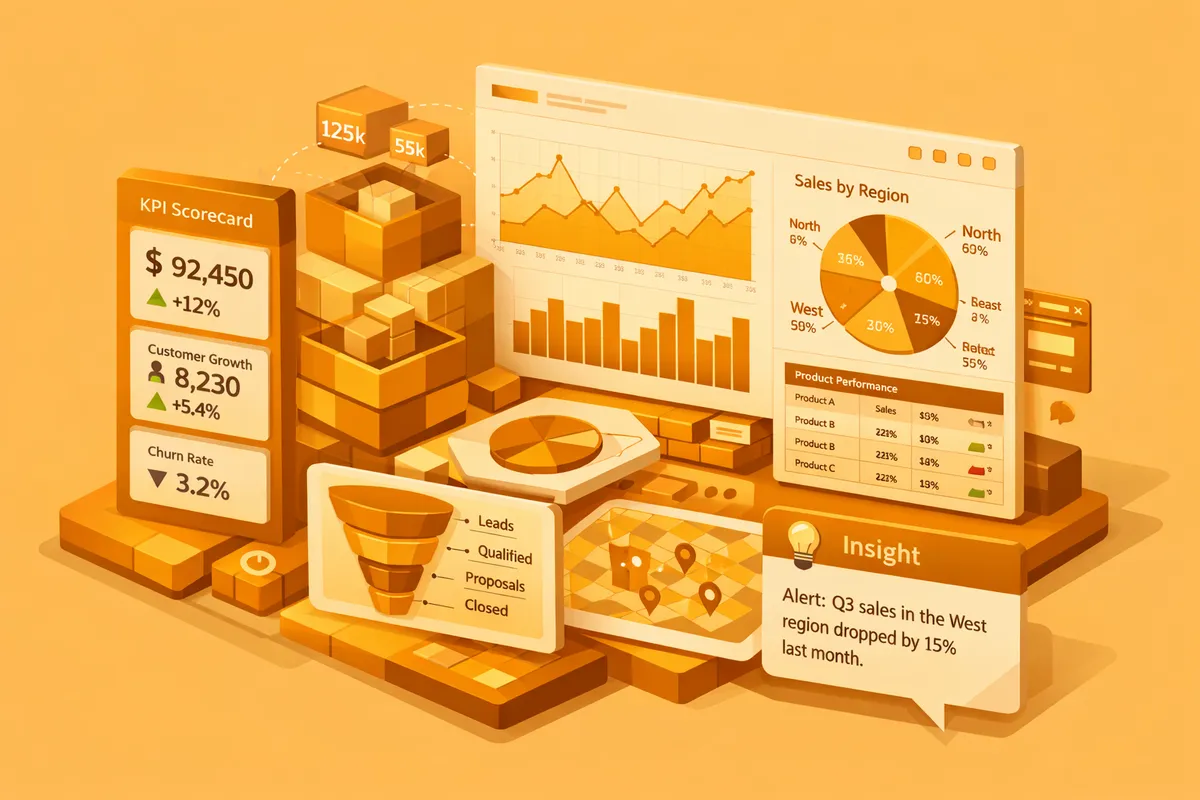
Dashboard development creates the visual interface that makes your business intelligence accessible to the people who need it. We build dashboards in Looker Studio, Tableau, or Power BI depending on your requirements and technical environment. Dashboards are designed for how your team actually works: what they look at first, what questions they need answered, and what level of detail is useful versus overwhelming.
Automated reporting delivers the analytical outputs your team needs on a schedule, without requiring anyone to log into dashboards and export data. A weekly performance summary delivered to your email every Monday morning, a monthly financial analysis that lands in your inbox before your monthly review meeting, a quarterly trend analysis that shows how key metrics are moving over time.
Industries We Serve in Pilsen
Restaurants and food businesses on 18th Street and throughout Pilsen use business intelligence to understand true food cost by menu item, labor cost by day part, revenue concentration by day of week and time of year, and the marketing attribution that shows which channels drive paying customers versus browsers.
Galleries and arts organizations in the Chicago Arts District use business intelligence to analyze show performance, collector acquisition cost, consignment versus direct sale profitability, and the patterns across multiple years of exhibition data that reveal what drives the gallery's best outcomes.
Community organizations use business intelligence to measure program reach, cost per participant, geographic distribution of services, and the outcome data that funders require as evidence of impact.
Service businesses across Pilsen use business intelligence to analyze profitability by service type, client acquisition cost by channel, project margin distribution, and the client lifetime value data that informs investment in retention versus new acquisition.
Multi-location businesses operating in Pilsen and elsewhere in Chicago use business intelligence to compare location performance, understand cross-location patterns, and make investment decisions about where to expand capacity and where to reduce it.
What to Expect Working With Us
Decision and data audit. We identify the specific decisions where better data would change the outcome and trace the data required for each decision to its source in your existing systems.
Architecture and design. We design the data warehouse schema and ETL pipeline architecture before building anything, giving you a blueprint to review and approve.
Infrastructure build. We build the ETL pipelines, data warehouse, and reporting layer, testing every component against real data from your operational systems.
Dashboard and report delivery. We build the dashboards and configure automated reporting delivery on the schedule your team needs.
Training and ongoing support. We train your team on using the BI system and provide ongoing support for questions, adjustments, and expansions as your business and analytical needs evolve.