How We Build Autonomous Workflow Agents for Pilsen
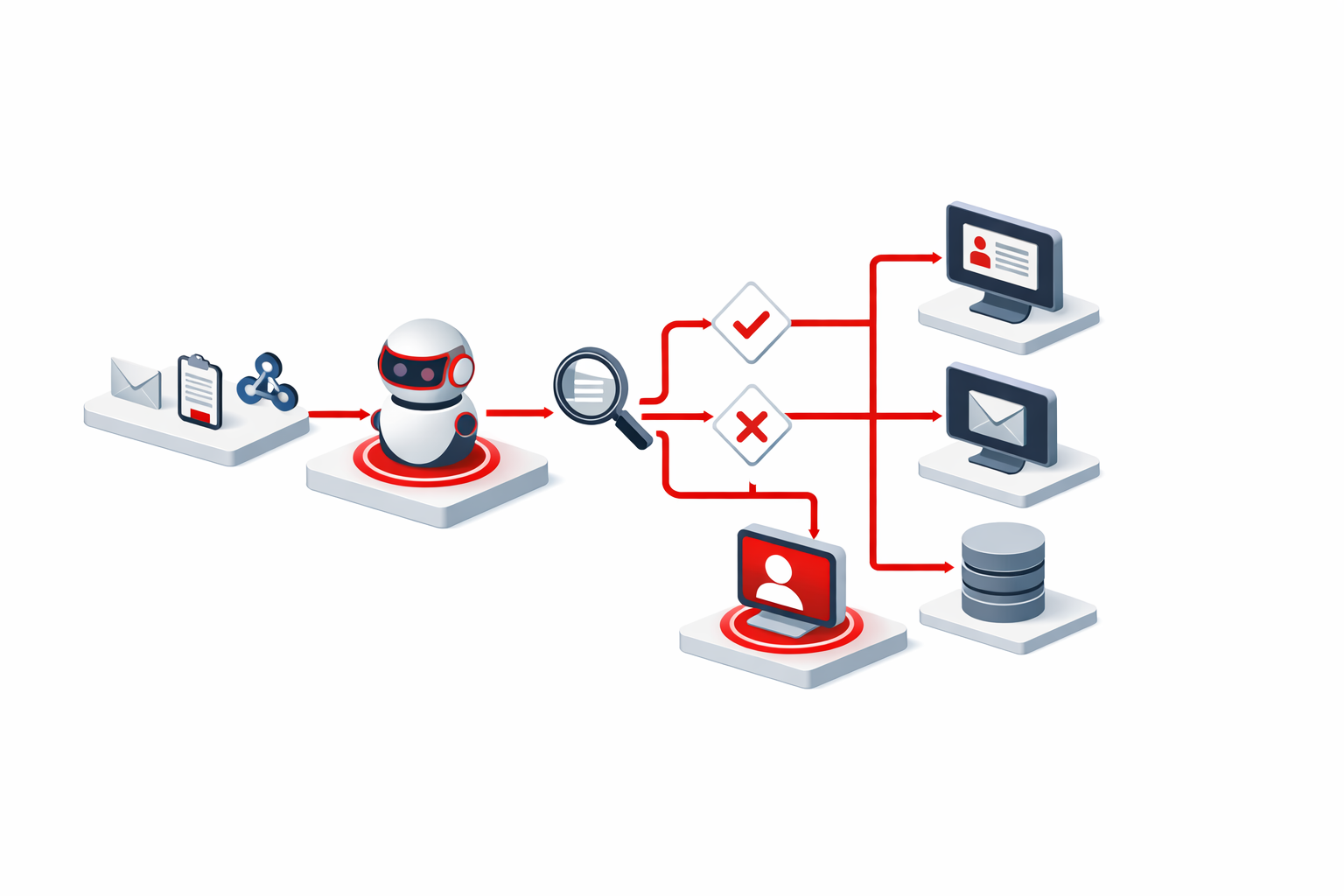
Autonomous workflow agent deployment starts with process documentation. We work with your team to document every step of the business process we are targeting: the triggers that start it, the decisions made at each step, the systems involved, the outputs produced, and the exceptions that require human escalation. Complete process documentation is the prerequisite for building an agent that handles the process correctly.
Agent design translates the process documentation into the agent's decision logic, system access permissions, and escalation rules. We define exactly what authority the agent has to act on your behalf, what it must check with you before doing, and what situations should stop the automated process and require human review. For a Pilsen restaurant, a scheduling agent might have authority to book and modify reservations within your defined availability windows, but must escalate any request for parties larger than your standard capacity or any cancellation request within 24 hours of the reservation time.
System integrations connect the agent to the tools it needs to operate. A customer service agent needs access to your calendar, your CRM, your communication channels, and your reservation or ordering system. We build these connections so the agent can read and write to each system with the appropriate scope, accessing only what is needed for the specific workflow it handles.
Guardrails and oversight ensure the agent operates within boundaries. We configure logging of every agent action, alerts for defined anomalies, regular review cycles to assess agent performance, and override mechanisms so you can correct agent behavior when it does not match your standards.
Training on your context is what separates a useful autonomous agent from a generic AI that frustrates customers with irrelevant responses. We train each agent on your specific business: your services, your pricing, your policies, your communication style, and the specific exceptions and nuances that define how your business operates.
Industries We Serve in Pilsen
Restaurants and food businesses on 18th Street use autonomous agents to handle reservation management, special request processing, catering inquiry coordination, and after-hours customer communication that would otherwise go unanswered until the next business day.
Galleries and arts organizations in the Chicago Arts District use autonomous agents to manage collector follow-up after openings, handle artwork inquiry processing, coordinate consignment logistics, and maintain the regular communication cadence that keeps the collector base engaged between exhibitions.
Service businesses across Pilsen use autonomous agents to handle the lead intake, qualification, scheduling, and follow-up communication workflow that consumes significant administrative time in businesses that depend on new client acquisition.
Community organizations use autonomous agents to handle program registration communications, volunteer coordination, and the multi-step event planning workflows that typically require significant staff coordination.
Professional services businesses use autonomous agents to manage client intake, document collection, appointment scheduling, and the routine communications that keep matters moving without requiring attorney, accountant, or consultant time.
What to Expect Working With Us
Process discovery and design. We document the target workflow in detail, identify the decision points that the agent will need to handle, define the system integrations required, and design the escalation rules that determine when human involvement is needed.
Agent build and testing. We build the agent against the process design, test it against realistic scenarios including edge cases and exception conditions, and validate that every output matches what your business would produce manually.
Supervised deployment. We deploy the agent in a supervised phase where a human reviews every action before the agent takes it, catching any calibration issues before they affect real customers.
Live deployment with monitoring. Once the supervised phase confirms the agent is calibrated correctly, we move to live deployment with monitoring. You receive logs of every agent action and alerts for any actions the monitoring system flags as potentially requiring review.
Ongoing optimization. We review agent performance regularly, address any calibration issues that emerge as the agent encounters new situations, and expand agent capabilities as your comfort and business needs evolve.