How We Build APIs for Pilsen
Every API development project starts with endpoint design. What data needs to be accessible? Through what operations, create, read, update, delete? With what authentication and authorization model? How will errors be handled and communicated? How will the API evolve over time without breaking existing integrations? These architectural decisions determine whether the API will be reliable, maintainable, and extensible over the business lifecycle.
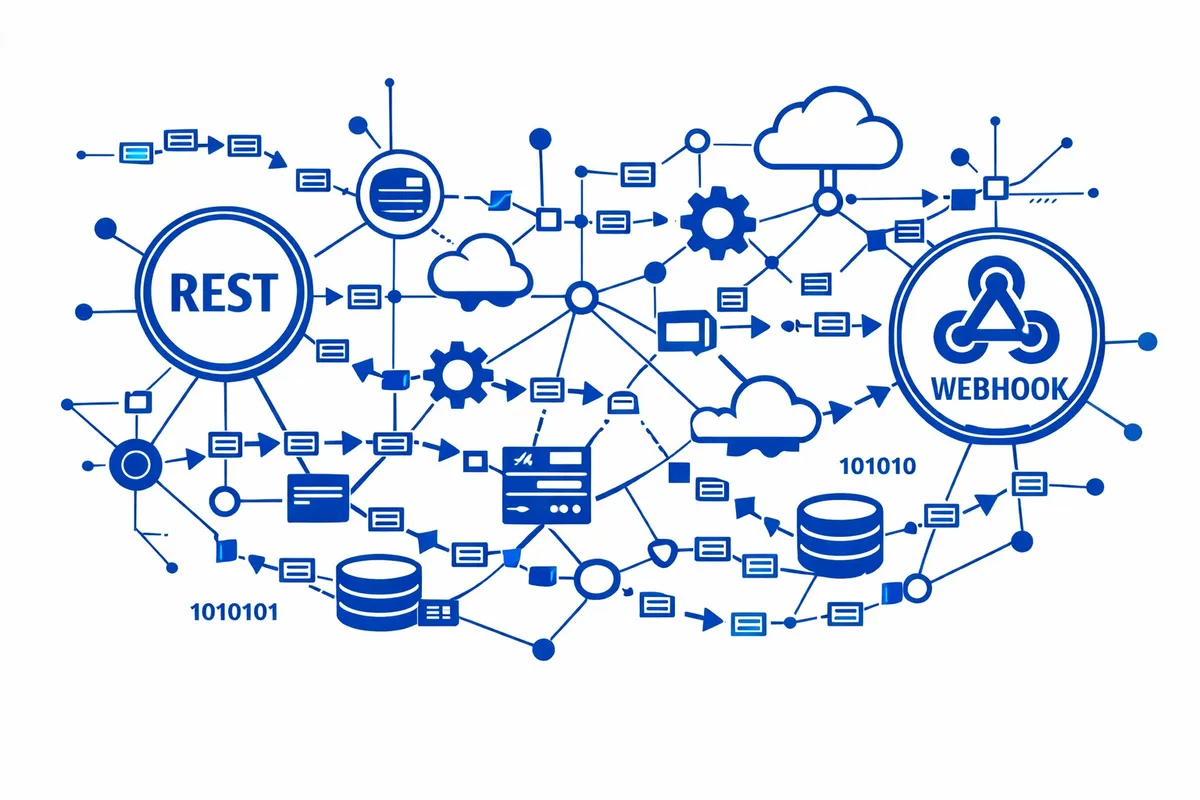
REST API development is the standard for business APIs that need broad compatibility with the widest range of client applications and integration platforms. We build REST APIs with clean, logical endpoint structures, proper HTTP method usage, consistent error handling, and complete documentation so any developer or integration platform can connect to your API without ambiguity.
GraphQL API development serves applications that need flexible data querying, particularly for frontend applications that consume different shapes of data depending on the view being rendered. A Pilsen gallery's website that needs product detail data for one page and summary data for another benefits from a GraphQL API that delivers exactly what each view needs rather than over-fetching from multiple REST endpoints.
Webhook systems handle event-driven integrations where your API needs to notify other systems when something happens rather than waiting to be asked. A webhook system for a Pilsen restaurant might notify their inventory system when a delivery is received in the POS, or notify their email platform when a new customer completes their first purchase.
API documentation is built into every delivery. An API without documentation is an API nobody can use. We produce OpenAPI specification documentation that describes every endpoint, every parameter, and every response format. That documentation becomes the reference for any developer who integrates with your API.
Authentication and security implements the access control model your API requires. OAuth 2.0 for user-delegated access, API key management for partner integrations, rate limiting to prevent abuse, and audit logging to track all API activity.
Industries We Serve in Pilsen
Restaurant groups and food service businesses operating multiple locations near 18th Street and throughout Chicago use custom APIs to connect location-specific POS systems to centralized reporting, inventory management, and kitchen operations platforms.
Community organizations managing program enrollment, volunteer coordination, and impact reporting use APIs to connect their multiple operational systems into data flows that reduce manual data handling and improve reporting accuracy.
Galleries and arts organizations use APIs to connect inventory management to e-commerce storefronts, enabling real-time availability display and purchase processing that keeps collector-facing systems current without staff intervention.
Service businesses with complex project management and client communication workflows use APIs to automate the status updates, notifications, and data synchronization that currently require manual coordination between multiple software tools.
Specialty producers and food businesses on Blue Island Avenue use APIs to connect their production tracking, inventory, and e-commerce systems in ways that standard integration platforms do not support.
What to Expect Working With Us
Discovery and design. We document the API requirements, design the endpoint structure, and create an API contract before writing code. You review and approve the design before implementation begins.
Development and testing. We build the API with test coverage for all endpoints and error conditions. We test against the real integration scenarios the API will face before delivery.
Documentation and deployment. We produce complete API documentation and deploy the API to the infrastructure we configure together, whether that is AWS, Google Cloud, or another platform.
Integration support. We support your team or your integration partners through the process of connecting to the API, helping troubleshoot any integration issues that arise during the connection process.
Maintenance and evolution. We maintain the API as your business evolves, adding endpoints, updating data models, and managing versioning so existing integrations do not break when the API changes.