How We Build AI Strategy Consulting in Pilsen
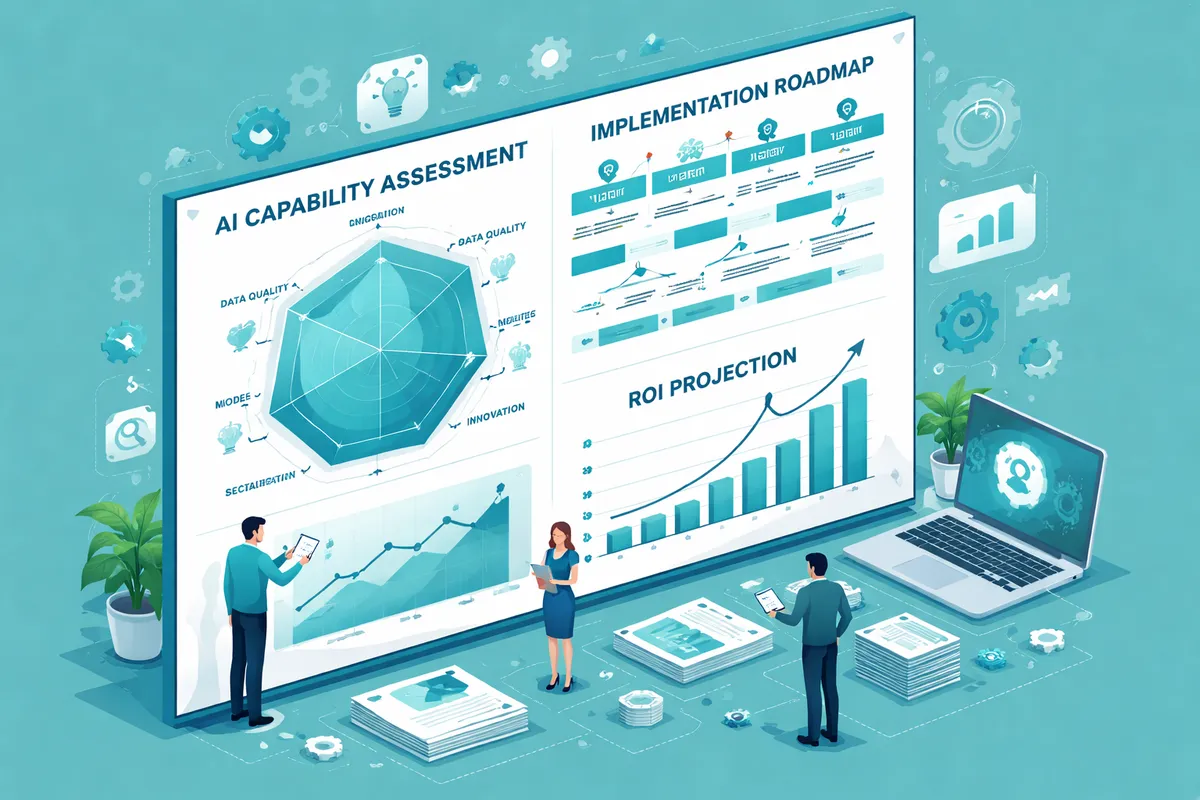
We conduct an on-site assessment of your business, reviewing operations, technology, customer interactions, data sources, and competitive position. Then we build a phased AI roadmap that starts with the highest-impact, lowest-effort opportunity and scales from there. For Pilsen businesses, we always factor in bilingual requirements, cultural calendar integration, team size constraints, and realistic budgets. Phase one addresses the problem that costs you the most time or money right now. Each subsequent phase builds on the data and infrastructure from the previous one, so the investment compounds rather than starting from scratch each time.
What to Expect Working With Us
1. On-site assessment. We visit your business, review your daily operations, and identify the friction points that cost you time and money every week. For bilingual businesses, we assess both English and Spanish customer communication workflows and identify where technology can serve both without compromising either. 2. Opportunity mapping. Every AI application relevant to your business gets evaluated by potential impact, implementation cost, and feasibility for your team size. The ranking is explained clearly in plain language. 3. Roadmap delivery. You receive a written AI strategy with prioritized recommendations, budget estimates, timelines, and projected returns. Every recommendation is sized for a Pilsen operation, not for a company on Michigan Avenue. 4. Implementation support. We guide the first phase from tool selection through launch and review results against projections before recommending the next step. Nothing advances until the previous phase is working.
Industries We Serve in Pilsen
Restaurants and food businesses along 18th Street receive AI strategies focused on demand forecasting to reduce food waste, marketing automation to fill slow periods, and operational efficiency improvements that save labor hours without sacrificing the quality of service that earns community loyalty. A taqueria near Damen completed a strategy engagement that identified demand forecasting as its highest-ROI opportunity. Implementation reduced weekly food waste by $600 and paid for itself within six weeks. The roadmap also identified bilingual chatbot deployment and delivery pricing optimization as phase two and three priorities, giving the owner a clear path forward with realistic timelines and budget estimates.
Art galleries and creative businesses near the National Museum of Mexican Art get roadmaps for collector engagement, exhibition marketing automation, and sales intelligence. Galleries with strong foot traffic but inconsistent conversion benefit most from strategies that focus on identifying and nurturing serious buyers rather than just increasing visitor volume. One gallery's strategy engagement revealed that its email list held 40 high-probability collectors who had never received targeted outreach, leading to a personalization deployment that generated three sales within the first month at a meaningful average price point.
Retail shops and community businesses on 18th Street and Blue Island Avenue receive strategies for inventory optimization, customer personalization, and search visibility tailored to small-business budgets. Most retail strategies start with data pipeline work that connects disconnected systems, because the intelligence opportunities downstream depend on having clean, unified data to work with. Getting that foundation right in phase one makes every subsequent investment faster and more effective.