How We Build AI Integration for Pilsen
AI integration projects begin with a systems audit. We document every software tool your business uses, identify what data each tool generates, and map where that data currently goes and where it could go if connected intelligently. For a Pilsen restaurant, that audit might reveal POS data, email marketing data, review platform data, reservation system data, and payroll data all sitting in separate systems with no connections between them.
From the audit, we identify integration opportunities ranked by business value. The highest-value integrations are those where connecting two existing systems produces an automatic action that previously required manual work or was simply not happening at all. We prototype the highest-value integration first, measure its impact, and expand from there.
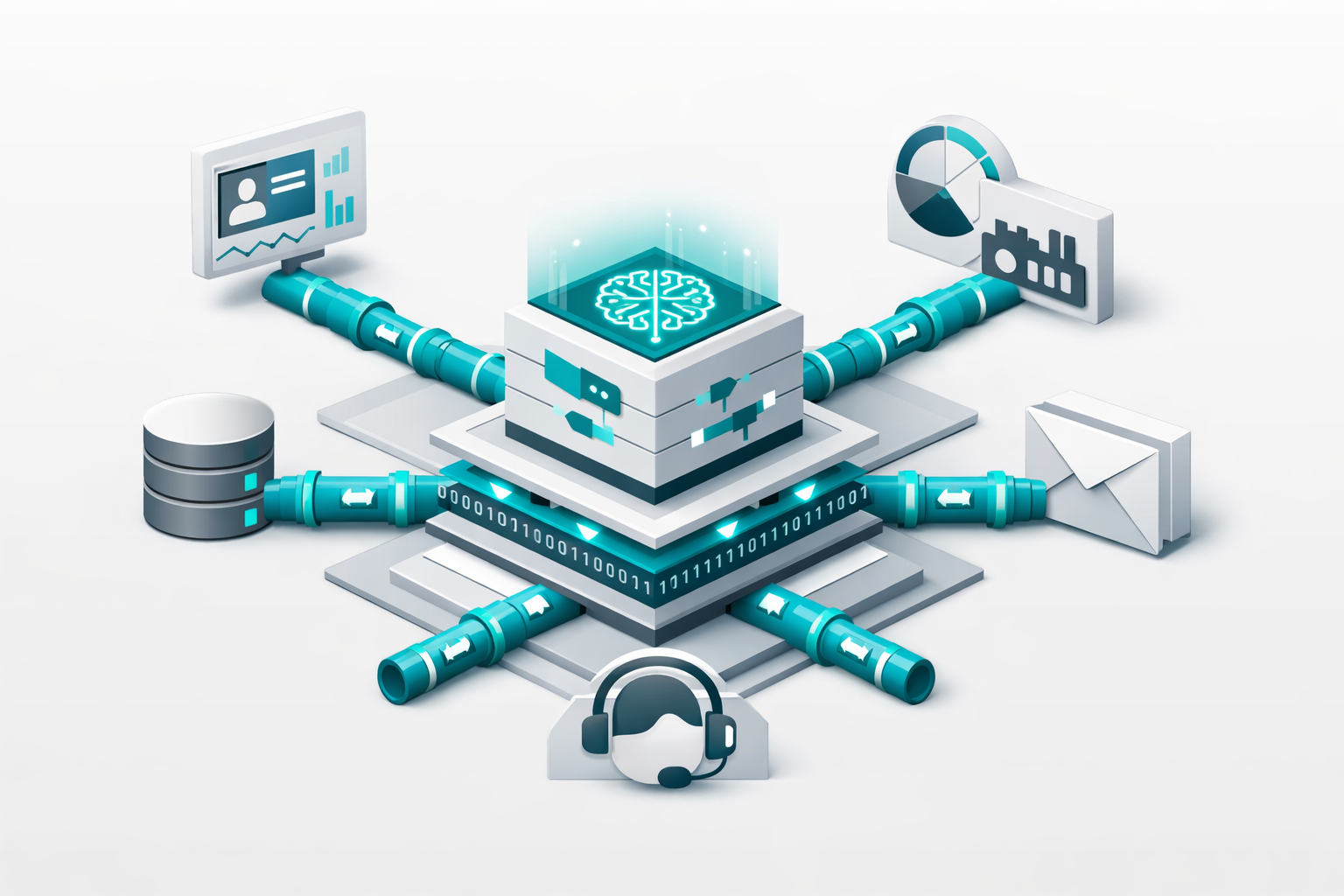
API connections between modern software platforms are often the first layer of integration. Many of the tools Pilsen businesses already use have APIs that allow data to flow between them without custom code. Connecting Square to Mailchimp so purchase data segments your email list automatically is an API integration. Connecting your reservation system to your CRM so every guest becomes a trackable contact is an API integration. We build these connections and configure the automation logic that makes data flow usable rather than just present.
Custom middleware handles the cases where direct API connections do not exist or where the logic required is more complex than off-the-shelf tools support. A gallery that needs to connect its ticketing platform, its CRM, its email platform, and its accounting system through a unified data model may require middleware that normalizes data across all four systems before routing it to each destination.
Workflow automation is the layer that converts integrated data into automated action. When the integration detects that a customer has not visited in 60 days, the workflow sends a re-engagement email. When integrated inventory data shows a popular item approaching depletion, the workflow creates a purchase order. When AI sentiment analysis of reviews identifies a service issue, the workflow alerts the manager. The intelligence exists. The integration makes it act.
Industries We Serve in Pilsen
Restaurants and food businesses on 18th Street and Blue Island Avenue use AI integration to connect POS systems to inventory tools, automate customer re-engagement from sales data, and surface operational intelligence that makes menu and staffing decisions better informed.
Galleries and studios in the Chicago Arts District use AI integration to connect visitor data to CRM, automate collector follow-up after openings, and generate the cross-system analytics that inform acquisition strategy.
Service businesses across Pilsen use AI integration to connect lead sources to CRM, automate follow-up sequences, and use AI-generated lead scoring to focus sales effort on the most promising prospects.
Community organizations use AI integration to connect donor data to communication platforms, automate grant reporting from program data, and surface the cross-database insights that inform program development.
Retail businesses on Halsted and Damen use AI integration to connect inventory, sales, and customer data in ways that inform purchasing, reduce stockouts, and improve customer retention through automated communication.
What to Expect Working With Us
Systems audit and integration map. We document what you have and identify where connections create value. You see the integration opportunity landscape before committing to any specific implementation.
Prioritized integration roadmap. We recommend the integrations that will produce the most meaningful impact first, rather than trying to connect everything at once.
Integration build and testing. We build each integration, test it thoroughly with real data, and operate a parallel validation period so you can verify accuracy before relying on automated outputs.
Workflow activation. Beyond the data connections, we build and activate the automated workflows that turn connected data into action, not just visibility.
Documentation and handoff. We document every integration we build so your team understands how the system works and can troubleshoot basic issues without depending on us for every question.