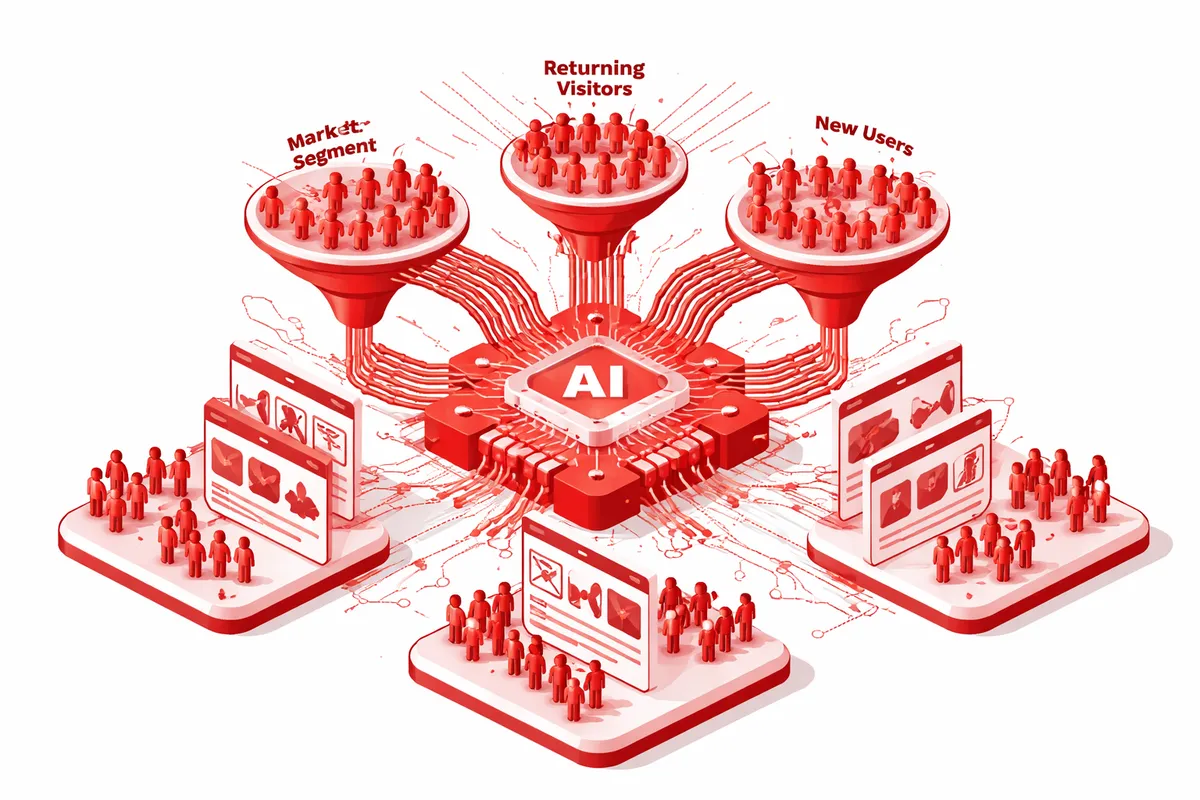
How We Build AI Content Personalization for Pilsen
We connect your email platform, social media accounts, point-of-sale data, and website analytics to build behavioral profiles for each customer. Then we deploy personalization models that adjust messaging based on language preference, visit frequency, purchase history, and seasonal context.
For restaurants and panaderias on 18th Street, this means bilingual promotions that shift between weekday lunch specials for working regulars and weekend discovery content for visitors exploring Pilsen for the first time. Loyal Spanish-speaking customers receive early access to holiday pre-orders and loyalty recognition content. English-speaking first-timers receive neighborhood guides and introductory offers that give them a reason to come back.
For art galleries near the National Museum of Mexican Art and along Halsted Street, AI personalization matches exhibition invitations to each subscriber's documented attendance history, preferred mediums, and price range. The system sends targeted previews to documented buyers before public openings and broader cultural invitations to community supporters, maintaining both revenue function and community accessibility in the same system.
For retail shops on Blue Island Avenue and 18th Street, personalization times seasonal campaigns around Pilsen's cultural calendar automatically. A gift shop near 18th Street and Damen Avenue no longer sends a single blast about Dia de los Muertos merchandise. It sends early access and pre-order options to returning seasonal customers and curated starter collections to customers who have not purchased seasonal items before.
Industries We Serve in Pilsen
Restaurants and taquerias on 18th Street and Damen Avenue use AI personalization to segment diners by visit frequency, average spend, and language preference. Spanish-speaking lunch regulars respond to loyalty rewards and early access to seasonal specials. English-speaking weekend visitors convert better with neighborhood pairing suggestions and discovery content. A personalized re-engagement sequence for a customer who has not visited in six weeks performs better than any generic discount blast at any price point.
Panaderias and Mexican bakeries near 18th Street and Ashland Avenue serve customers whose purchasing patterns follow the cultural calendar more than the standard commercial one. Pre-Dia de los Muertos bread pre-orders, Posadas season traditional items, and Three Kings Day specials each represent high-value moments where personalized outreach to the right segment drives significantly higher conversion than a single broadcast email sent to the entire list.
Art galleries and creative studios near the National Museum of Mexican Art deploy personalized marketing that separates serious collectors from cultural supporters without alienating either. Documented buyers receive pre-opening previews and private viewing invitations. Community members receive cultural programming announcements and public event details. The system manages both audiences simultaneously without the gallery director having to manually segment every invitation.
Independent retail and specialty shops on Blue Island Avenue personalize seasonal campaigns around cultural events that standard e-commerce platforms do not support natively. Businesses using AI-driven cultural calendar triggers report measurable increases in pre-order revenue and seasonal merchandise sell-through compared to single-blast campaigns, because customers who have purchased in previous years receive timely outreach before they look elsewhere.
Small breweries and creative gathering spaces near Halsted Street and 21st Street serve a bilingual audience that spans longtime Pilsen residents and newer visitors from adjacent neighborhoods. Personalized content routes Spanish-speaking regulars toward community event programming and English-speaking newcomers toward introductory offerings, preserving both the local loyalty base and the growth potential from the neighborhood's increased visibility.
Cultural nonprofits and community organizations along 18th Street use personalized communication to match donors and volunteers with programs aligned to their documented interests and contribution history. Personalization turns a single contact list into distinct engagement tracks: major donors receive impact reports; event volunteers receive scheduling updates; general supporters receive program news. Each group receives content that matches their level of involvement rather than a single message designed for no one in particular.
What to Expect Working With Us
1. Bilingual data integration and cultural calendar mapping. We connect your email platform, social accounts, point-of-sale data, and website analytics to build behavioral profiles for each customer. We map your audience around Pilsen's cultural calendar: Dia de los Muertos pre-order season, Fiesta del Sol foot traffic patterns, Second Fridays gallery walk cycles, and Posadas season commerce all require distinct content strategies built into the system before each period begins.
2. Bilingual segment development with cultural specificity. We build audience segments that reflect Pilsen's actual community composition: longtime Latino families, artists and creative workers, English-speaking newcomers near the Pink Line, and visitors from adjacent neighborhoods. Spanish and English content variants are developed with authentic cultural context. The Spanish content is not translated English. It is written for a Spanish-speaking audience from the first draft.
3. 18th Street-aligned campaign launch. Personalized campaigns go live across email, SMS, Instagram, and your website. Automated triggers are configured around Pilsen's cultural events and commercial rhythms. A restaurant near the National Museum of Mexican Art does not need to manually launch a Dia de los Muertos campaign every year. The system initiates the appropriate outreach to the appropriate segments at the right moment based on the cultural calendar built into the configuration.
4. Bilingual performance tracking and continuous refinement. We monitor engagement by language and audience segment weekly. Monthly reports show how each community group is responding, where bilingual personalization is generating the strongest results, and how cultural event timing is performing against actual customer behavior. The segments are refined quarterly as the system accumulates more behavioral data and the model improves.
Pilsen's commercial community has earned customer loyalty through decades of authentic relationship-building. AI content personalization extends that same relationship quality into digital channels. A taqueria on 18th Street near Ashland Avenue that messages its Spanish-speaking regulars with loyalty recognition and messages its English-speaking newcomers with neighborhood orientation is doing digitally what its best counter staff does in person: reading each customer and responding accordingly. The businesses in Pilsen that personalize at this level will hold their loyal base and grow their new customer segment simultaneously, without choosing between the two.