How We Build AI Compliance Governance for Pilsen
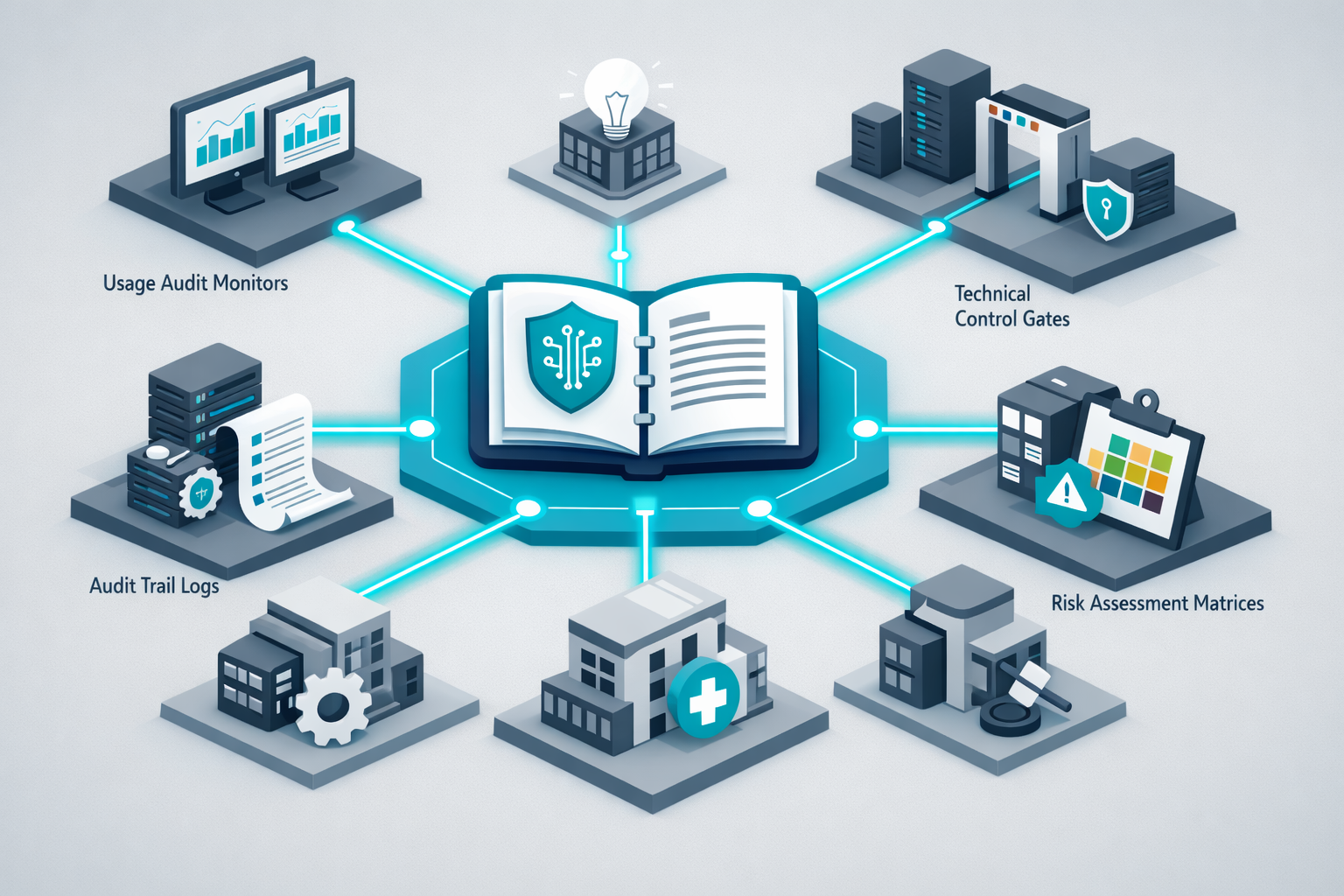
Every engagement starts with an AI usage audit. We document every AI tool in use across your organization: what it does, what data it processes, what decisions it informs, and what oversight is currently in place. Most organizations discover through this audit that their AI footprint is larger than they realized. AI tools embedded in software platforms, productivity tools, and vendor services often operate without the organization's explicit awareness.
From the audit, we assess risk. Not all AI use carries equal risk. An AI tool that generates social media caption suggestions carries different compliance exposure than an AI tool that scores loan applications or screens job candidates. We prioritize governance resources according to actual risk rather than treating every AI tool identically.
Policy development produces the documented framework that governs how your organization uses AI. This includes what AI tools are approved for use, what categories of decisions AI cannot make without human review, how AI outputs are documented and auditable, how errors or bias concerns are escalated, and how affected individuals can contest AI-informed decisions. Policies need to be specific enough to be operational, not just aspirational.
Technical controls translate policy into practice. We work with your technical team or implement controls directly to enforce the governance policies through system configuration, access controls, logging, and human-in-the-loop requirements. A policy that says "AI cannot make final hiring decisions" needs a technical implementation that prevents final hiring decisions from being executed without a documented human review.
Documentation and audit trails create the record that demonstrates compliance. When a regulator, funder, or community member asks how an AI-informed decision was made, the answer needs to be retrievable. We build the logging and documentation systems that make that possible.
Industries We Serve in Pilsen
Community organizations and nonprofits connected to the Pilsen Neighbors Community Council, Rudy Lozano Branch Library programs, and neighborhood service providers use AI governance frameworks to demonstrate responsible AI use to funders and regulators, and to ensure that AI tools serve rather than undermine their communities.
Healthcare and clinic organizations serving Pilsen's residents use AI compliance governance to navigate federal requirements around AI in clinical settings, including FDA guidance on AI-assisted diagnostic tools and CMS requirements for AI in billing and authorization systems.
Small businesses on 18th Street and Halsted using AI for hiring, customer service, or credit-adjacent processes use governance frameworks to manage compliance with Illinois employment AI disclosure requirements and federal fair lending standards.
Professional services firms in Pilsen's growing commercial corridors use AI governance to satisfy enterprise client requirements that increasingly include vendor AI usage policies as part of due diligence and contract requirements.
Education-adjacent organizations serving Pilsen's families use AI compliance frameworks to manage FERPA obligations around student data processed by AI tools and to meet the requirements of school district partnerships.
What to Expect Working With Us
AI usage audit. We document your current AI footprint across all tools and platforms in use. You see the complete picture of where AI is touching your operations and what compliance obligations may apply.
Risk assessment and prioritization. We rank your AI uses by compliance risk and recommend which areas to address immediately versus which can be addressed in subsequent phases.
Policy development. We draft your AI usage policies in language that is both legally grounded and operationally usable. Policies that sit in a shared drive and are never consulted are not governance. We build policies that your team can actually use.
Implementation support. We work with your team to implement the technical controls and documentation systems that make your policies operational.
Training and ongoing review. We train your staff on your AI governance framework and establish a review schedule so the framework stays current as AI tools and regulations evolve.