How We Build Accounting Automation for Pilsen
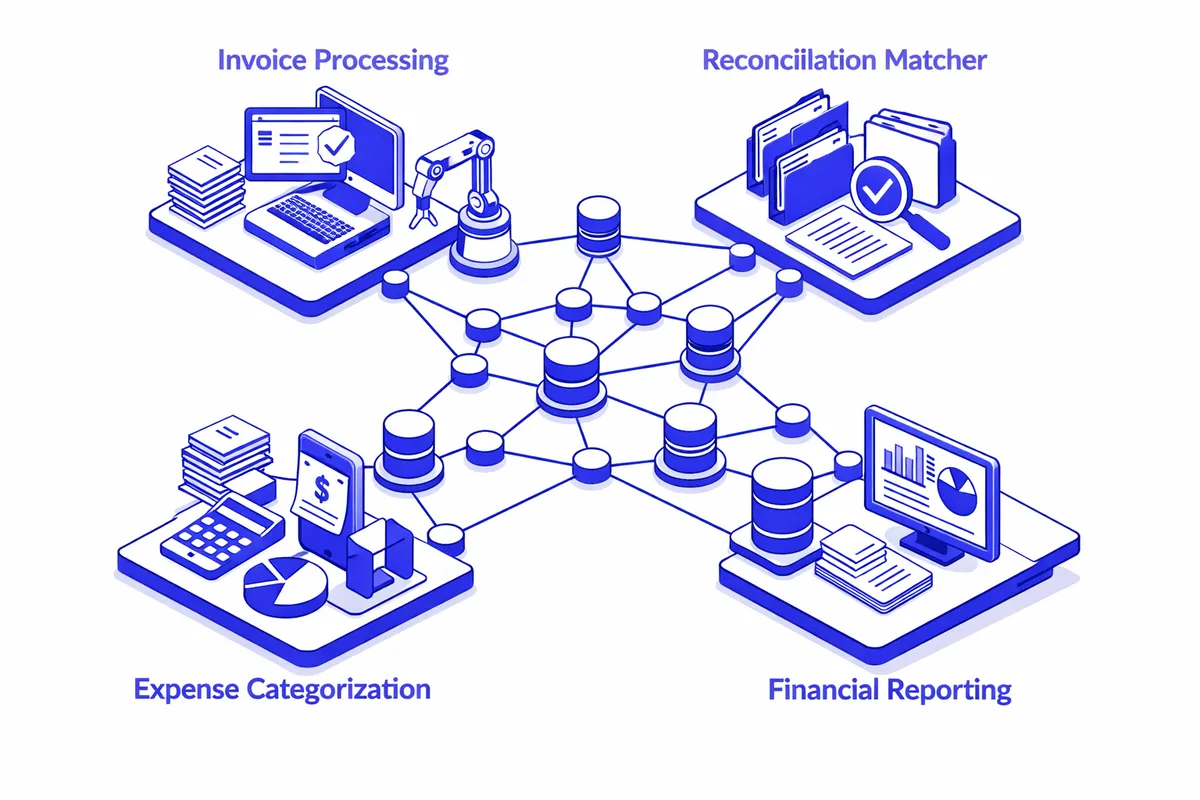
Every accounting automation project starts with a process audit. We document every step in your current financial workflow: how invoices are created, how payments are received and recorded, how vendor bills are entered, how bank accounts are reconciled, how payroll is processed, and how reports are generated. That documentation reveals exactly where manual effort is concentrated and where automation will produce the biggest return.
For most Pilsen small businesses, the high-value automation targets are consistent: automatic invoice creation from sales data, payment application when funds clear, bank feed reconciliation, vendor bill capture from email, and automatic sales tax calculation. We build each of these connections between your existing systems so data moves without anyone touching it.
POS integration is particularly important for Pilsen's restaurant businesses. Modern POS systems including Toast, Square, and Clover generate detailed sales data that should flow directly into your accounting system without manual export and import. We build those connections so daily sales, tip totals, and payment method breakdowns appear in your accounting software automatically at end of day.
Payroll integration eliminates the manual step of entering payroll totals into your accounting system after each pay run. We connect your payroll processor, whether that is Gusto, ADP, or another platform, directly to your accounting software so journal entries post automatically.
Vendor bill automation uses email parsing and document capture to pull invoice data from supplier emails and upload it to your accounting system with the correct vendor, amount, and due date already populated. For restaurants on 18th Street receiving multiple vendor invoices per week, this alone saves significant time.
Industries We Serve in Pilsen
Restaurants and taquerias on 18th Street and Blue Island Avenue use accounting automation to manage high daily transaction volumes, reconcile split payment types, track food and beverage cost against sales, and produce the weekly profit and loss reports their owners need to make purchasing decisions.
Galleries in the Chicago Arts District use accounting automation to handle consignment sales, artist commission calculations, event ticket revenue, and the irregular cash sales that come with gallery openings and art fairs.
Service businesses across Pilsen, from contractors to professional services providers operating out of storefronts along Ashland and Racine, use accounting automation to invoice clients automatically, track payment status, and send reminders without manual follow-up.
Retail shops on Halsted and Damen use accounting automation to reconcile daily sales against inventory costs, manage vendor payment schedules, and produce the monthly reporting that informs purchasing decisions.
Community organizations connected to the neighborhood use accounting automation to manage grant-funded project accounting, donor acknowledgment letters, and the restricted fund tracking that funders require.
What to Expect Working With Us
Process audit and scoping. We spend time understanding exactly how your business currently handles financial transactions before recommending anything. We identify the three to five automation opportunities that will produce the most significant time savings and accuracy improvements for your specific situation.
System connections and testing. We build the integrations between your existing tools and test them thoroughly before you rely on them for real transactions. We run parallel processing during the transition period so your manual process and the automated process run simultaneously until you are confident the automation is working correctly.
Staff training. Accounting automation changes daily routines. We train whoever handles your books on how to review automated entries, how to handle exceptions that require manual attention, and how to identify when something looks wrong. The goal is confident use, not dependency on us for every question.
Ongoing support. We provide ongoing support as your systems evolve, whether that is adding new vendor connections, adjusting automation rules when your business changes, or troubleshooting reconciliation issues that arise.