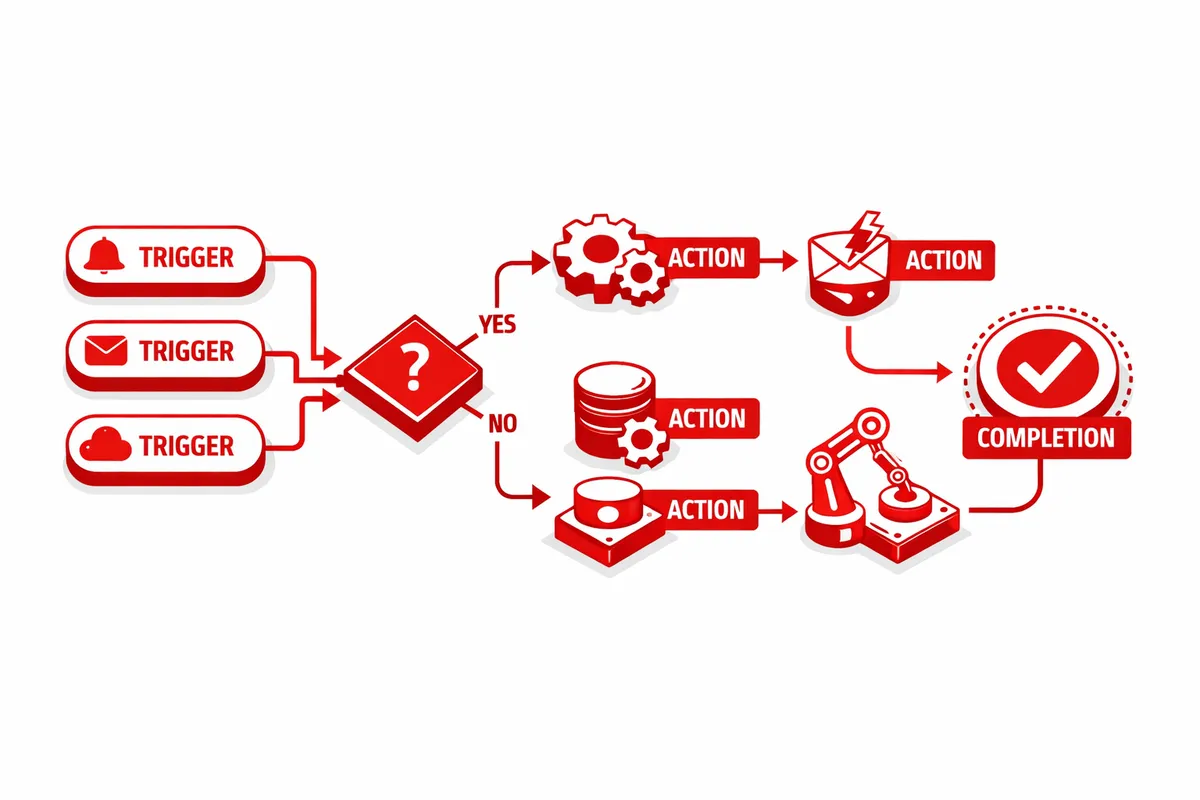
How We Build Workflow Automation for Old Town Businesses
We begin by understanding the specific operational complexity each Old Town business faces. For multi-revenue-stream restaurants, the complexity lies in the shared resources, ingredients, equipment, staff, that must be allocated across dining room, events, and catering simultaneously. For entertainment venues, the complexity is in the event lifecycle, where dozens of tasks must execute in sequence over weeks of lead time. For professional services, the complexity is in client lifecycle management across scheduling, service delivery, and billing.
We map every process, identify the handoff points where manual coordination currently occurs, and design automations that bridge those gaps. We prioritize the automations that have the highest impact on daily operations, which for Old Town businesses typically means production planning for restaurants, event lifecycle management for venues, and client communication for professional services.
We integrate with the platforms each business uses, connecting reservation systems, POS platforms, event management tools, scheduling software, accounting systems, and marketing platforms into a unified automation framework.
Industries We Serve in Old Town
Restaurants along Wells Street automate production planning, purchasing, inventory management, and multi-stream revenue coordination. A Wells Street restaurant with dining, events, and catering operations eliminated the morning reconciliation process entirely by connecting all three revenue streams into a single production planning automation. The system generates a unified prep list that accounts for dinner covers, event menus, and catering orders, calculates total ingredient requirements, compares against current inventory, and generates purchase orders for any shortfalls. Food cost tracking runs across all three streams simultaneously, giving the chef visibility into cost performance by revenue line rather than just an aggregate number.
Entertainment venues including comedy clubs, performance spaces, and event venues automate booking management, marketing campaign deployment, ticket operations, and settlement workflows. When a show is booked, the automation creates the event across ticketing, marketing, and internal scheduling platforms simultaneously. The promotional campaign triggers at configured intervals before the show date. Ticket sales data flows to the finance team in real time. Day-of logistics checklists generate for the technical crew. Post-show settlement calculations and artist payments prepare automatically from ticket revenue data.
Professional services in the Old Town Triangle and along Sedgwick Street, including therapists, coaches, consultants, financial advisors, and small law practices, automate client scheduling, intake documentation, session notes management, and billing. A therapist's practice automated the entire intake process: when a new client books an initial session, the system sends the intake forms, collects completed documents, flags any items requiring clinical review before the session, sends the appointment reminder, and prepares the session file. The therapist walks into the first session with everything needed rather than spending the first ten minutes reviewing paperwork.
Retail businesses along North Avenue automate inventory management, customer communication, and event-driven marketing. Proximity to The Second City and other entertainment venues means Old Town retail benefits from show-night foot traffic. Automation triggers promotional messages and social media posts timed to show schedules, driving foot traffic to retail businesses during the natural flow of entertainment-driven visitors through the neighborhood.
What to Expect Working With Us
1. Operational complexity assessment. We document the specific operational challenges your Old Town business faces, particularly where multiple revenue streams or service lines share resources and create coordination complexity.
2. Process mapping and prioritization. Every manual process gets documented and ranked by impact. For restaurants, production planning and purchasing typically rank highest. For venues, event lifecycle management. For professional services, client communication and billing.
3. Platform integration. We connect your existing tools so data flows between them. Most Old Town businesses use 4 to 10 platforms that currently require manual coordination.
4. Core automations live in two weeks. Production planning, notification workflows, daily reporting, and high-frequency task automations deploy first.
5. Full deployment in four to six weeks. Multi-step event management workflows, seasonal automations, and complex operational processes complete the build.