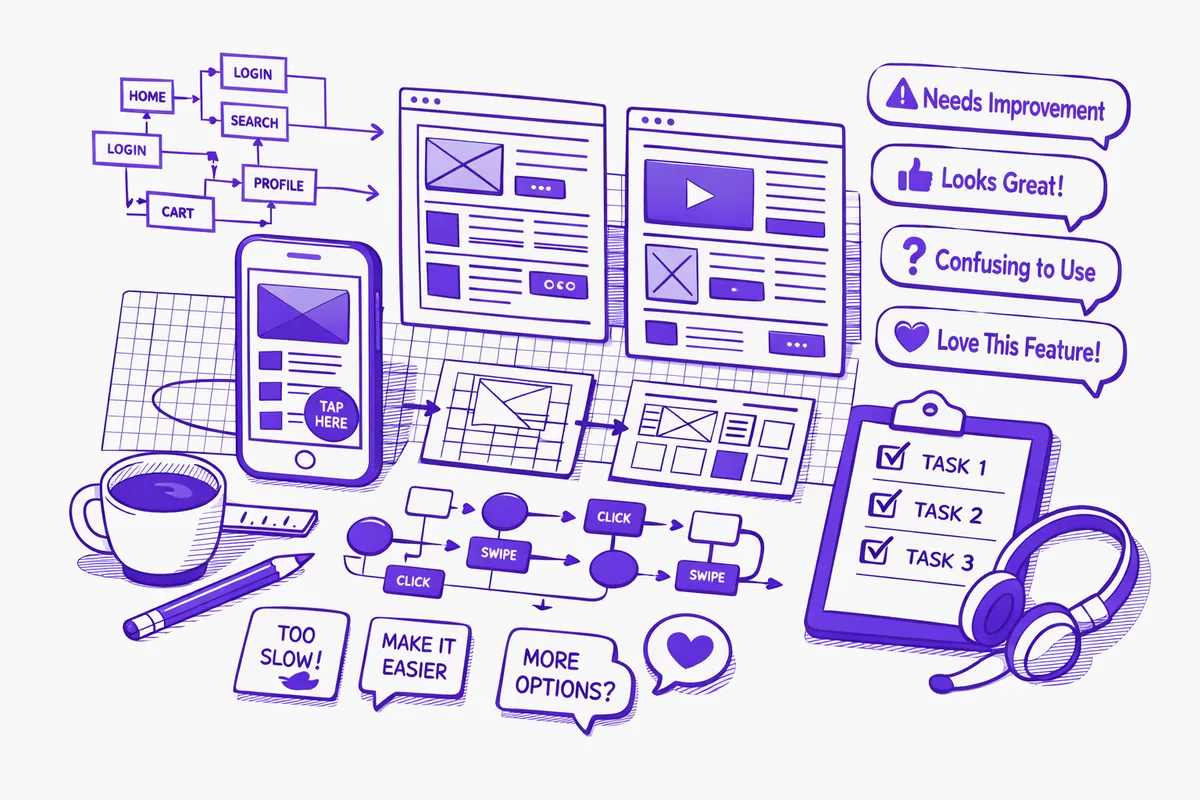
How We Build UI/UX Design for Old Town
UI/UX engagements for Old Town businesses start with user research. We do not design for imagined users. We talk to your actual customers: the comedy club attendees on Wells Street, the dental patients near LaSalle Drive, the boutique shoppers who browse the Old Town Triangle on a Saturday. We learn how they describe their needs, what language they use to navigate decisions, and where they get stuck in current digital interactions with your business or your category.
From the research, we define the user flows that matter most: the path from discovery to ticket purchase, from symptom to appointment booked, from product discovery to checkout. Each flow is mapped with the specific friction points and decision moments that research identified. The design work is then focused on resolving those friction points, not on adding features or aesthetic complexity that users did not ask for.
We produce interactive prototypes before any development work begins. The prototype is realistic enough that users can test it as if it were the real product, but inexpensive enough to change based on what testing reveals. For a ticketing interface for a Wells Street venue, we test the prototype with actual comedy fans who live in the neighborhood and discover whether the flow works before a developer writes a line of code. Changes at the prototype stage cost a fraction of what they cost after development.
Industries We Serve in Old Town
Comedy clubs and performance venues along Wells Street need ticketing and event management interfaces designed for mobile conversion. The primary user is someone on their phone at 9 PM deciding whether to come out this weekend. The ticketing flow needs to show available shows, communicate the performer and format clearly, display remaining seats with appropriate urgency, and complete the purchase in three taps. We design for that user, at that moment, on that device.
Medical and dental practices near LaSalle Drive operate digital interfaces on two sides of the transaction: the patient-facing portal and the staff-facing practice management view. Both benefit from UX design that reduces cognitive load. A patient who can schedule, fill out intake forms, view their treatment history, and pay their bill from a single portal interface without calling the front desk has a better experience. Front desk staff who can process that patient without switching between three software screens serve more patients with less administrative friction.
Interior design studios and project-based businesses in the Old Town Triangle use UX design for client portals and project communication interfaces. A client portal that gives homeowners a clear view of their project's status, pending decisions, and outstanding invoices reduces the volume of status-check communications that consume a project manager's time. Designed well, the portal becomes a premium service differentiator. Designed poorly, it becomes one more thing clients cannot figure out how to use.
Boutique retailers on Wells Street extending their business online need e-commerce interfaces that translate the in-store experience into a digital context. The discovery and curation that makes a boutique worth visiting in person needs a UX equivalent: curated collections, editorial photography, and a purchase flow that matches the premium positioning of the merchandise. We design retail interfaces that convert the browsing visitor into a buyer without making the shopping feel transactional.
Real estate offices in Old Town dealing with properties on LaSalle Drive and Sedgwick Street use UX design for client-facing search and transaction management interfaces. A home search interface designed for buyers actively looking in Old Town surfaces neighborhood-specific filters, integrates school and walkability data that Near North Side buyers care about, and presents listings in a format that makes the neighborhood's architectural character legible, not just the address and price.
Professional services firms with offices near the Old Town Triangle and LaSalle Drive use UX design for client intake, proposal presentation, and project collaboration interfaces. A professional services firm that can send a proposal through a polished digital interface, collect a signature and deposit payment in the same flow, and onboard the client into a project portal demonstrates operational sophistication that differentiates it from competitors still managing these interactions over email.
What to Expect Working With Us
1. User research and journey mapping. We conduct research with actual users of your digital product or, for new products, with representative users in your target audience. Research outputs are a journey map showing the current experience, a friction inventory listing the highest-priority problems to solve, and a prioritized feature brief that frames what the redesign or new design needs to accomplish.
2. Information architecture and flow design. Before visual design begins, we map the navigation structure and primary user flows. This step determines what lives where in the interface and in what sequence. Changes at the IA phase are inexpensive. Changes to information architecture after visual design is complete are expensive.
3. Prototype and usability testing. We build an interactive prototype and test it with five to eight users from your target audience. Testing identifies whether the design solves the problems the research identified. We iterate on the prototype, not on the built product. Final prototype approval is the sign-off that development should begin.
4. Design system and developer handoff. Final UI design is delivered in a component library with documented spacing, typography, and interaction states. Developer handoff includes annotated specs so the development team can implement the design accurately without design team involvement at every decision. We stay available for design QA during development to confirm that the built product matches the approved design.