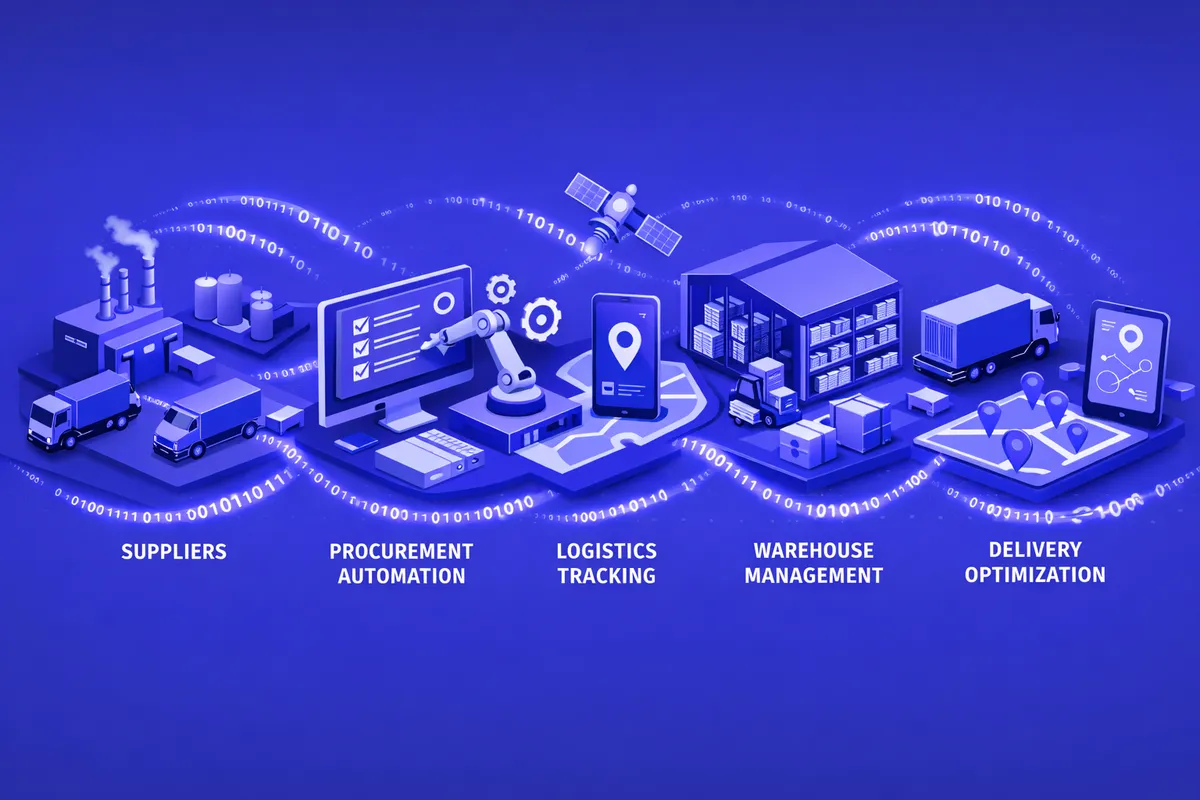
How We Build Supply Chain Automation for Old Town
Supply chain automation for Old Town operators begins with a vendor and workflow inventory that reflects how these businesses actually run. We catalog every vendor relationship: contract terms, ordering frequency, lead times, historical performance, and the existing process for ordering, receiving, and reconciling each category. For a Wells Street restaurant, that catalog spans food and beverage distributors, cleaning supply vendors, paper goods suppliers, equipment maintenance contractors, and the various specialty vendors that serve the entertainment-adjacent hospitality model.
From the vendor catalog, we map the procurement workflows to find where informal coordination creates risk. Most Old Town operators have evolved procurement processes that work when things go right and fracture under pressure. The bar manager who personally calls the distributor every week, the restaurant owner who tracks purchase orders in a shared spreadsheet, the boutique buyer who coordinates overseas orders through email and a personal calendar: these processes carry institutional knowledge that disappears with personnel changes and do not scale with the business.
Old Town's entertainment character shapes automation priority. For a comedy club like Second City or a bar feeding the post-show crowd at Zanies, the F&B purchasing cycle needs to be calibrated against the show calendar, not just average weekly demand. A week with four sold-out shows requires different par levels than a week with two shows and a private event. Automation that accounts for the event calendar does not just save purchasing time; it improves the guest experience by ensuring supply meets demand.
We integrate supply chain automation with your accounting system so purchase orders generate expected expense records automatically, received goods update inventory without manual entry, and invoices route for payment only after reconciliation against purchase orders and receiving records.
Industries We Serve in Old Town
Comedy clubs and live entertainment venues along Wells Street manage procurement for bar operations, kitchen supply, event staffing materials, and venue maintenance across a calendar where show demand determines purchasing volume. Automated bar inventory monitoring tied to the event calendar generates purchase orders calibrated to expected show attendance rather than historical averages. When a sold-out Saturday at Second City requires twice the normal bar par, the system accounts for it rather than requiring the bar manager to adjust manually.
Restaurants and bars on Wells Street and North Avenue manage procurement cycles where food and beverage distributor reliability directly affects kitchen and service quality. Automated invoice reconciliation against contracted distributor pricing catches price discrepancies at receipt. Automated reorder point management triggers purchase orders when inventory falls below par rather than requiring a manager to notice depletion and initiate the order.
Boutique retailers and specialty shops near Old Town Triangle manage procurement for product categories with different vendor lead times, minimum order quantities, and seasonal demand patterns. Automated reorder management accounts for the seasonality in Old Town's retail foot traffic, adjusting par levels for the spring and summer seasons when Lincoln Park Zoo proximity drives neighborhood traffic rather than treating every month identically.
Interior design firms and home furnishings studios near Sedgwick Street manage vendor relationships across furniture manufacturers, fabric suppliers, freight carriers, and installation contractors. Automated vendor performance tracking builds documented records of delivery accuracy and damage rates that inform future sourcing decisions with the data that currently exists only in a designer's memory.
Medical and dental practices along LaSalle Drive and Eugenie Street manage procurement for clinical supplies, equipment maintenance contractors, and facility services. Automated compliance-aware procurement tracks supply vendor certifications alongside standard purchase order management, ensuring that clinical supply vendors maintain current certifications before orders are placed.
Real estate and property management offices in Old Town manage procurement for maintenance contractors, facilities services, and renovation materials across a portfolio of historic 19th-century brick properties with different maintenance profiles. Automated contract renewal tracking ensures maintenance agreements are reviewed before auto-renewal dates rather than discovered after the renewal has already occurred at the previous rate.
What to Expect Working With Us
1. Vendor and procurement process inventory. We spend the first two weeks documenting your complete vendor landscape and current procurement workflows. For Old Town hospitality operators, this inventory specifically captures the relationship between the entertainment calendar and purchasing volume so the automation layer can account for show-driven demand from the start.
2. Automation architecture and integration design. We design the automation against your actual workflows and identify the integration points with your accounting system, inventory management platform, and vendor communication channels. For most Old Town restaurants and venues, the F&B purchasing integration is the highest-priority component because it removes the daily manual ordering cycle that consumes the most kitchen and bar management time.
3. Phased build with priority on highest-impact workflows. We build and deploy automations in order of business impact. For a Wells Street comedy venue, that typically means event-calendar-aware bar inventory management first, followed by cleaning and supplies automation, followed by contractor performance tracking. For a boutique retailer, it means seasonal inventory management first, followed by vendor performance tracking.
4. Vendor communication rollout and performance monitoring. Effective supply chain automation includes vendor-facing components: purchase order transmission, acknowledgment tracking, and delivery confirmation. We manage the vendor rollout communication and provide a monitoring dashboard showing the vendor performance data that drives better purchasing decisions over time.