How We Build RAG Systems for Old Town
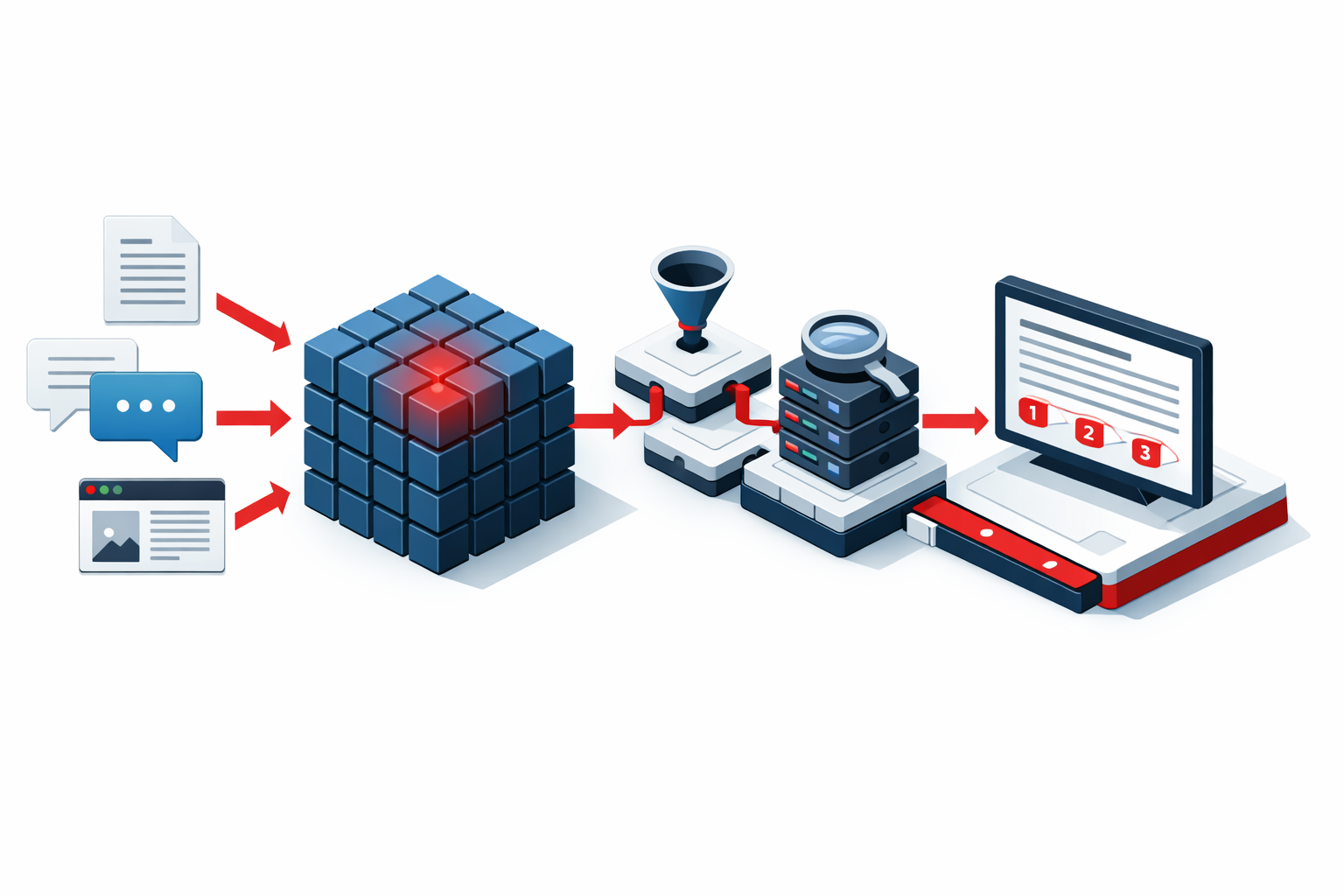
Knowledge audit and documentation. We begin by identifying the institutional knowledge most critical to your operations and documenting it systematically. For a comedy club, this means performer coordination procedures, venue operation standards, customer service policies, and neighborhood knowledge. For a restaurant, it means the menu, ingredient sourcing, preparation approaches, wine program knowledge, and service standards. We work with experienced staff to capture knowledge that lives in institutional memory.
Knowledge base structuring and indexing. Raw documentation becomes more useful when structured for RAG retrieval. We organize knowledge by topic, context, and query pattern so retrieval accurately matches knowledge to the question being asked. A staff member asking "what does the kitchen use for the mushroom risotto" needs a different retrieval path than a customer asking "is there anything on the menu without gluten." We structure knowledge bases to serve both internal staff and external customer queries accurately.
RAG system development and retrieval tuning. We build the retrieval and generation system connecting the knowledge base to the query interface. Retrieval tuning is critical: a system that retrieves vaguely relevant documents and generates plausible-sounding but inaccurate answers is worse than no system. We tune retrieval to surface precisely relevant knowledge and configure generation to cite retrieved knowledge accurately.
Interface and deployment design. We design query interfaces appropriate to each use case. Staff-facing RAG interfaces need to be fast and accessible during service. Customer-facing interfaces need to be conversational and representative of your business's voice. Website-embedded knowledge bases need to match your existing web presence. We design each interface for the specific user and context.
Knowledge base maintenance and expansion. Knowledge bases require maintenance as offerings change, policies evolve, and new institutional knowledge is developed. We design update processes appropriate to your team's capacity and the rate at which your knowledge base needs to evolve, and provide ongoing support for knowledge base maintenance.
Industries We Serve in Old Town
Comedy clubs and entertainment venues along Wells Street and in the Old Town entertainment corridor build RAG systems on performer history and profiles, venue operation procedures, show-specific technical requirements, customer service policies, and neighborhood knowledge for guest recommendations. Staff new to the venue answer performer and venue questions with the confidence of five-year veterans. Customer-facing knowledge bases help website visitors get accurate information about shows, tickets, and venue experience without staff involvement.
Restaurants and bars throughout Old Town, the Old Town Triangle, and North Avenue build RAG systems on menu knowledge including ingredients, preparation, sourcing, and allergen information; wine and beverage program knowledge with producer, region, and pairing intelligence; operational procedures and service standards; neighborhood knowledge for guest recommendations; and supplier and procurement knowledge. New servers access the same menu knowledge that experienced servers have developed. Customer-facing chat functions answer ingredient and preparation questions without requiring kitchen interruption.
Art galleries and exhibition organizations near North Avenue and throughout Old Town build RAG systems on artist biographies and career documentation, exhibition histories and critical context, artwork specifics including medium and provenance, acquisition process information, and the curatorial perspective that frames the gallery's programming approach. Gallery staff answer detailed collector questions with depth that matches the gallery's expertise. Website-embedded knowledge enables pre-visit research that converts curious visitors into engaged guests.
Boutique retailers and specialty shops near Eugenie Street and the Old Town Triangle build RAG systems on product sourcing, materials, and production context; return and exchange policies; seasonal buying perspective and curatorial rationale; and the brand and designer relationships that inform the shop's selection. Staff answer specific product questions with the depth that the buyer's expertise provides. Customer-facing product information enables online research before in-store visit.
Interior design and architecture studios in Old Town's brownstone and loft buildings build RAG systems on materials and product knowledge including vendors and specifications; project methodology capturing how the studio approaches different project types; client FAQ documentation; and portfolio documentation with project context and design rationale. New project managers access institutional knowledge about vendors and processes. Client-facing systems answer process questions that would otherwise require principal time.
Boutique hotels and hospitality venues adjacent to Lincoln Park and throughout Old Town build RAG systems on property information including room details, amenities, and operational specifics; neighborhood knowledge for guest recommendations covering restaurants, entertainment, and Lincoln Park area attractions; guest service policies; and local logistics including parking, transportation, and area navigation. Guest service staff deliver consistent, accurate neighborhood knowledge regardless of personal familiarity.
What to Expect Working With Us
1. Knowledge audit and documentation sessions. We conduct structured sessions with your most experienced staff to document institutional knowledge in the categories most critical to your operations. We interview, record, and document knowledge that lives in individual experience. Knowledge documentation typically takes two to four weeks depending on depth and the number of domains covered.
2. Knowledge base structuring and RAG system development. We organize documented knowledge for RAG retrieval, build the retrieval and generation system, and tune retrieval accuracy against test queries from your actual knowledge domains. System development typically takes three to five weeks.
3. Interface development and deployment. We build the staff-facing and customer-facing interfaces appropriate to your use cases and deploy to production with initial accuracy monitoring. Interface development typically takes two to three weeks.
4. Knowledge base maintenance and expansion support. We provide ongoing support for knowledge base updates as your offerings and policies evolve, and assist with expansion to additional domains as initial deployments demonstrate value. We conduct quarterly accuracy reviews and refresh content to maintain retrieval quality.