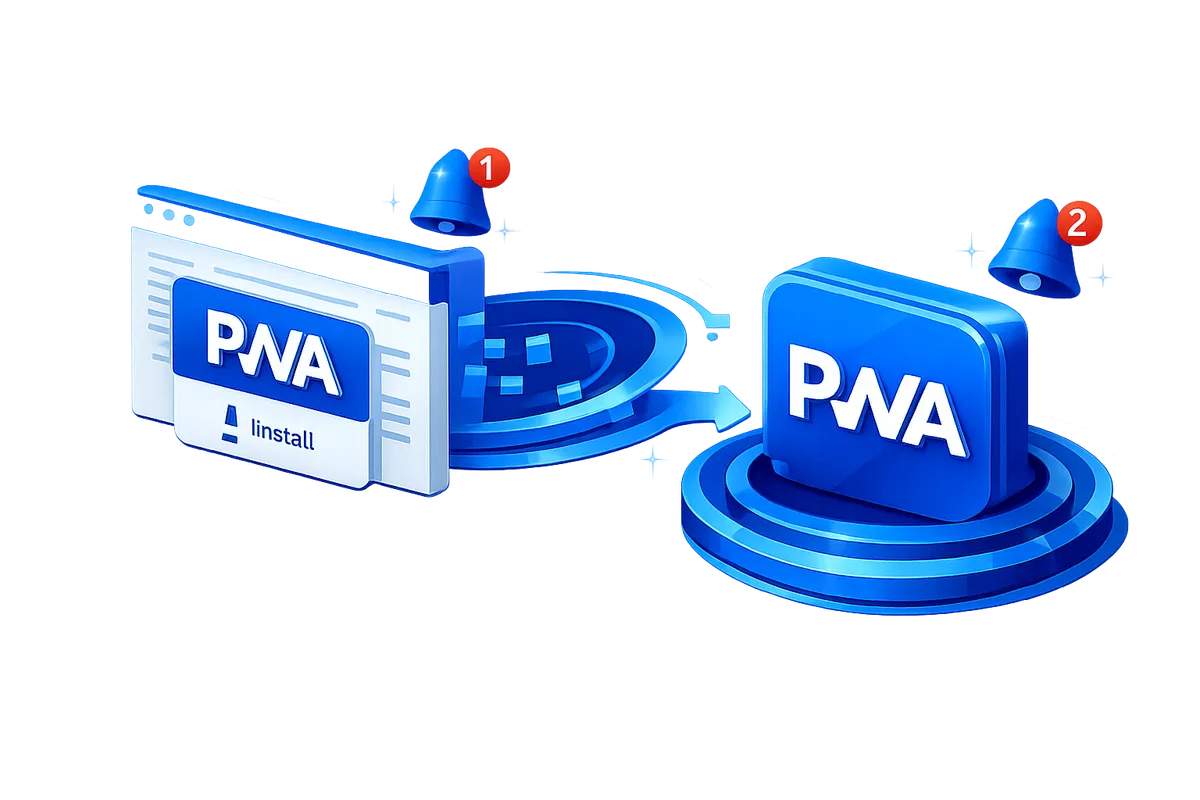
How We Build Progressive Web Apps for Old Town
Old Town clients typically have established customer relationships and want to deepen them rather than acquire new audiences through digital. The PWA architecture for this context prioritizes loyalty mechanics, push notification strategy, and reservation or booking workflows over broad discovery features.
We design around the specific flows that Old Town customers use most: checking tonight's show lineup, reserving a table for Friday, browsing new arrivals in a boutique before visiting. These flows are mapped in detail, simplified to their minimum steps, and built with the kind of performance that makes the experience feel effortless rather than digital.
Push notification strategy is part of the build engagement, not an afterthought. For a comedy club that announces new headliners, we design the notification architecture to match the booking calendar and the customer's interest profile. For a restaurant that fills cancellations, we build the notification trigger into the reservation system. The push notification channel is only valuable if it is used with precision.
Industries We Serve in Old Town
Comedy clubs and live entertainment venues along Wells Street face a specific problem: customers decide to see a show hours before it starts, and the marketing window for last-minute tickets is narrow. A PWA with a push notification channel to an audience of fans who have installed the app gives Second City and Zanies a direct line to people who have already demonstrated interest. A push notification at 5 PM about tonight's 8 PM show with remaining seats drives walk-up sales from an audience that is already in the neighborhood.
Independent restaurants and bars on Wells Street use reservation and loyalty PWAs to compete with OpenTable's data collection and Yelp's platform dependency. A restaurant that processes reservations and collects loyalty points through its own PWA owns the customer data and the communication channel. A push notification for a reservation reminder, a birthday offer, or a new chef's tasting menu reaches a self-selected audience of regulars without paying platform fees for that access.
Boutique retail and home goods stores near Sedgwick Street and North Avenue use PWAs to extend the in-store relationship. A boutique whose regular customers follow specific designers or categories uses push notifications to announce new arrivals before they are published anywhere else. Customers who install the PWA are the business's most engaged audience, and reaching them directly through push rather than through social media algorithm is both more reliable and more personal.
Medical and dental practices near North Avenue use patient portal PWAs that modernize administrative processes without requiring patients to download a health platform app. A dentist whose patients are professional North Side residents expects a portal that reflects that practice's quality. An installable PWA with appointment management, treatment plan access, and push reminders positions the practice digitally alongside its clinical standard.
Interior design and home furnishings businesses serving Old Town's owner-occupied residential market use project management PWAs that give clients visibility into renovation and design projects. A client who can check the status of a kitchen renovation in their Eugenie Street row house from their phone, approve material selections, and receive push notifications at project milestones feels engaged rather than anxious throughout the project.
Real estate agents and small property management firms in Old Town use client-facing PWAs to differentiate their services. An agent who provides a property search PWA with custom criteria saved from the home screen and push notifications for new matching listings gives clients a better tool than a generic portal. A property manager whose tenants can submit maintenance requests and receive status updates through a PWA reduces phone calls and improves tenant satisfaction.
What to Expect Working With Us
1. Customer journey mapping. We trace the three to five digital interactions that matter most for your Old Town business: the reservation lookup, the loyalty check-in, the show lineup review. These become the core flows in the PWA, and everything else is secondary. For businesses with strong existing customer relationships, this phase often reveals which current digital touchpoints are creating friction that the PWA will eliminate.
2. Notification strategy design. Before writing a line of code, we define your push notification calendar for the first 90 days. How often will you send? For what types of events? What categories will customers be able to opt into selectively? A comedy club and a boutique have different notification rhythms, and the architecture reflects those differences. Over-notification kills opt-in rates; under-notification wastes the channel's value.
3. Build and loyalty integration. We build the PWA and integrate it with your reservation system, loyalty database, or point of sale as needed. For a Wells Street restaurant using a standard restaurant management platform, we integrate through that platform's API. For a boutique with a simpler system, we may build lightweight loyalty infrastructure directly into the PWA.
4. Launch campaign and ongoing optimization. We help you convert existing customers to PWA installs through an in-store and digital campaign. For a Wells Street bar, this means table cards, receipt inserts, and a social media push. For a boutique, it means staff training and an in-store install experience. We track installation rates and notification engagement and adjust the strategy based on what the data shows.