How We Build No-Code Platform Development for Old Town
Old Town's operational problems are specific. We start every project by understanding the exact workflow that is creating friction: the show-night coordination that depends on text messages, the class enrollment that gets managed in a shared spreadsheet, the staff scheduling that requires calls to everyone on the shift list when a bartender calls out.
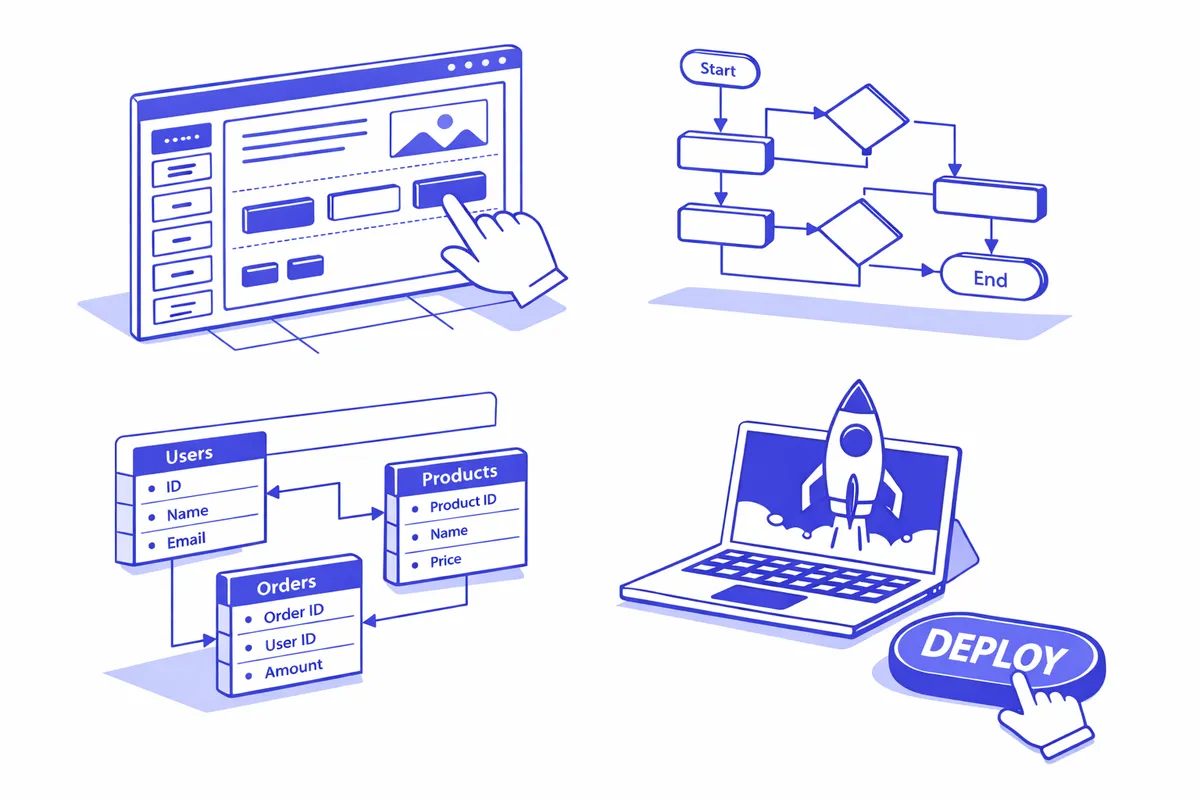
Platform selection for entertainment corridor operators usually involves a combination of tools. Airtable handles the relational data: shows linked to dates, staff linked to certifications, classes linked to enrollment records. Zapier connects the operational data to the communication tools the team already uses, sending automated reminders, moving records when statuses change, and triggering notifications when key events happen. Bubble is right when the application needs a customer-facing layer, a class enrollment portal for training program students or a private event inquiry form with conditional logic.
The architecture for entertainment businesses requires careful data modeling. A comedy club's operational database links shows to dates, venues, performers, ticket data, and staff assignments. An improv school's enrollment system links students to classes, instructors, levels, and performance dates. Getting those relationships right before configuration begins is what determines whether the system is still useful after 18 months of operation or whether it requires a rebuild.
We work closely with Old Town operators throughout the build. Wells Street entertainment businesses run on tight margins with no IT department. The system has to work for the team lead who manages show operations, not just for the owner who commissioned it.
Industries We Serve in Old Town
Comedy clubs and live entertainment venues on Wells Street build show-night operations tools in Airtable that link performances to dates, seat capacities, door list requests, staff assignments, and bar preparation notes: the full operational record for every show in one place rather than across four different communication threads.
Improv and performance training programs near Second City build class enrollment and curriculum tracking systems in Bubble and Airtable that manage student progression through levels, instructor assignments, and performance night coordination without generic learning management software.
Restaurants and bars along Wells Street and Sedgwick Street build private event inquiry systems, staff scheduling tools, and certification tracking applications in Airtable that handle the operational complexity of high-volume hospitality without enterprise HR software licensing costs.
Boutique retail shops on Sedgwick Street and along the Old Town Triangle use Airtable for inventory management, vendor communication, and the customer relationship tracking that spreadsheets handle inconsistently when the business has more than a few hundred active customers.
Medical and dental practices along North Avenue and LaSalle Drive use no-code for patient intake, referral tracking, and the operational coordination that generic practice management platforms handle with frustrating inflexibility for independent offices.
Interior design firms and boutique professional services in Old Town's residential fabric build client project tracking and vendor management tools in Airtable that connect the information scattered across email threads into a structured pipeline the whole team can see.
What to Expect Working With Us
1. Discovery and platform recommendation. We understand your specific operational problem and recommend the platform that fits. For Old Town entertainment operators, that often means a combination of Airtable and Zapier, sometimes with a Bubble customer-facing layer. We explain the reasoning and tell you if no-code is not the right fit.
2. Data architecture that fits live operations. Entertainment and hospitality operations are dynamic. The data model has to handle the reality that shows get added, staff changes, and event details evolve constantly. We design for that flexibility from the start.
3. Build with your operations team. The show-night manager who will use the system participates in build reviews, not just the owner who commissioned it. The tool has to work for the people running operations on a Friday night.
4. Handover your team can maintain. Training covers the scenarios your team will actually encounter: adding a new show, substituting a staff member, managing a last-minute class enrollment change. Documentation covers how to extend the system when your operations evolve.