How We Build Logo Design for Old Town
Logo design for Old Town starts with a neighborhood brief, which we write ourselves before we write your creative brief. We document the visual references that are specific to this neighborhood: the typographic traditions on building facades along Eugenie Street, the signage conventions of the entertainment corridor on Wells Street, the architectural details of the Old Town Triangle that have shaped local visual culture for generations. That research informs every design decision that follows.
The creative brief is a conversation, not a form. We want to understand your business's personality, your customers' expectations, and the contexts where the logo will appear: on a sign above a Wells Street door, on a printed menu, on social media, on a paper shopping bag, on a button for an Art Fair Saturday. A logo that reads beautifully on a four-inch sign above a door may not work as a social media avatar. Understanding the full range of application surfaces from the start prevents the expensive discovery that a logo does not work in a critical context.
We present two to three distinct logo directions. Each direction comes with a written rationale: why this visual approach is appropriate for Old Town, why it fits the business's character, and how it will perform across the key application surfaces. You choose the direction to develop further. We refine based on your feedback. The final deliverable is a complete logo system, not a single file.
Industries We Serve in Old Town
Comedy clubs and performance venues along Wells Street need marks that balance entertainment personality with institutional credibility. Second City built a logo that communicated that it was both a creative institution and an approachable entertainment destination. New comedy and performance venues in the neighborhood need to find that same balance without trying to replicate an iconic identity. We design marks for entertainment businesses that carry wit without sacrificing the gravitas that sells tickets.
Boutique retailers on Wells Street and in the Old Town Triangle represent a category where logo quality directly correlates with perceived price point. A clothing boutique with a carefully designed wordmark and brand system can charge prices that match the quality of its merchandise. The same boutique with a generic mark undercuts its own positioning before a customer reaches the register. Logo design for Old Town retail is an investment in the ability to price at the level the product deserves.
Restaurants and bars between North Avenue and Eugenie Street use their logo across a dense collection of surfaces: exterior signage, menus, website, social media, matchbooks, staff uniforms, takeout packaging, and reservation confirmation emails. A logo system built for that full range of applications from the start performs consistently across all of them. One designed for a single use and then stretched to others creates visual inconsistency that dilutes the brand.
Medical and dental practices near LaSalle Drive need logos that communicate competence, care, and approachability in a context where patients are often anxious and trust is the primary commodity. Overly corporate marks read as cold. Overly informal marks read as unprofessional. The design language for healthcare in Old Town sits between those poles: clean, warm, and specific enough to feel personal.
Interior design studios and home furnishing showrooms in the Old Town Triangle area operate in a field where the logo is itself a claim about taste. If the mark does not demonstrate design sensibility, the studio's other work becomes harder to sell. We treat interior design identity projects as the highest-stakes logo assignments in the portfolio: the client's professional credibility depends on a mark that demonstrates exactly what they sell.
Real estate offices operating in Old Town, where residential transactions on LaSalle Drive and Sedgwick Street involve significant values and buyers with refined aesthetic standards, need identity systems that match the quality of the properties they represent. A logo that looks dated or template-built appears on every listing sheet and every email signature, subtly undermining the premium positioning the office is trying to establish.
What to Expect Working With Us
1. Neighborhood research and creative briefing. We research the visual context of Old Town before our first client meeting, so the creative brief conversation is grounded in neighborhood-specific references rather than generic branding questions. The brief produces a documented design direction that guides the entire project.
2. Two to three concept directions. We present distinct directions, each with a rationale specific to your business and its Old Town context. Directions are different enough to represent genuine choices, not variations on the same idea. You choose one to develop, with written feedback.
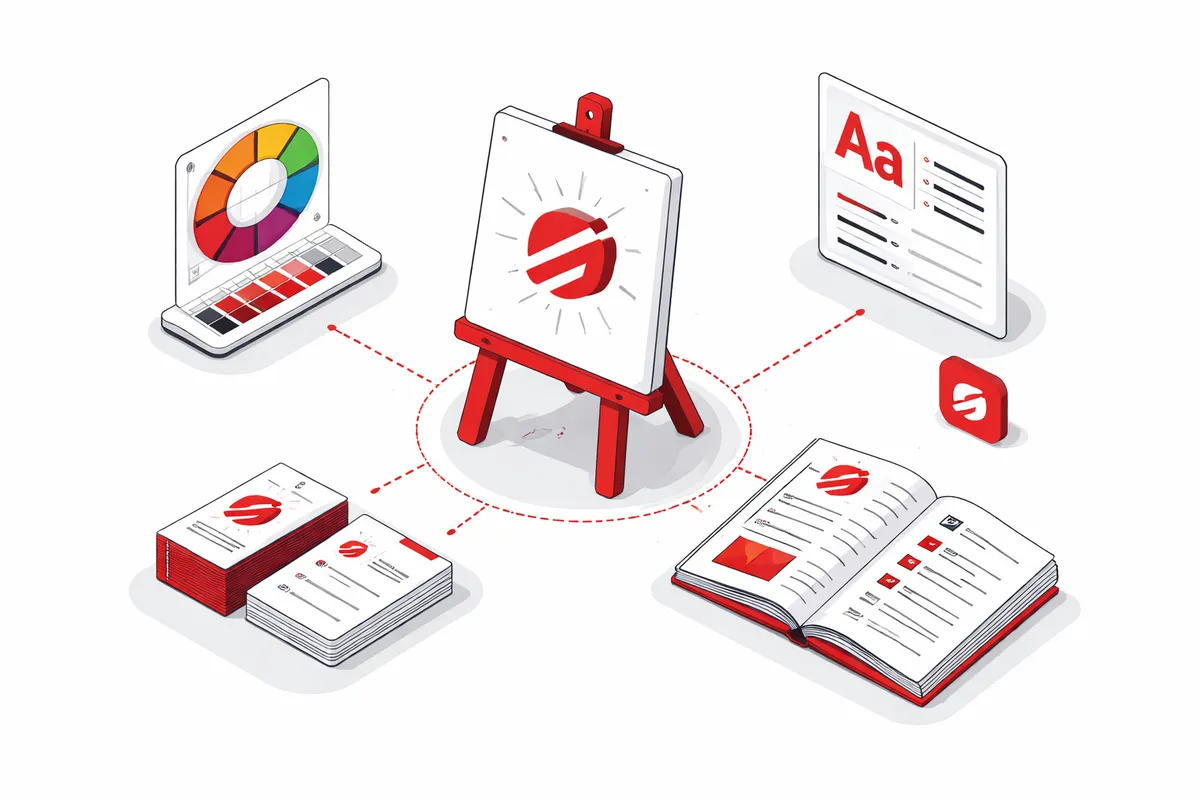
3. Refinement and final logo system. We refine the chosen direction through two rounds of feedback until the mark is complete. Final delivery includes the full logo system: primary mark, secondary marks, color variations, and a usage guide. Files are delivered in every format you will need: SVG, EPS, PNG, and PDF.
4. Application review. Before the project closes, we apply the logo to a set of your most important application surfaces, signage mockup, menu cover, social media avatar, and email header, and review those applications with you. If anything does not work in context, we resolve it before final delivery, not after you have had a sign printed.