Your Cart (0)

Your cart is empty

Old Town, Chicago

Legacy System Integration in Old Town

Legacy System Integration for businesses in Old Town, Chicago. We know the neighborhood, the customers, and what it takes to compete locally.

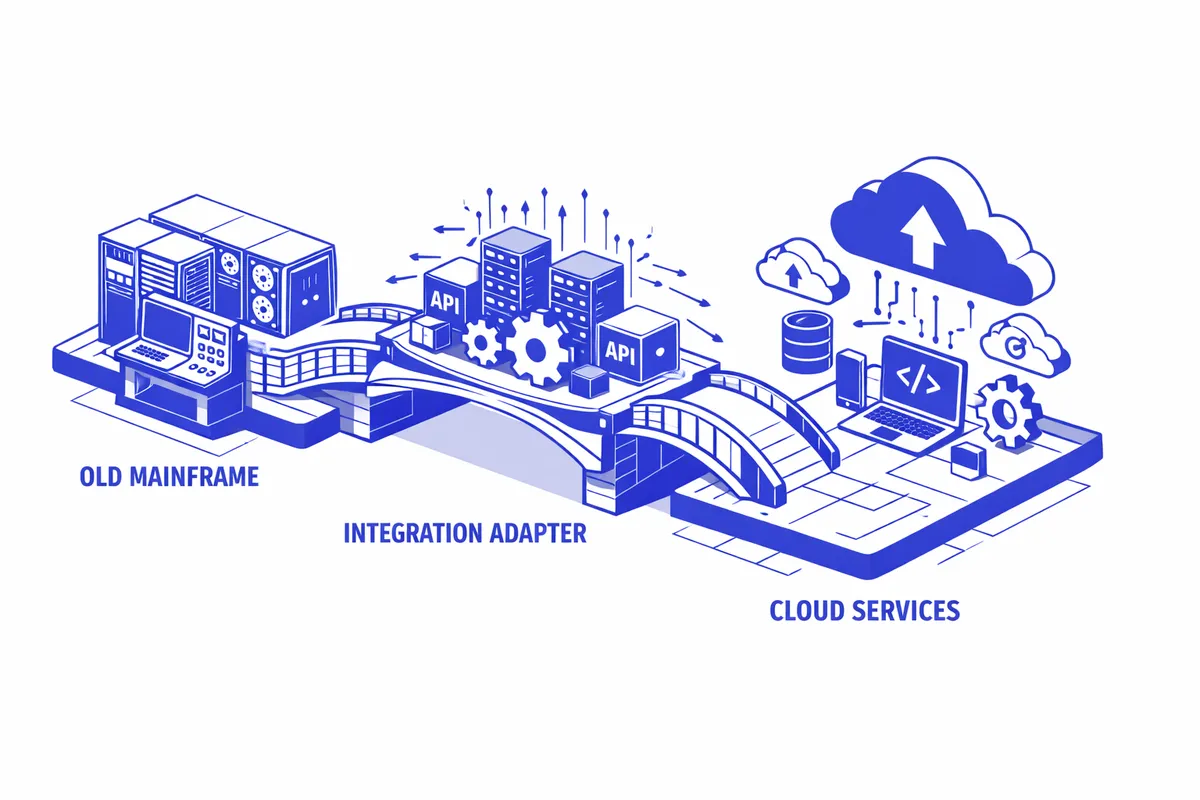
Legacy System Integration in Old Town service illustration

How We Build Legacy System Integration for Old Town

Old Town integration work is shaped by the neighborhood's character: independent businesses with strong operational traditions and limited tolerance for disruption. We scope projects to minimize operational interference during build and testing, and we schedule deployment activities around the business rhythms of each client.

For Wells Street restaurant clients, deployment activities avoid Friday and Saturday service, when a full integration deployment and its associated testing would create risk. We target midweek installation windows when volume is lower and staff capacity to observe and report issues is higher. For comedy venue clients, we coordinate deployment around performance and training schedules.

Discovery for Old Town clients focuses on understanding the legacy system's actual behavior in production, not its designed behavior as documented. POS systems that have been running for eight years in a busy restaurant have accumulated configuration changes, menu evolution, and operational customizations that affect how data is structured in exports. Integration designed against documentation from eight years ago may not match how the system actually exports data today. We build our understanding from the current production system, not from original documentation.

Integration architecture for Old Town's independent businesses prioritizes simplicity. Simpler integration architecture is easier to maintain, easier to troubleshoot, and more reliable over the multi-year operation that Old Town businesses need. We build the integration that delivers the required connectivity with the least complexity necessary.

Industries We Serve in Old Town

Restaurants and Bars: Wells Street restaurants and bars with legacy POS systems need integration with cloud accounting, delivery aggregators, and reservation platforms. We build connections that eliminate manual reconciliation work and keep financial data current without requiring POS replacement that would disrupt service operations.

Comedy and Entertainment Venues: Old Town comedy and entertainment venues including institutions along Wells Street use ticket sales, class registration, and membership systems with years of customer history that need integration with modern email marketing, CRM, and audience analytics tools.

Boutique Retail: Old Town boutique retailers between Eugenie Street and North Avenue use legacy inventory and customer management systems that need integration with e-commerce platforms and modern marketing tools to reach customers between in-store visits.

Interior Design: Interior design practices serving Old Town's historic homes use project management, vendor, and client communication platforms that need integration to connect project workflows to billing and client portal systems.

Real Estate: Real estate offices serving Old Town's active residential market use older CRM and listing management systems that need integration with modern transaction management, digital marketing, and client communication tools.

Medical and Dental Practices: Medical and dental practices serving Old Town's residential population use practice management systems that need integration with online scheduling tools and patient communication platforms that clients now expect.

What to Expect Working With Us

1. Production System Discovery: We assess your legacy system in its current production state, documenting actual export formats, actual data structures, and actual behaviors rather than relying on original vendor documentation. For Old Town businesses with systems that have been in active use for years, this production-state discovery captures the customizations and evolution that make your system's behavior unique to your business.

2. Schedule-Conscious Project Management: We build integration project timelines around your business's operational calendar. For Wells Street restaurants, this means avoiding deployment activities during high-volume periods. For comedy venues, this means coordinating around show schedules. We ask about your operational calendar at the start of every project and build the deployment plan around it.

3. Targeted Build: We build exactly the integration your Old Town business needs, scoped to the specific data flows that deliver operational relief, without building integration infrastructure you do not need. Independent businesses in Old Town do not need enterprise integration platforms. They need reliable, targeted connections between specific systems.

4. Operator-Readable Documentation: After deployment, we provide documentation written for business owners and operators, not engineers. Old Town's independent business owners typically maintain their own operations without dedicated technical staff. Documentation describes what the integration does, what monitoring is in place, and what to do when something unexpected occurs in terms an owner can act on.

Frequently Asked Questions

Yes. POS systems from 2014 with limited vendor support are common in Old Town's restaurant community. The integration approach depends on what export capability the system retains. Most POS systems from this era support scheduled CSV or flat-file exports even when vendor support for other capabilities has lapsed. File-based integration between a legacy POS and QuickBooks Online uses these exports as the data source: the integration reads the export file on a scheduled basis, transforms the transaction data into the format QuickBooks expects, and imports it into the accounting system. This approach works reliably for systems with limited vendor support because it uses the export capability the system already has rather than requiring active vendor participation to build an API connection.

Yes. The integration preserves your ticket history in the legacy system where it belongs and makes it accessible to email marketing without migrating or moving that data. We build a connector that extracts customer and ticket purchase records from the legacy system on a defined schedule and synchronizes them to your email marketing tool as audience segments. The legacy system retains all records and continues to operate as the system of record for ticket sales and customer history. The email marketing tool receives a synchronized view of that history that it uses for audience segmentation. For Old Town venues, this means you can segment marketing by attendance frequency, show type preference, and purchase recency, all without requiring the complex data migration that moving ticket history to a new platform would involve.

Well-scoped integration projects cause minimal disruption during the build phase because we work with exports or database copies rather than live production systems during development and testing. The deployment step, when the integration first connects to production systems, requires a brief window of reduced capacity in the legacy system. For restaurant POS integrations, this window is typically less than two hours and can be scheduled during slow periods. We target midweek midday windows for Old Town restaurant clients when possible. After deployment, the integration runs automatically without requiring operational attention beyond what your monitoring setup provides.

Export format changes are the most common cause of integration failures after launch. We build integration components to be tolerant of minor format variations, but significant structural changes to export files can break the integration logic that reads them. Our monitoring detects these breaks and alerts before they accumulate into significant data gaps. When an export format change is detected, we assess whether the integration can be updated to accommodate the new format and update it on a timeline that minimizes the data gap. For clients on maintenance retainers, this update work is covered. For clients without retainers, we provide support on a time-and-materials basis.

Empirical discovery. We access the system in a test or staging environment where feasible, or work with production exports under controlled conditions, and map the actual data structure by examining real outputs. We generate exports, examine the fields and formats they contain, identify which fields correspond to which business concepts by cross-referencing the system's user interface with its exports, and build the integration based on this empirically derived understanding. For inventory systems used in Old Town boutiques, this discovery work typically takes two to three weeks and produces integration design documentation that is more accurate than vendor documentation for systems that have been customized and evolved over years of operation.

After launch, the primary monitoring concerns are data freshness (whether the integration is running on schedule), data accuracy (whether the records in the destination system match the source), and error rate (whether the integration is encountering and handling errors correctly). We set up monitoring that checks these three dimensions and alerts your designated contact when issues occur. For Old Town restaurant clients, daily summary reports of previous day integration activity provide a quick sanity check that data moved correctly without requiring active monitoring on your part. Learn more about our [Legacy System Integration services across Chicago](/chicago/legacy-system-integration) or explore other [digital services available in Old Town](/chicago/old-town).

Ready to get started in Old Town?

Let's talk about legacy system integration for your Old Town business.