How We Build Inventory Management for Old Town
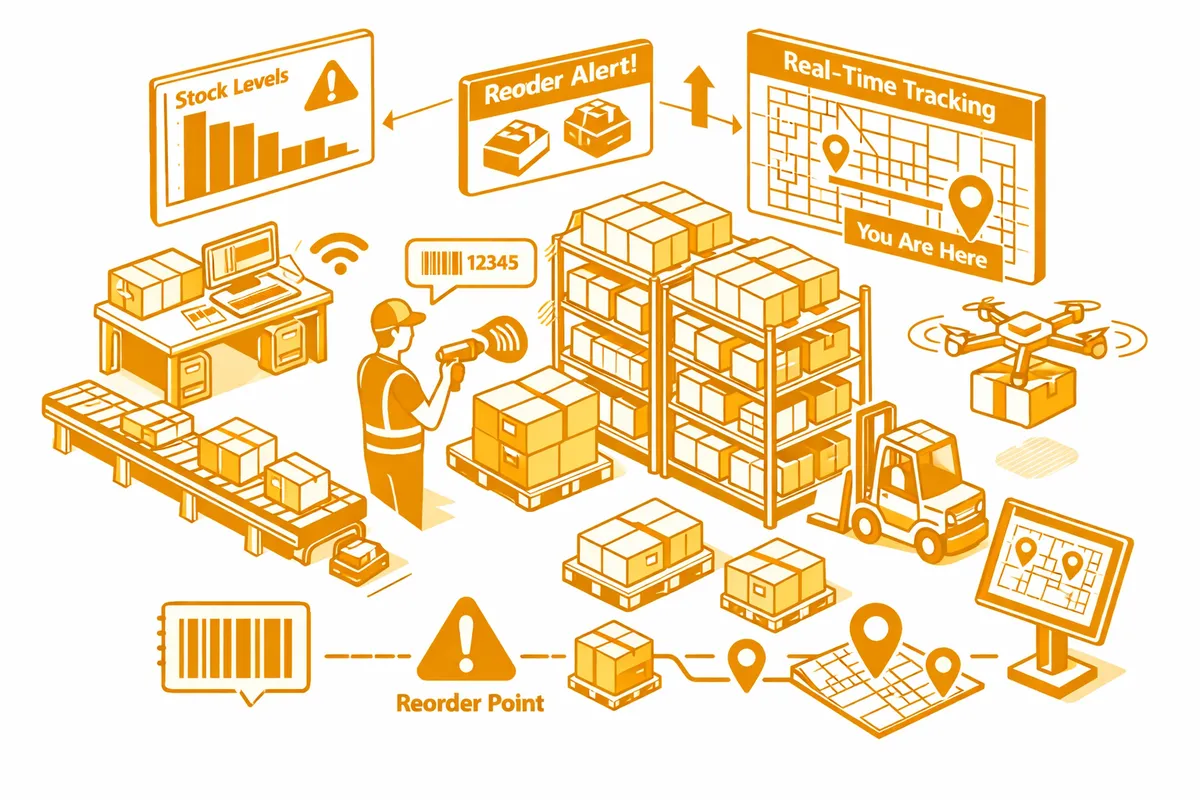
We begin in the back room. For an Old Town business, that is not a figure of speech. We walk the actual storage, whether it is a basement under a Wells Street storefront or a few shelves behind the bar, because the physical reality shapes the system. We watch how stock comes in, where it goes, and how staff find it during a rush. Then we map the product catalog the way the business thinks about it, not the way a generic tool imposes.
Next we set reorder logic against real sales history. A boutique near the Old Town Triangle has items that move every day and items that sit for a season, and the system needs to treat them differently. We build reorder points and suggested quantities from velocity, with the spikes around Second City show nights and the summer zoo traffic accounted for rather than averaged away.
We connect the inventory system to the tools the business already runs: the point of sale at the register or behind the bar, and the accounting system, so a sale on Wells Street updates stock and the books without a second entry. For businesses selling online as well as in the store, we sync the channels so the count is one number, not two that drift apart.
Finally we make it usable by the people doing the work. Receiving, counting, and looking something up have to be fast on a phone in a cramped storeroom. We pilot with the actual staff, fix what slows them down, and only then call it done.
Industries We Serve in Old Town
Boutique retailers and gift shops along Wells Street and near the Old Town Triangle use inventory management to keep a deep, fast-changing selection straight in storage that has no room to spare. The system flags fast movers before they sell out ahead of a weekend, tracks seasonal stock so it does not linger, and turns the back-room guesswork into a reorder list built from real sales.
Bars and cocktail lounges within a few blocks of Second City rely on inventory systems to control pour cost on nights when volume spikes hard. Real-time counts on spirits, beer, and wine catch shrink early, and reorder logic tied to show-night patterns means the well does not run dry when the comedy crowd arrives on Wells Street.
Restaurants and gastropubs near North Avenue and LaSalle Drive use inventory management to hold food cost steady across unpredictable covers. The system tracks ingredient-level usage, ties counts to the menu, and signals reorders before a key item runs out during the Saturday rush, all without a manager spending the afternoon counting walk-in shelves.
Comedy clubs and entertainment venues in the Wells Street corridor, the businesses that give Old Town its name recognition, use inventory systems to manage bar stock, concessions, and merchandise across show schedules. When two shows back to back at a venue near Zanies create a concentrated sales window, the system keeps the bar and merch table stocked without overbuying for the slow weeknights.
Interior design and home furnishing studios in Old Town's converted brick storefronts use inventory management to track samples, fabric, and stocked pieces across small showrooms and offsite storage. Designers working out of spaces near Eugenie Street and Sedgwick Street get one accurate view of what is physically available to specify for a client, instead of discovering a shortage mid-project.
Specialty food and beverage shops along Wells Street use inventory systems to manage perishable and dated stock in tight quarters. Lot and expiration tracking keeps a cheese counter, wine shop, or bakery near the Old Town Triangle from selling past-date product or writing off stock that quietly expired in a crowded cooler.
What to Expect Working With Us
1. Storeroom walkthrough and catalog mapping. We start in your actual storage space on or near Wells Street, watch how stock flows during a busy stretch, and build the product catalog the way your business thinks about it. The physical constraints of an Old Town footprint shape the design from the first day.
2. Velocity-based reorder setup. We build reorder points from your real sales history, with the surges around Second City show nights, summer zoo traffic, and the June Art Fair accounted for instead of averaged into a flat number you cannot trust.
3. Point of sale and accounting integration. We connect inventory to your register or bar POS and your accounting system so one sale updates stock and the books at once, and we sync online and in-store channels into a single count.
4. Staff pilot in the rush. We test the receiving, counting, and lookup tools with the people who use them, during real service, and fix whatever is slow before the system goes fully live.