How We Build Custom ERP for Old Town
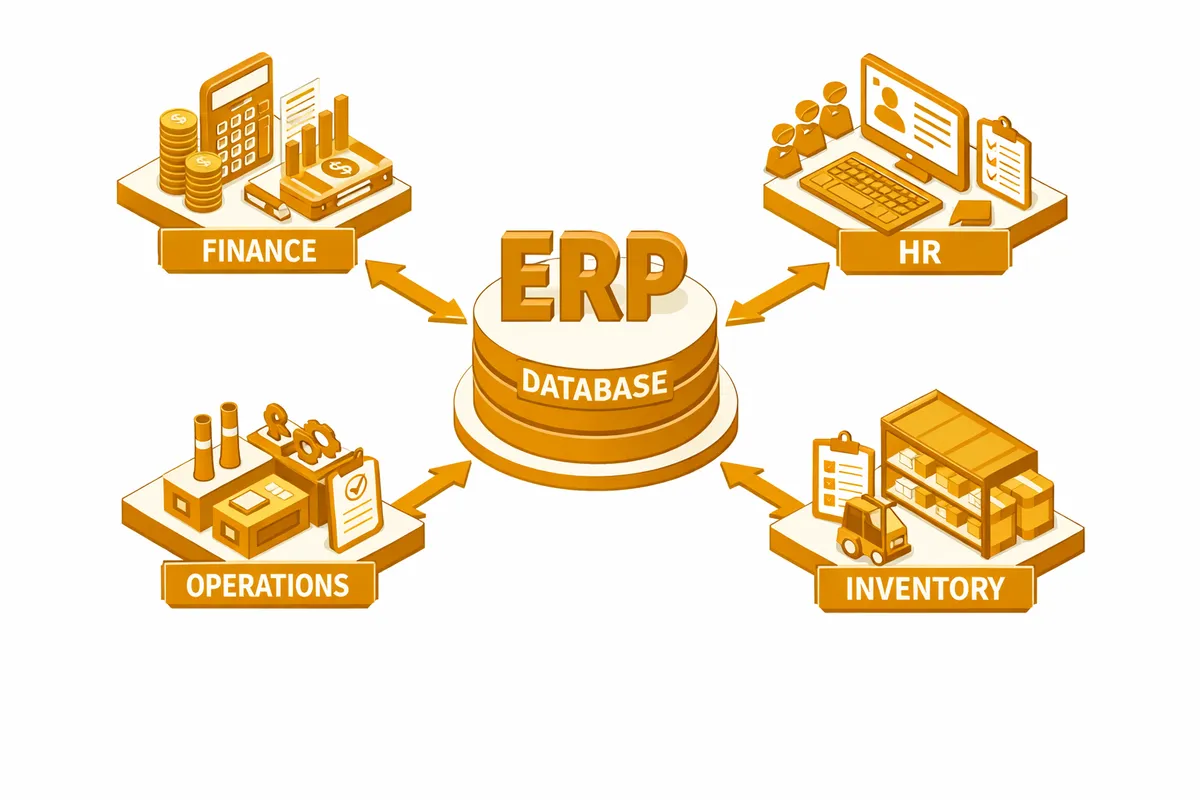
A custom ERP engagement starts with a process documentation phase that takes longer than clients typically expect. We need to understand not just what your business does but how it does it and why certain processes work the way they do. For a boutique retailer near the Old Town Triangle, that means understanding how buying decisions get made, how inventory is tracked from purchase order to shelf to sale, how returns are handled, and how vendor relationships are documented. For a medical practice on LaSalle Drive, it means understanding the clinical workflow, the billing cycle, and the compliance checkpoints that must exist at specific stages.
We spend two to three weeks in documentation before writing any code. The output is a process map that shows every workflow your ERP needs to support and every data object that flows through those workflows. That map becomes the specification. Any ambiguity we identify in the documentation phase is a bug in the system before it exists, so we resolve it in documentation rather than in code.
The build follows the specification in modular phases. Each module, inventory management, or scheduling, or financial reporting, for example, is built and tested against your actual data before the next module begins. This sequenced approach means you see working software early and can validate that the first module matches your actual operations before the full system is assembled. Changes at the module level cost far less than changes after integration.
Industries We Serve in Old Town
Multi-format entertainment venues along Wells Street that operate as comedy club, event space, and food-and-beverage operation need an ERP that handles resource scheduling across all three use cases simultaneously. A custom system tracks which rooms are booked for comedy nights, which are reserved for private events, and which are available, while managing the staff schedules, inventory levels, and revenue projections for each.
Interior design studios and project-based businesses operating out of the Old Town Triangle area need ERP functionality built around the project lifecycle: client intake, scope definition, vendor sourcing, procurement, installation tracking, and client billing across milestones. Generic ERP systems treat these as separate modules with awkward workarounds. A custom system treats the project as the primary object and every other function as a service to it.
Medical and dental practices on LaSalle Drive operate under regulatory requirements that shape every workflow in the business. A custom ERP for a healthcare practice embeds compliance checkpoints directly into the workflows rather than relying on staff to remember them. Patient records, scheduling, insurance verification, and billing each operate as integrated modules within a system designed for healthcare compliance from the ground up.
Real estate offices managing significant residential and commercial inventory in Old Town, where properties on Sedgwick Street and LaSalle Drive command premium prices, need ERP functionality built around the transaction cycle: listing management, showing coordination, offer tracking, contract management, commission calculation, and post-close documentation. Custom ERP holds all of that in one system tied to the property record.
Boutique retailers on Wells Street dealing with seasonal inventory cycles, vendor relationship management, and multi-channel sales (in-store and online) need an ERP that treats inventory as a shared resource across all channels. Custom systems prevent the oversell problem that plagues retailers running separate in-store and e-commerce inventory counts.
Full-service restaurants and bars between North Avenue and Eugenie Street need ERP functionality that connects kitchen management, front-of-house scheduling, inventory, vendor ordering, and financial reporting. A custom restaurant ERP built for your specific operation eliminates the manual reconciliation between systems that consumes manager time every week.
What to Expect Working With Us
1. Process documentation and requirements definition. We document every business process your ERP will support and define the data model that underlies all of them. This phase produces a specification document you review and approve. The specification is the contract: what we build will match it exactly, so this phase demands your time and attention.
2. Phased module development. We build the ERP in phases, delivering working modules before beginning the next. You test each module against real workflows and provide feedback before integration. This approach reduces total project risk and gives you early visibility into what the final system will feel like.
3. Data migration. We migrate your existing data from legacy systems into the new ERP. Every record is validated before migration and verified after. Historical data, years of customer records, transaction history, inventory logs, lands in the new system intact and correctly structured.
4. Training, launch, and stabilization. We train every team member who will interact with the system before go-live. The launch week includes daily check-ins. The first month of live operation includes a weekly review where we address any issues, add any configuration adjustments needed, and confirm that each module is producing the expected outcomes.