How We Build Business Intelligence for Old Town
Business intelligence for an Old Town business starts with a data model design. Before we connect any systems, we define the questions you need to answer. A comedy club near Second City asking "which show formats produce the highest bar revenue per ticket" needs a different data model than a boutique retailer asking "which product categories drive the most return customer visits." We design the model around your actual decision framework, not a generic dashboard template.
Once the model is defined, we connect your source systems: POS, reservation platform, ticketing, marketing automation, payroll, and any other operational system generating structured data. We build the transformation layer that converts raw transactional data into the dimensions and measures your BI system needs. A ticket sale in Eventbrite becomes a "performance event" record with show type, attendee count, revenue, and bar spend per head attached.
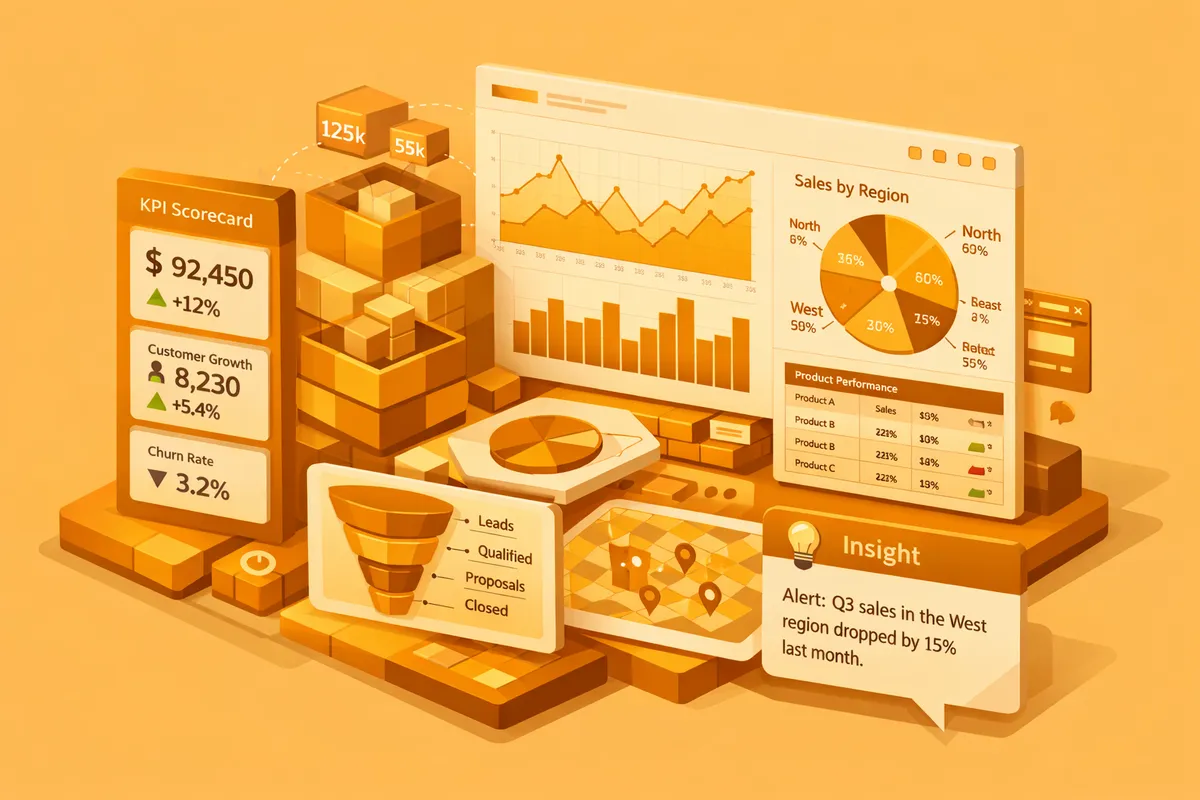
The front-end layer is a set of interactive dashboards built for the decisions your team makes at different time horizons. A nightly operations report for the general manager. A weekly trend view for the owner. A quarterly deep-dive for planning and budgeting. Each view uses the same underlying data model and updates automatically so no one is manually pulling reports or reconciling numbers across systems.
For businesses along Sedgwick Street and the residential blocks of Old Town where the customer base is more neighborhood-rooted than visitor-driven, we add customer lifetime value modeling. That analysis shows which customer segments generate the most value over 12 months, not just in a single transaction, and gives the marketing team a foundation for retention campaigns that are worth the investment.
Industries We Serve in Old Town
Comedy and performance venues along Wells Street have a complex BI picture: ticket sales, ancillary bar and food revenue, private event bookings, and touring act costs all need to be tracked against occupancy and show frequency. BI brings those together in a view that shows contribution margin by show type and illuminates which programming decisions are actually profitable versus which just fill seats at a cost.
Fine dining and upscale casual restaurants between North Avenue and Eugenie Street use business intelligence to understand the relationship between reservation lead time, table size, day of week, and average check. A restaurant that can predict Tuesday night revenue based on Wednesday reservation counts can staff more precisely and reduce overtime without sacrificing service quality on slow nights.
Interior design and home furnishing showrooms in the Old Town Triangle area serve clients on long sales cycles that involve multiple touchpoints before a project closes. BI maps the client journey from first inquiry to signed contract, identifies where prospects drop out of the pipeline, and quantifies the average project value by source channel. That information tells the studio where to invest in marketing and which referral relationships deserve more attention.
Boutique retailers on Wells Street competing against online options need BI that connects in-store traffic counts, conversion rates, transaction values, and return rates. When a product category shows strong traffic but low conversion, that is a pricing or presentation problem. When a category shows high conversion but low return traffic, that is a satisfaction or repurchase problem. BI distinguishes between them automatically.
Real estate offices serving Old Town, where residential transactions on LaSalle Drive and Sedgwick Street involve significant values, use BI to track pipeline velocity, lead source quality, and agent performance across market cycles. A BI dashboard that shows average days-to-close by property type and price band gives managing brokers the data to allocate agent attention to the highest-probability opportunities.
Medical and dental practices near LaSalle Drive use BI to connect clinical scheduling data with revenue cycle metrics: appointment utilization by provider, insurance reimbursement rates by payer, and no-show rates by scheduling method. That analysis drives scheduling protocol decisions and payer mix strategy.
What to Expect Working With Us
1. Decision inventory and data model design. We interview your leadership team about the decisions they make weekly, monthly, and annually that depend on data. That inventory defines the data model. We do not start connecting systems until the model is documented and approved because the model determines which data we need and how it must be structured.
2. Data warehouse build and source connections. We build a centralized data warehouse that receives data from all connected sources, applies the transformation rules defined in the data model, and stores clean, queryable data in a structure your dashboards can use. This layer is the foundation of the BI system and is built for durability, not speed.
3. Dashboard build and validation. We build your dashboard views against the data warehouse and validate every metric against your source systems. If the BI dashboard shows Tuesday revenue at $14,200 and your POS report shows $14,180, we find the $20 discrepancy before launch. Dashboards that do not match source data erode trust and get ignored.
4. Training and adoption support. BI only creates value if people use it. We run training sessions with every team member who will interact with the dashboards and configure each view for its intended audience. The general manager's nightly report is not the same view as the owner's quarterly review. Tailoring the views to the audience drives adoption faster than a one-size-fits-all approach.