How We Build Autonomous Workflow Agents for Old Town
Workflow documentation and decision rule mapping. We begin by documenting your actual workflows in the detail required to configure agents: the specific sequence of steps, the information that triggers each step, the person or system receiving each handoff, and the decision rules that handle variations. For a comedy club, this means documenting the full show booking workflow from initial booker confirmation through post-show settlement. For a restaurant, it means documenting the reservation workflow from initial request through day-of confirmation and special request communication. We document actual workflows rather than idealized ones, because agents configured to ideal workflows fail when reality diverges.
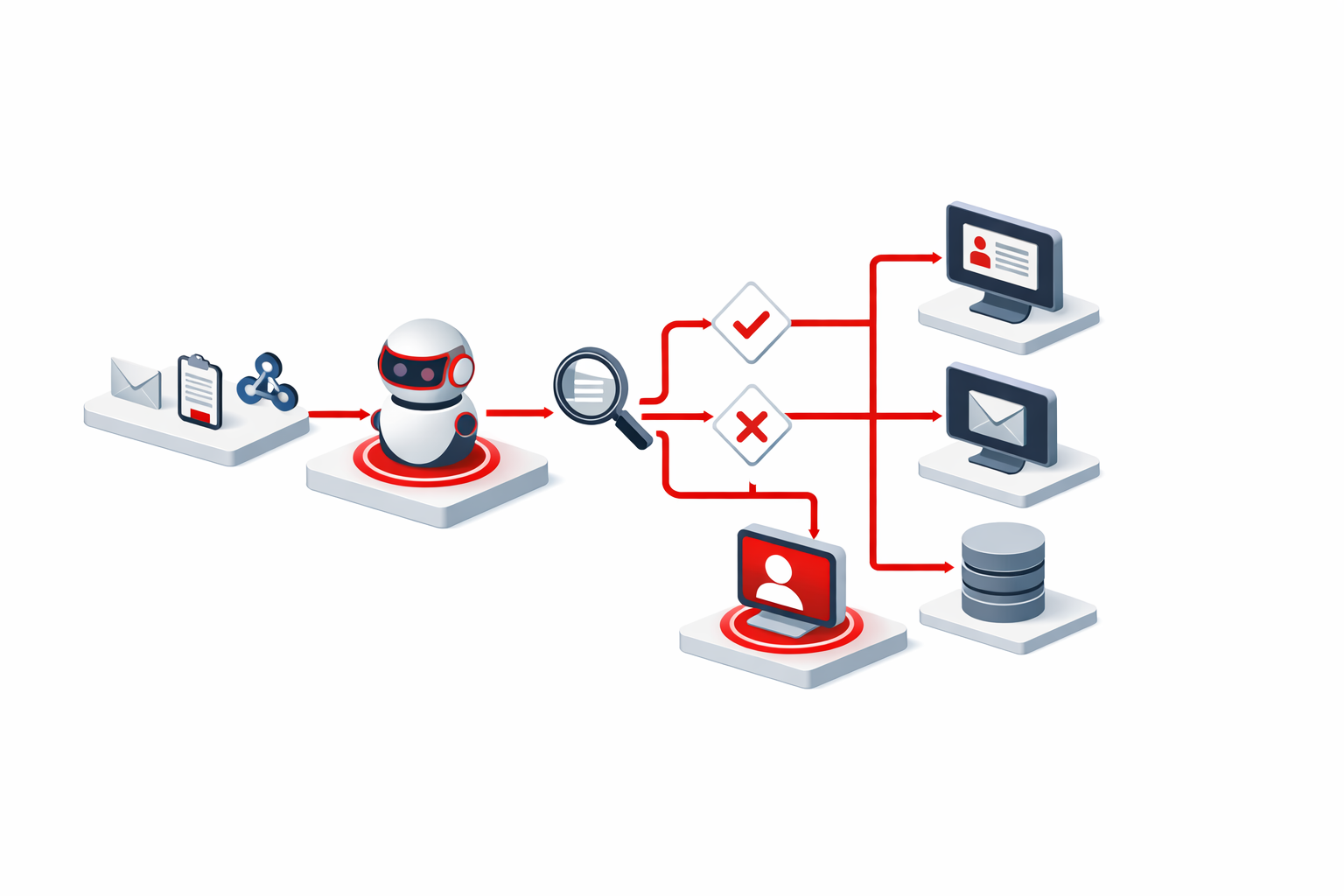
Agent configuration and rule implementation. We configure agents that implement your documented decision rules with the specific information and system connections required. A show booking agent needs access to your booking calendar, your ticketing system, your production equipment inventory, and your marketing scheduling tool. A reservation agent needs access to your reservation platform and your table inventory system. We configure each agent with the access and logic required to execute its workflow rather than assuming connectivity.
Exception handling and escalation design. Workflows produce exceptions: a performer requests a technical requirement not in the standard rider, a reservation guest requests a table configuration the floor doesn't have, a client brief includes scope elements outside the studio's standard practice. We design exception handling that surfaces these situations to the appropriate person with the relevant context so they can resolve it without reconstructing the situation.
Integration with existing systems. Workflow agents work best when they connect the systems you already use. We assess your current tool stack and configure agents to work within it: integrating with your ticketing platform, reservation system, project management tool, and communication platforms rather than requiring system replacement.
Testing and refinement. We test agent behavior against real workflow scenarios before deployment. We run agents alongside manual workflows initially, comparing agent decisions against what manual execution would have done, and refine configuration based on discrepancies before relying on agents for production workflows.
Industries We Serve in Old Town
Comedy clubs and live entertainment venues along Wells Street and in the Old Town entertainment corridor deploy workflow agents for show booking coordination: confirming booking details with performers, collecting rider requirements, setting up ticketing with appropriate capacity and pricing, triggering marketing content production, communicating production requirements to operations, and managing the document sequence from booking confirmation through post-show settlement. Show coordination overhead drops significantly when the administrative sequencing runs automatically.
Restaurants and bars throughout Old Town, the Old Town Triangle, and North Avenue deploy workflow agents for reservation management: confirming reservation requests with real-time availability checking, recording bookings, sending confirmation communications, processing modification and cancellation requests, managing waitlist communication, and assembling the day-of reservation summary for front-of-house preparation. Front-of-house staff focus on in-person guest experience rather than reservation administration.
Interior design and architecture studios in Old Town's brownstones and loft spaces deploy workflow agents for project administration: project initiation sequences that create project folders, assign team members, and send client onboarding communication; procurement coordination routing vendor inquiries and tracking quote responses; document review routing ensuring client approvals are collected before work proceeds; and billing trigger management initiating invoice creation at project milestones.
Event venues and private spaces along the Old Town entertainment corridor deploy workflow agents for event booking management: handling inquiry responses with availability confirmation, collecting event specification details, routing leads to event coordinators with complete specification summaries, managing the document sequence from proposal through contract execution, and coordinating vendor communication for catering, equipment, and service providers.
Boutique hotels and hospitality venues adjacent to Lincoln Park and throughout Old Town deploy workflow agents for guest communication sequences: pre-arrival communication with arrival instructions and service options; in-stay communication for housekeeping requests; checkout and post-stay communication with review invitation timing; and return guest recognition communication with appropriate offer and preference acknowledgment.
Real estate offices and residential specialists in the Old Town market deploy workflow agents for transaction coordination: initial inquiry response with showing scheduling, document collection sequences that ensure required materials are gathered before deal stages advance, closing coordination communication with all parties, and post-close follow-up sequences. Agents handle the administrative coordination that consumes transaction time, freeing agents' hours for client relationships.
What to Expect Working With Us
1. Workflow documentation sessions. We conduct structured sessions with the staff who execute each workflow, documenting the actual sequence, decision rules, and information flows in the detail required for agent configuration. We identify the highest-pain workflows and prioritize deployment accordingly. Documentation typically takes two to three weeks.
2. Agent configuration and integration. We configure agents implementing your documented workflows and establish the system integrations required. We build exception handling and escalation logic into each agent from the start. Configuration typically takes three to five weeks depending on workflow complexity and integration requirements.
3. Parallel testing and refinement. We run agents alongside manual workflows for two to four weeks, comparing agent decisions against what manual execution would have done and refining configuration based on discrepancies. We don't hand over production workflows until parallel testing confirms agent behavior meets the quality standard of manual execution.
4. Production deployment and monitoring. We transition production workflows to agents with monitoring of exception rates, completion rates, and audit trail completeness. We review agent activity weekly during the first month and monthly thereafter. We refine agent behavior based on production patterns and expand to additional workflows as initial deployments demonstrate value.