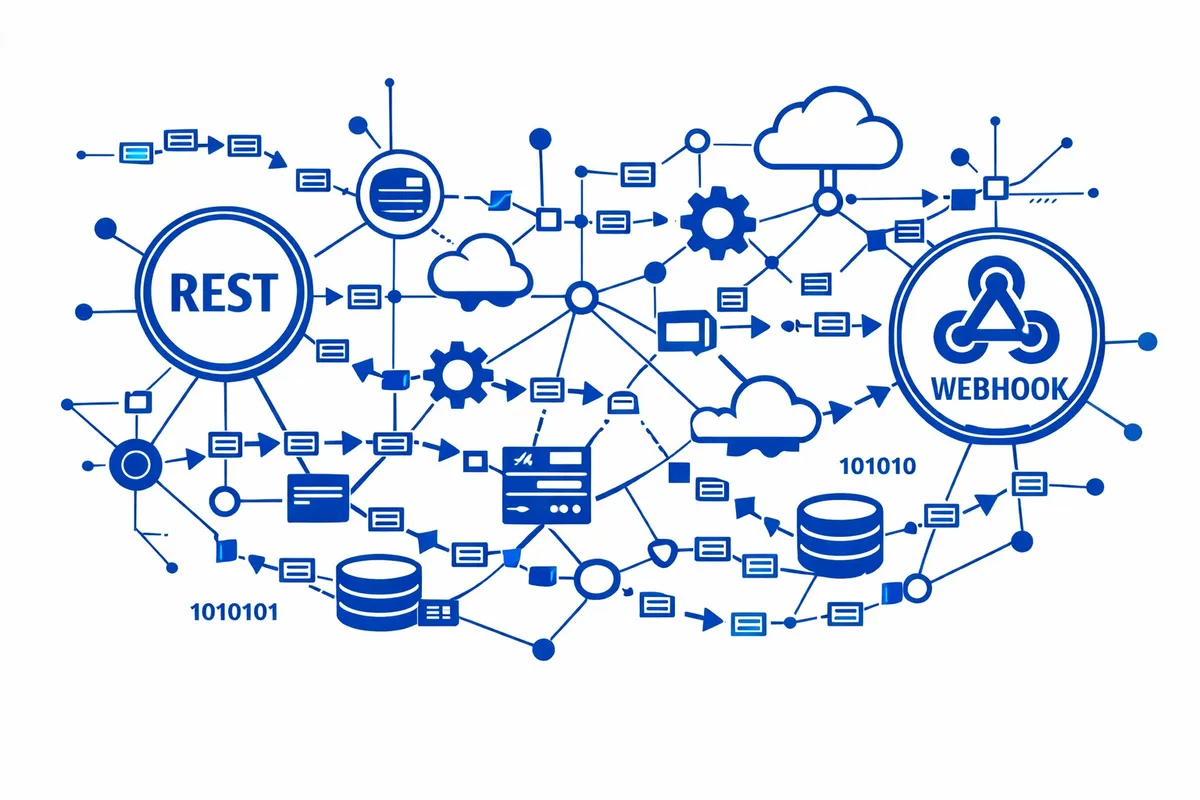
How We Build APIs for Old Town
Old Town projects start with the specific operational pain point driving the conversation. For entertainment venues, it is usually the disconnection between ticketing and beverage or merchandise systems. For retailers, it is usually inventory sync. For professional practices, it is usually the scheduling-to-billing workflow. We spend the first session understanding the exact failure mode: what breaks, how often, and what it costs in staff time or customer experience.
The design phase defines the integration with enough specificity to build it correctly. For a comedy venue integrating ticketing and POS, the design needs to answer specific operational questions: does a ticket purchase trigger a drink package reservation, and if so, how does the venue staff see that at the bar? For a boutique connecting its in-store POS to Shopify, the design needs to specify how the integration handles a product return: does the returned unit go back into online inventory immediately, or does it stay out of online inventory until it has been inspected and restocked?
We build and test with realistic Old Town operational data. Peak Saturday night traffic at a Wells Street venue, the holiday shopping rush at a boutique, the Monday morning appointment booking surge at a medical practice. Each of these scenarios has specific failure modes we test before going live.
Industries We Serve in Old Town
Comedy venues and entertainment businesses near Second City on North Wells Street coordinate ticket sales, food and beverage, merchandise, and private event bookings across systems that rarely share data. API development connects your ticketing platform to your POS so that pre-purchased packages are visible at the bar without staff having to check a separate list, and your event management system blocks ticketed showtimes automatically when a private booking comes in.
Boutique retailers and home goods stores on Wells Street managing physical and online inventory need their POS and e-commerce platform connected so the inventory count is always consistent. When a customer buys the last piece of a limited item in the store, the website should reflect that immediately. API integration handles this sync automatically, eliminating the manual reconciliation that currently creates the inconsistency.
Restaurants and bars along the Wells Street dining strip that use multiple ordering platforms need their orders aggregated to a single kitchen view. An API that routes orders from your online ordering platform, delivery apps, and in-person POS to the same display eliminates the missed order that results from managing multiple tablets at the same time.
Interior design and real estate businesses serving Old Town's historic residential market manage client records, property listings, and transaction documents across platforms that require significant manual coordination. Integration APIs that route new leads from your website to your CRM and update transaction records as deals progress reduce the administrative overhead that keeps designers and agents from client work.
Medical and dental practices near Moody Church and St. Michael's Church serving the Old Town residential community manage scheduling, billing, and insurance verification across systems that often do not communicate. API integration connecting scheduling to billing reduces the manual work between patient checkout and claim submission and improves billing accuracy.
Boutique fitness and wellness studios along LaSalle Drive that have grown a loyal Old Town clientele often use scheduling platforms that do not connect to their accounting software or email marketing tools. Integration APIs that route new client sign-ups to email lists and billing platforms automatically, and that send retention sequences when regular clients have not booked recently, reduce the manual work of client relationship management.
What to Expect Working With Us
1. Operational assessment. We spend two to three hours with the business owner or operations manager tracing data flows, identifying the manual handoffs between systems that cost the most time and cause the most errors. For Old Town's entertainment venues, this session typically surfaces three to four disconnected workflows that are manageable individually but collectively represent significant operational inefficiency.
2. Integration specification. We write a precise document describing what connects to what, what data moves, what triggers each transfer, and how failures are handled. For entertainment businesses with complex operational scenarios like private events and recurring shows, this document covers the specific workflows that require careful design.
3. Build and test with realistic data. We build in a test environment and verify every data flow under the conditions your business actually encounters, including peak traffic scenarios and failure cases.
4. Live deployment and monitoring. We deploy during a low-traffic window, monitor closely for the first week, and maintain alert coverage for the first 90 days. APIs break when software vendors update their platforms. We catch those breaks and repair them before they affect your operations.