How We Build AI Integration Services for Old Town
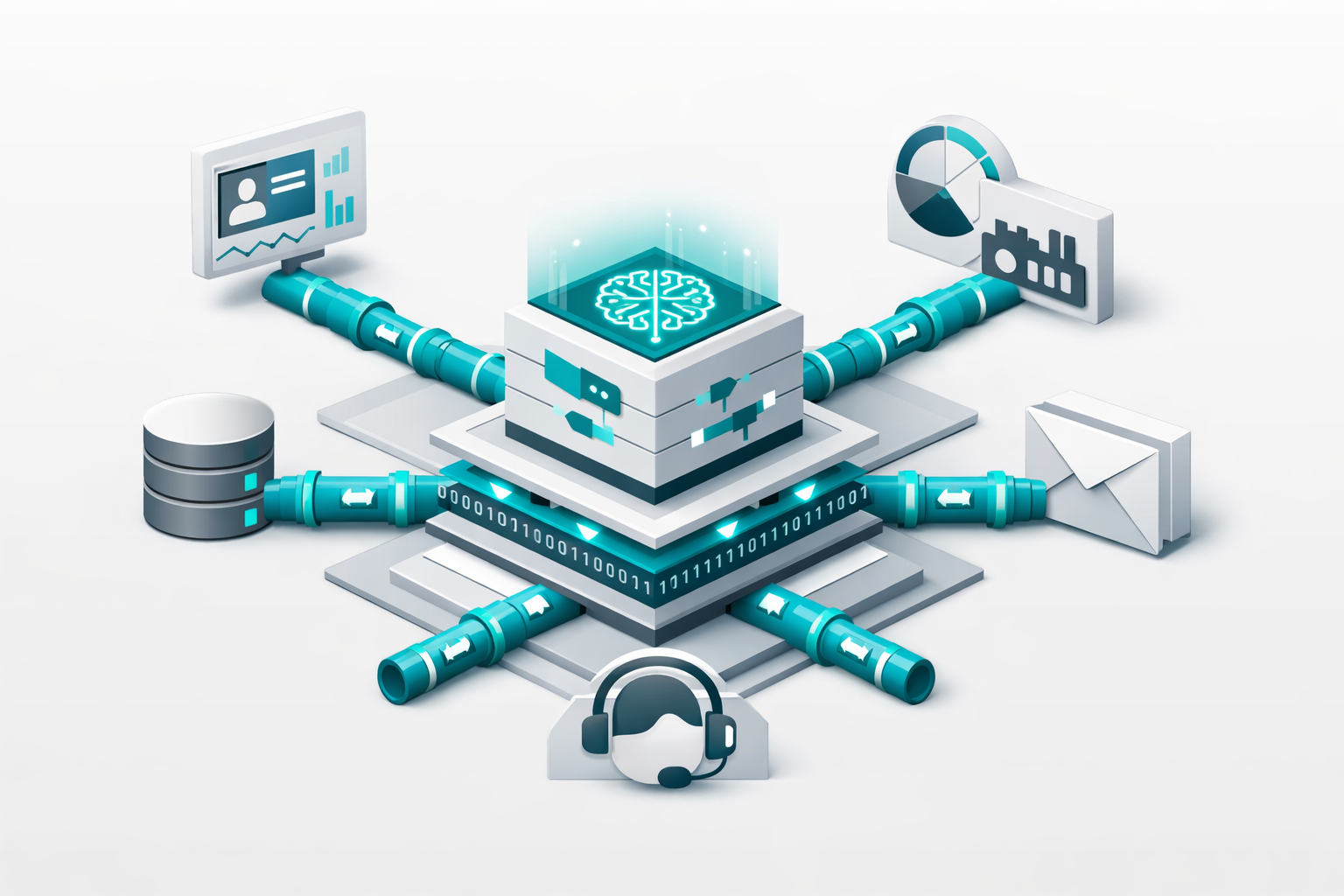
Integration engagements begin with the systems map. We document every software platform in your operation, inventory the API and data export capabilities each provides, and identify the data flows that would produce the highest operational value if automated. Most Old Town businesses are surprised by the integration potential that already exists in their current software stack. The systems have integration capabilities. The connections simply have not been built.
From the systems map, we design the integration architecture. For entertainment venues, the architecture typically prioritizes ticketing-to-email integration that triggers audience communications based on purchase events, attendance data integration that feeds marketing attribution analysis, and group booking workflow integration that connects inquiry tools to CRM records. For restaurants, the priorities are usually reservation-to-loyalty integration, POS-to-email integration for post-visit follow-up, and review management integration that routes new reviews to the appropriate response workflow.
Implementation builds the integration connections using your existing platforms' APIs, configures the data transformation logic that reconciles format differences between systems, and establishes the event triggers that initiate automated workflows. Testing validates that integrations work correctly under realistic data volumes and edge cases. Documentation captures integration configurations so that future system changes do not accidentally break data flows.
Industries We Serve in Old Town
Comedy clubs and performance venues on Wells Street generate ticketing, attendance, email engagement, and social media data across platforms that, when integrated, enable audience communication that is impossible from any single system. We build ticketing-to-email integrations that add purchasers to appropriate audience segments automatically, attendance data integrations that trigger post-show follow-up communications, and CRM integrations that build customer records from ticket purchase history. The integrated system knows every customer's show history across every platform they have used to purchase tickets.
Restaurants and bars along Wells Street and North Avenue run reservation systems, POS platforms, and email marketing tools that each hold partial pictures of customer behavior. Integration connects these systems so that a customer's reservation record includes their POS purchase history, and their email marketing profile includes their visit frequency and order patterns. Post-visit follow-up triggers automatically from POS data. Loyalty program milestones trigger reward communications from the loyalty platform to the email tool without manual export and import.
Boutiques and specialty retailers in the Old Town Triangle and on Wells Street manage inventory in one system, customer purchase history in another, and email marketing in a third. Integration connects point-of-sale data to customer profiles, triggers restock notifications when inventory falls below threshold, and feeds purchase data into email marketing segments that drive personalized product recommendations. A customer who bought handmade ceramics receives new ceramics arrivals before the general email list.
Wellness studios and fitness businesses near Sedgwick Street use booking platforms, billing systems, and email marketing tools that need to exchange data for cohesive client communication. Integration connects booking data to email marketing so that class enrollment triggers welcome sequences for new students and absence flags trigger reactivation communication for lapsing clients. Billing system data feeds churn analysis that identifies at-risk clients before they cancel.
Therapists and professional services in the Old Town Triangle's residential offices manage scheduling, billing, document management, and client communication across practice management platforms that vary in their integration capabilities. We build integrations between scheduling systems and billing platforms, document management tools and client records, and appointment reminders and client communication systems. The integrated practice management environment reduces the administrative overhead that fragments clinical or professional time.
Event planners and private event coordinators working across Old Town's entertainment corridor manage inquiry, booking, vendor coordination, and billing across tools that require integration to avoid manual data transfer. Integration connects inquiry forms to CRM records, booking confirmations to contract generation systems, and event completion data to billing platforms. The event workflow advances automatically from inquiry to completion without manual handoffs between systems.
What to Expect Working With Us
1. Systems inventory and integration opportunity assessment. We document every platform in your operation, assess API and integration capabilities, and identify the three to five integration priorities that produce the highest operational value. The assessment produces a prioritized integration roadmap with estimated impact for each connection.
2. Architecture design and API evaluation. We design the integration architecture that connects your systems efficiently, evaluate the API quality and rate limits that affect integration design, and identify any platforms that require workaround approaches such as file-based integrations or webhook configurations rather than direct API connections.
3. Integration development and testing. We build the integration connections using your existing platforms' APIs, configure data transformation logic, and establish event triggers. Testing validates accuracy and reliability under realistic conditions before deployment. We test edge cases and failure scenarios to ensure integrations handle unexpected data gracefully.
4. Maintenance and monitoring. API integrations require ongoing monitoring because source systems update their APIs, change rate limits, and modify data formats. We monitor integration performance, address issues before they cause data gaps, and update integration configurations when source systems change. Quarterly reviews assess whether new integration opportunities have emerged as your systems evolve.