How We Build Accounting Automation for Old Town
We start by mapping how money actually moves through your business. For a comedy club near Moody Church, that means understanding the split between box office sales, food and beverage revenue, private event deposits, and merchandise. For a boutique retailer on Wells Street, it means mapping inventory costs against point-of-sale data and understanding how returns and exchanges hit your books. The mapping phase takes one to two weeks and produces a workflow diagram specific to your operation.
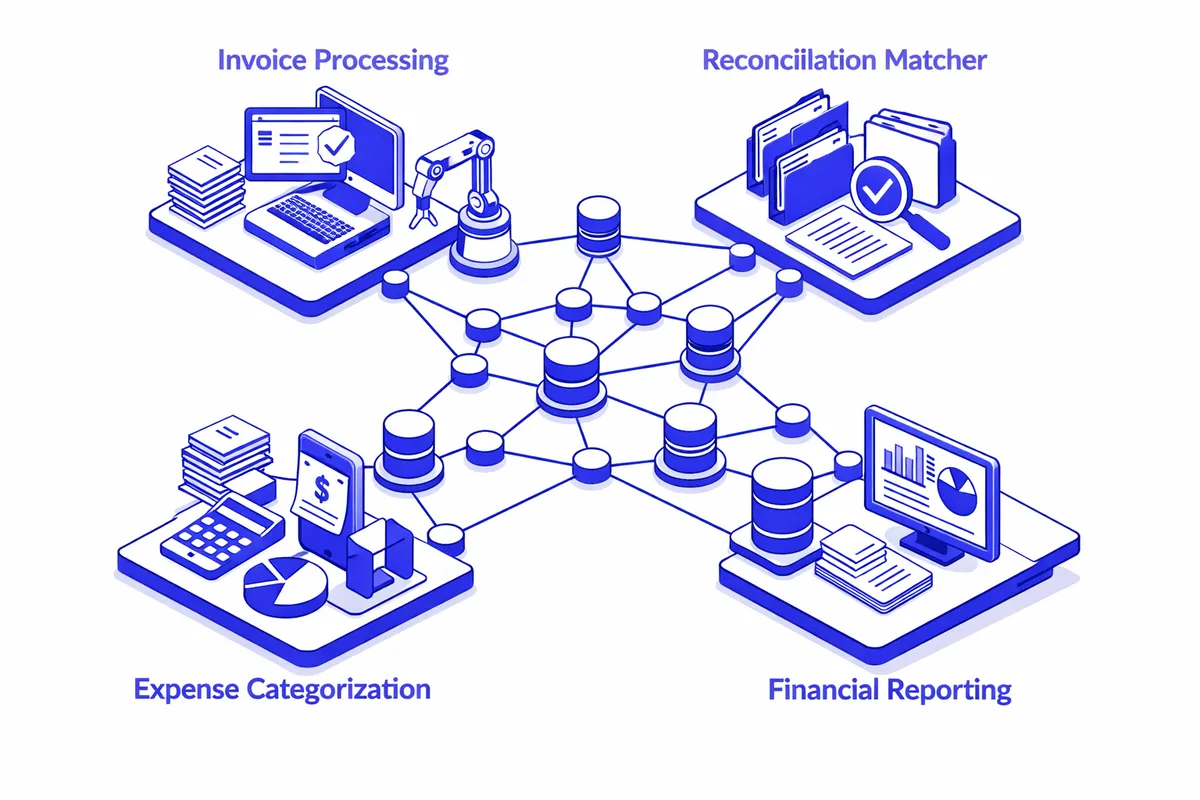
From there we connect your existing systems. Most Old Town businesses are already using Square, Toast, or Clover at the point of sale and either QuickBooks or Xero for accounting. We build the integration that pushes transaction data from the former to the latter automatically, with the correct categorization rules applied in transit. Bank feeds connect the same way. By the time setup is complete, the only entries that require human review are edge cases: vendor credits, disputed charges, and anything the system flags as ambiguous.
We document every automation we configure and train your team on how to handle the flagged exceptions. The goal is a system you can hand to any new bookkeeper or office manager and have them operational in a day. Month-end close, which might have taken four to six hours of manual work, typically drops to under an hour of review once the automation is running.
Industries We Serve in Old Town
Comedy clubs and performance venues along Wells Street deal with multi-revenue-stream accounting that breaks manual systems quickly. Ticket sales, bar revenue, private event deposits, and talent payments all need to land in the correct accounts and sub-accounts without someone manually sorting every transaction. Automation handles the categorization and flags any transaction that does not match a known pattern.
Restaurants and bars between North Avenue and Eugenie Street run high transaction volumes with tight margins. A single Wells Street dinner spot might process 300 covers on a Friday, each generating a separate card transaction. Automated reconciliation matches every POS transaction to the corresponding deposit without a human touching the data.
The interior design and home furnishing studios that have operated in Old Town for decades regularly invoice project clients in installments and need to match those invoices against deposits and final payments. Accounting automation creates invoices from project milestones, sends reminders automatically, and posts payments to the correct client account the day they clear.
Boutique retailers on Wells Street deal with inventory accounting that gets complex fast. When a product sells, the revenue hits the books and the cost of that item needs to decrease inventory value simultaneously. Automated inventory-linked accounting keeps cost of goods sold accurate in real time instead of at quarter-end.
Medical and dental practices near LaSalle Drive manage insurance reimbursements, patient copays, and accounts receivable aging reports that manual processes handle poorly at any volume. Automated insurance payment posting and AR reporting give practice managers an accurate picture of collections without weekly reconciliation sessions.
Real estate offices operating in Old Town, where property values on streets like Sedgwick Street and LaSalle Drive make individual deals significant, need accurate commission tracking, escrow account management, and agent payout records. Accounting automation applies commission split rules at the transaction level and generates accurate statements without manual calculation.
What to Expect Working With Us
1. Revenue stream mapping. We document every source of income and every category of expense in your business before we touch any software. This step takes longer than most owners expect, but it is the work that determines whether the automation will be accurate. A business on Wells Street that has not documented its revenue categories cannot automate its accounting without that foundation.
2. System integration and rule configuration. We connect your POS, banking feeds, payroll processor, and accounting platform. Every connection is tested against historical data before it goes live. Categorization rules are validated against three months of actual transactions so the system reflects how your business actually operates.
3. Reconciliation calibration. For the first four weeks after launch, we review exception reports with you weekly. Some businesses have edge cases that did not surface in the historical test. This calibration period catches and resolves those cases before they become habits.
4. Handoff and documentation. We deliver a documented playbook of every automation, every rule, and every exception protocol. Your team can manage the system independently. We are available for quarterly reviews and for any significant operational change that requires reconfiguring the automation rules.