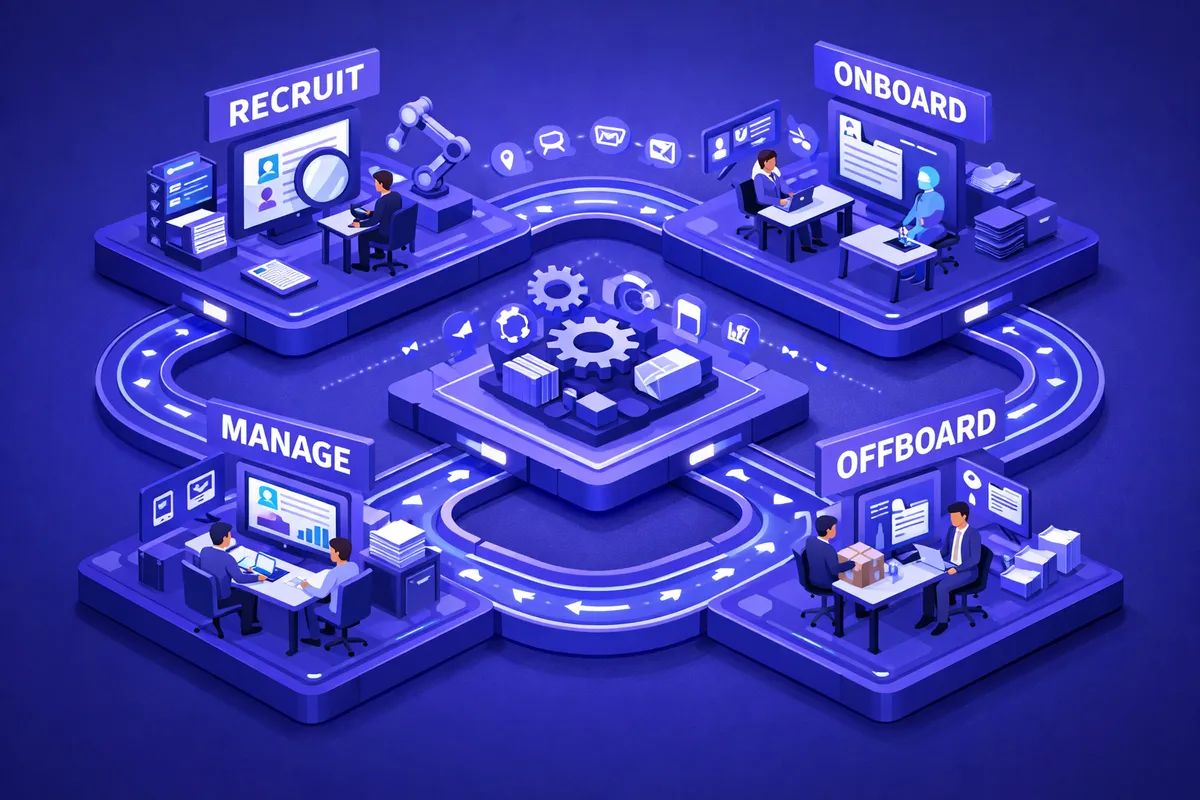
How We Build HR Automation for Oak Park
The first conversation we have with an Oak Park client is about their current state: what they are tracking manually, what keeps falling through the cracks, and which HR tasks they dread most. For a law firm on Lake Street, that might be tracking continuing education credits alongside time-off accruals. For a therapy group practice on Madison Street, it might be managing contractor versus employee classification for associate therapists. We document every personnel workflow the business runs today, identify the ones with the most error surface, and prioritize those for automation first.
From that audit, we configure your HR platform around your actual operations rather than a generic template. Onboarding sequences include your specific documentation requirements, your benefits enrollment windows, and your compliance checkpoints for Illinois paid leave law. We build the approval chains to match how your practice actually makes decisions: maybe your senior partner approves time-off requests over five days, and your office manager handles anything shorter. The system reflects that.
We also connect HR automation to your adjacent tools. If you are running payroll through a regional provider, we build the integration so new hire data does not get re-entered twice. If you use a project management platform to track billable work, we can surface scheduling and capacity data alongside HR data. For an architecture firm on Oak Park Avenue, that kind of integration means knowing simultaneously who is available, who has outstanding certifications to complete, and how PTO accrual sits for the team heading into a busy project phase.
Training matters more than most vendors acknowledge. An Oak Park professional who has been running HR manually for years will not switch to a new system because it exists. We run working sessions with whoever will actually use the platform, we document the workflows they will touch most often, and we stay available in the weeks after launch when real edge cases come up.
Industries We Serve in Oak Park
Law practices and professional legal offices on Lake Street and Oak Park Avenue use HR automation to manage attorney licensing documentation, track CLE credit requirements alongside standard time-off policies, and standardize onboarding for new associates. The combination of professional compliance obligations and a small administrative team makes automation especially valuable: the system handles the recurring tracking tasks so the practice administrator can focus on higher-judgment work.
Independent therapists and group counseling practices along Madison Street face a classification question that recurs constantly: which practitioners are employees, which are contractors, and what documentation each relationship requires. HR automation creates distinct onboarding tracks for each arrangement, maintains the required records, and flags when annual contractor agreements need renewal. Practices can scale their associate roster without the documentation overhead compounding proportionally.
Architecture and design firms in Oak Park's professional corridor use automated HR systems to track project-based staffing, manage licensure renewal deadlines for registered architects, and coordinate PTO around project timelines. When a firm near the Frank Lloyd Wright Home and Studio is managing multiple commissions simultaneously, knowing who is available and what compliance milestones are approaching is operationally critical.
Independent retailers on Lake Street, from specialty home goods stores to independent bookshops, use HR automation to handle seasonal staffing cycles. Consistent onboarding, clear shift policies, and automated time tracking mean managers spend less time on administration and more time on the floor during the busy stretches when Wright Plus and Scoville Park events bring extra customers to the neighborhood.
Real estate brokerages and property managers serving the Oak Park and River Forest markets use automated HR tools to manage agent licensing status, track commission structure documentation, and handle the particular onboarding complexity of bringing on licensed agents who are technically independent contractors. The system maintains the audit trail that compliance requires without treating every new agent relationship like a full-time hire.
Restaurants and food service businesses along Lake Street and Chicago Avenue deal with a high-turnover workforce where onboarding speed matters. Automated HR handles digital paperwork collection, I-9 verification workflows, and required training acknowledgments so a new hire can complete their pre-start documentation before they walk through the door. That means day one is about the job, not the stack of forms.
What to Expect Working With Us
1. Operations and compliance audit. We spend time with whoever manages HR at your Oak Park business today, map every personnel workflow, and identify where Illinois compliance requirements intersect with your current manual processes. Most practices discover three or four specific risk points they were not actively monitoring. That audit shapes the build plan.
2. Platform configuration around your structure. We configure your HR system to match your org chart, approval flows, pay structure, and document requirements. No generic templates. A law firm on Lake Street has different configuration needs than a restaurant on Chicago Avenue, and we build for your actual situation.
3. Integration with your existing tools. Payroll platforms, scheduling software, accounting systems. We connect the pieces you are already using so HR automation reduces re-entry and errors rather than adding another siloed system to manage.
4. Go-live support through the first hiring cycle. The real test of HR automation is not setup. It is the first time you use it to onboard someone new. We stay close through that cycle, troubleshoot anything that surfaces, and refine the system based on how it performs against real scenarios rather than our configuration assumptions.