How We Build Document Management for Oak Park
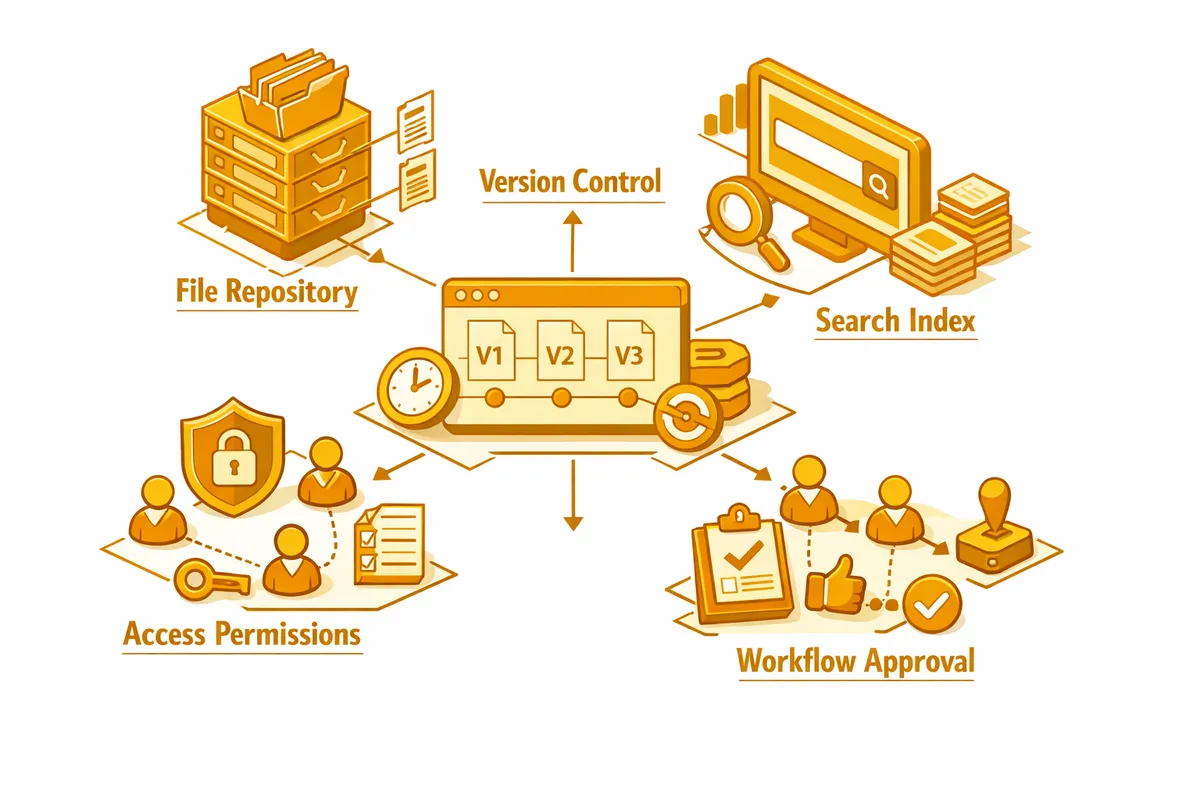
Every Oak Park engagement opens with a document audit. We catalog every kind of record the practice creates and receives, where each one currently lives, who touches it, and which regulations govern how long it has to be kept and who may see it. For a law firm near Lake Street, that audit usually surfaces matter files, court records, client correspondence, and engagement letters scattered across physical cabinets, a server folder, and email threads with no consistent naming.
From the audit we design a taxonomy specific to the practice. For an Oak Park attorney, that means a structure organized by client and matter type, with categories that match how legal work actually accumulates. For a therapy practice off Madison Street, it means clinical records held separately from billing and administrative files, because the confidentiality line has to be built into the structure, not left to staff memory.
Access controls follow that taxonomy and we implement them technically, not as a policy memo. In a counseling practice, clinical notes reach clinical staff only. In an architecture firm on Oak Park Avenue, a project's drawing set is open to the team on that project and closed to everyone else. Every implementation also includes migration. Oak Park practices often hold years of paper and decades of digital files, so we catalog, digitize what needs it, and move those records in with consistent metadata applied along the way. The system goes live organized, not inheriting the disorder it was meant to replace.
Industries We Serve in Oak Park
Law firms and solo attorneys near Lake Street use document management to bring matter files, court records, and client correspondence into one searchable repository organized by client and matter. An attorney who can surface any filing in under a minute during a deadline window operates in a different register than one digging through a cabinet, and the audit trail proves exactly who accessed what.
Therapists and counseling practices with offices off Madison Street rely on document management to keep clinical records confidential by structure. Notes sit behind role-based access that billing and reception staff cannot cross, retention follows the rules governing mental health records, and the practice can demonstrate compliant handling rather than just assert it.
Architecture and design firms along Oak Park Avenue manage drawing sets, permit applications, survey records, and contractor correspondence for renovations of the village's historic housing stock. A document management system keeps each project's full set organized and findable years later, when a past client returns or a preservation question reopens a closed file.
CPA and accounting offices in the buildings along Chicago Avenue hit their hardest stretch during tax season. Document management gives them a structured repository for client returns, source documents, and prior-year filings, so the spring crush runs on a system that retrieves records on demand instead of a folder sprawl that slows every engagement.
Real estate brokerages working the blocks around Scoville Park handle purchase agreements, disclosures, inspection reports, and closing documents on tight timelines. A document management system keeps each transaction's paperwork in one place with version control, so an agent is never chasing the current draft of a contract across email the day before a closing.
Independent retailers and restaurants along Lake Street and Madison Street keep licensing records, health inspection reports, lease agreements, and employee files that a casual drawer-and-thumb-drive setup puts at risk. Document management centralizes those records, makes them searchable, and ensures the owner can produce an inspection history or a signed lease without a frantic search.
What to Expect Working With Us
1. Records inventory. We catalog every document type the practice handles, where it lives now, who accesses it, and the retention and confidentiality rules attached to it. This inventory is the foundation, and for Oak Park's regulated professions it is also where compliance gaps first become visible.
2. Practice-specific taxonomy. We design a filing structure that matches how your practice actually works, by client and matter for a law firm, by clinical versus administrative for a counseling practice. The structure carries the confidentiality logic so it is enforced by design, not by reminder.
3. Technical access controls. We implement role-based permissions, encryption, and audit logging in the system itself. Staff see only what their role requires, and every file access is recorded, which matters when an Oak Park practice has to demonstrate compliant handling.
4. Migration done in order. We catalog, digitize, and move your existing paper and digital files into the new system with consistent metadata applied during the move. Including older renovation and matter records tied to the village's long-lived projects, so the system launches organized.