How We Build Autonomous Agents for Oak Park Professionals
We start by mapping the specific workflow you want to automate, understanding every step in the current process before designing any automation.
Workflow discovery and mapping. We observe how you currently handle the target workflow, whether email triage, document processing, scheduling, or project tracking. We identify the decision criteria, the exceptions, and the priority signals that guide your current choices. We map the complete workflow so we understand exactly what we are automating and where human judgment must remain.
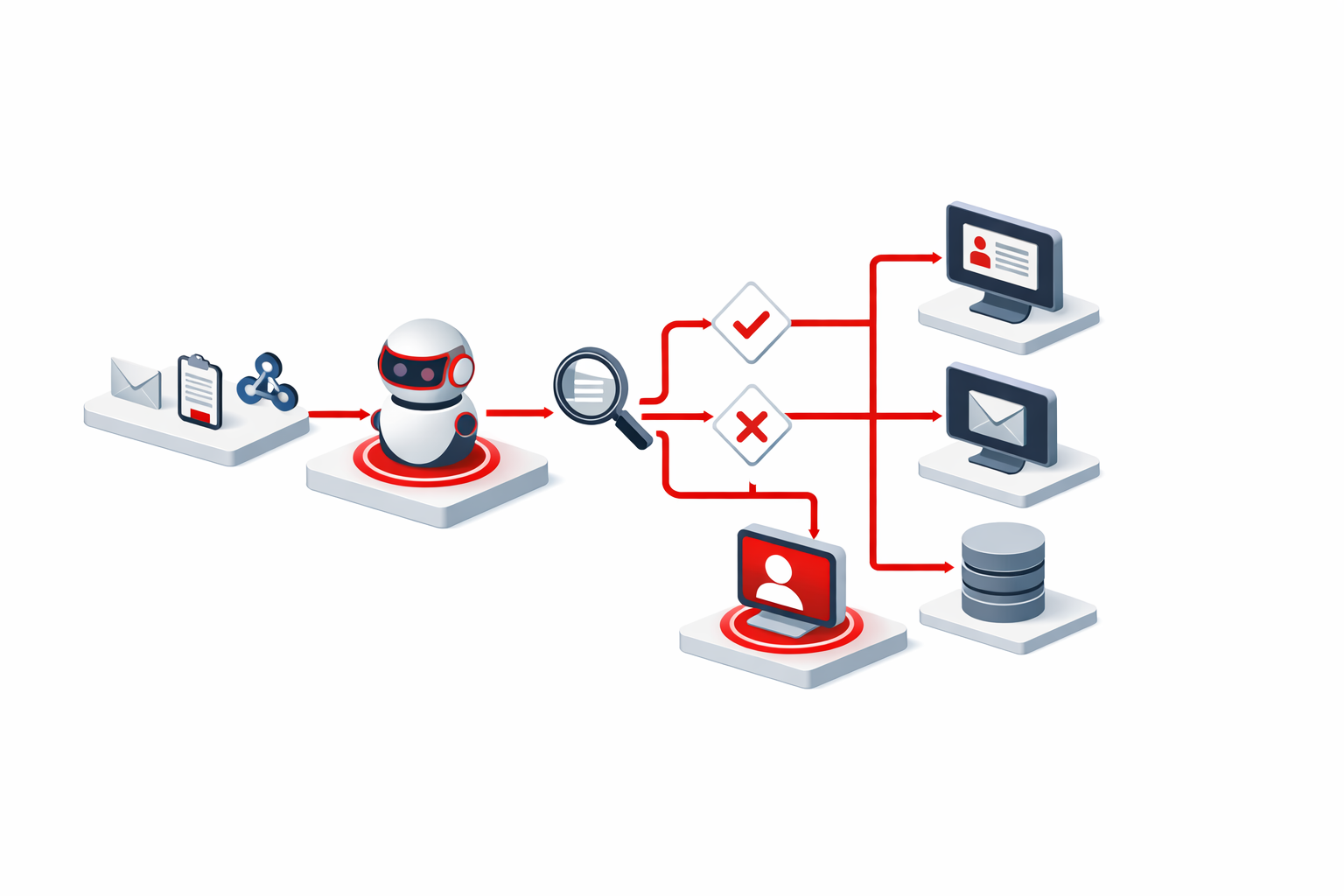
Agent design and system integration. We design an agent that operates on the principles you described during discovery. The agent gets read access to your email, calendar, document systems, and project management tools. We configure monitoring dashboards so you can see what the agent is doing in real time. We establish approval workflows so decisions above a defined risk threshold still require human confirmation.
Training and calibration. We deploy the agent and observe its initial performance. We train it on your actual decisions and preferences. For the first two to three weeks, we typically configure the agent to flag decisions for your quick approval while refining its understanding. As accuracy improves, we extend autonomy to the decisions where the agent has demonstrated reliability.
Transparency and oversight. The agent works for you, not the reverse. You see what it is doing, what decisions it is making, and what it has surfaced for your review. You intervene when judgment is needed and provide feedback that improves the agent's future performance. The agent's activity log is always accessible.
Ongoing management and refinement. We monitor agent performance, provide quarterly reviews showing what the agent has handled, and update rules and priorities as your practice evolves. As your team grows or your practice areas shift, the agent adapts.
Industries We Serve in Oak Park
Law firms and legal practices deploy agents to triage incoming emails by matter and urgency, flag documents requiring attorney review, schedule client meetings based on case status and attorney availability, and generate billing narratives and status updates. For solo attorneys and small firms along Madison Street and Marion Street, an agent handling administrative work traditionally requiring a paralegal creates significant capacity without the cost of hiring.
Architecture and design studios use agents to track design feedback and revision requests across active projects, organize client communications by project phase, schedule design reviews and client presentations, and generate project status updates. Architects near the Lake Street corridor spend less time in email and more time developing work they actually want to be known for.
Accounting and bookkeeping practices deploy agents to process incoming tax documents, categorize transactions and receipts, flag questionable entries for review, and prepare year-end documentation summaries. Accountants on Lake Street during tax season focus on analysis and client counsel rather than document management.
Management consultants and advisory practices use agents to track deliverables and deadlines, schedule client check-ins based on engagement phase, route meeting notes to relevant team members, and flag timeline concerns before they become crises. Consultants focus on client strategy rather than administrative coordination.
Medical and healthcare practices deploy agents to route patient inquiries, schedule appointments based on provider availability and patient need category, organize incoming records and referrals, and generate appointment reminders with relevant preparation instructions.
Nonprofit organizations deploy agents to manage volunteer scheduling and communications, route donor inquiries, track grant deadlines and required reporting, and organize program documentation. Limited staff capacity extends further when administrative coordination is automated.
What to Expect Working With Us
1. Workflow discovery and process documentation. We spend time observing and documenting the workflow you want to automate. We identify every decision point, every exception type, and every system involved. We map the workflow clearly so we can design automation that reflects reality rather than an idealized process description.
2. Agent design and system architecture. We design the agent architecture, configure integrations with your email, calendar, document, and project management systems, and establish monitoring dashboards and approval workflows. We set autonomy levels appropriate to the risk profile of each decision type.
3. Training and calibration. We deploy and calibrate the agent over three to four weeks of supervised operation. We train it on your actual decisions and preferences. We measure accuracy and adjust configuration based on real performance data.
4. Full deployment and ongoing refinement. We release the agent to full autonomous operation in its approved domains, maintain monitoring, and provide quarterly reviews showing impact. We update agent configuration as your workflow or priorities change.