How We Build AI Strategy for Oak Park
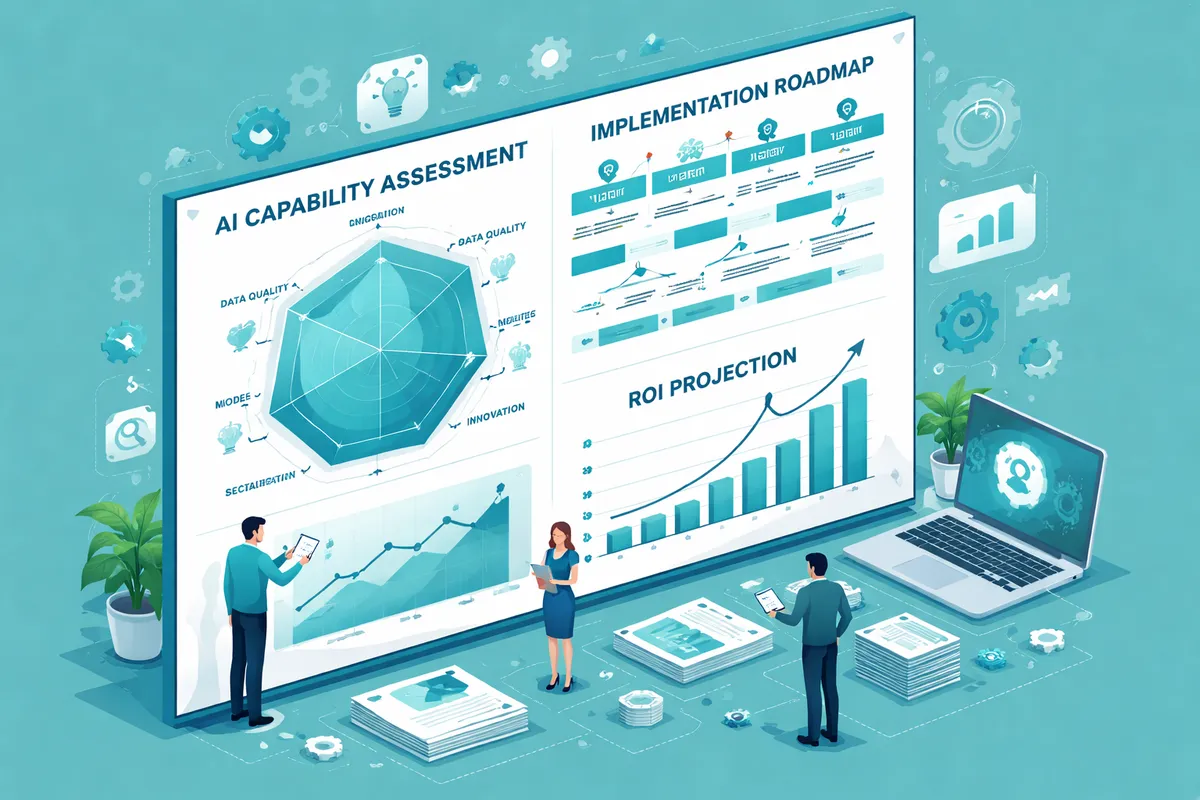
Our process is built in layers. First, we conduct a diagnostic of your current operations and competitive position. For a law firm, that means understanding your matter types, your hourly rates, where staff time is consumed, and where mistakes are most costly. For a design practice, it means understanding your project types, your fee structure, your creative workflow, and where AI might enhance rather than replace human creativity. For a professional services firm of any type, it means identifying the 20% of tasks that consume 80% of staff time and asking whether AI can reallocate that time to higher-value work.
From that diagnostic, we build a strategic matrix that evaluates AI opportunities across three dimensions: impact on revenue, impact on efficiency, and operational feasibility. High-revenue opportunities that are easy to implement become your Phase 1. Medium opportunities that unlock team capacity become Phase 2. Long-term opportunities that require significant process change become your Phase 3. This is not theoretical strategy. It is a roadmap you execute against month by month.
We then evaluate the vendor landscape for each opportunity. Build versus buy is not an academic question in Oak Park. You want to know the actual cost, integration effort, training burden, and ongoing maintenance required for each option. We provide that comparison so your decision is made on information rather than sales pitch. We also help you structure vendor relationships, negotiate contracts that protect your interests, and plan for the vendor risk that is inevitable in any technology implementation.
Industries We Serve in Oak Park
Law firms and solo practitioners along Ridgeland Avenue and Madison Street use AI strategy consulting to evaluate contract review automation, legal research acceleration, and document automation. The decision is never just about capability. It is about privilege, confidentiality, and malpractice exposure. We help you understand what AI can handle without client consent, what requires disclosure, and what is still too sensitive to automate.
Architecture, interior design, and design studios in Oak Park's creative corridor adopt AI for concept generation, variation design, and client presentation preparation. AI does not replace the architect. It eliminates repetitive version iterations and lets your best designers spend time on conceptual thinking rather than mechanical drawing. We help you integrate AI into your design process in a way that enhances rather than commodifies your creative reputation.
Accounting and bookkeeping practices on Lake Street and throughout Oak Park's professional corridors deploy AI to automate data entry, categorize transactions, and flag anomalies that warrant human investigation. The economics change dramatically when AI handles the low-value data processing. Your accountants move from data entry to advisory conversations. We help you restructure your service model around that shift.
Therapists, counselors, and mental health practitioners use AI strategy consulting to evaluate note-taking automation, patient communication systems, and scheduling optimization. The core therapeutic relationship remains deeply human. But the administrative burden that surrounds that work can be substantially reduced. We help you understand which tools fit your practice and which would actually undermine your relationship with clients.
Independent consultants and management advisors adopt AI for research acceleration, report generation, and client communication. For a consultant billing by the hour, AI that reduces your research and analysis time by 20% is transformative. We help you implement AI tools that amplify your expertise without commodifying your advice.
Real estate professionals, brokers, and property managers along Lake Street and Madison Street use AI strategy consulting to evaluate market analysis automation, property marketing, and lead scoring. The real estate market in Oak Park moves on relationships and local knowledge. AI tools work best when they amplify that knowledge rather than replace it. We help you structure AI implementation that keeps you in control of client relationships.
What to Expect Working With Us
1. Discovery engagement and current-state analysis. We spend 2-3 weeks understanding your business model, your competitive position, your team structure, and your financial goals. We interview key stakeholders and map your current workflow. This is not a survey. It is a working understanding of how you actually make decisions and spend your time. We deliver a 20-page diagnostic document that identifies where AI could create advantage and where it is not relevant.
2. Strategic roadmap and vendor evaluation. We build a phased roadmap prioritized by impact and feasibility. For each opportunity, we evaluate build-versus-buy and provide specific vendor recommendations with projected costs and implementation timelines. This roadmap is your decision-making tool for the next 12-24 months. You make the final choices, but with complete information.
3. Implementation planning and team training. If you decide to move forward on Phase 1 opportunities, we help you structure the implementation, negotiate vendor contracts, and train your team. We do not stay on indefinitely. We help you get to the point where your team owns the tool and can operate it independently.
4. Quarterly strategic reviews and roadmap updates. After initial implementation, we check in quarterly to assess what is working, what needs adjustment, and whether new AI capabilities have opened opportunities that did not exist six months ago. AI moves quickly. Your strategy should evolve with the landscape.