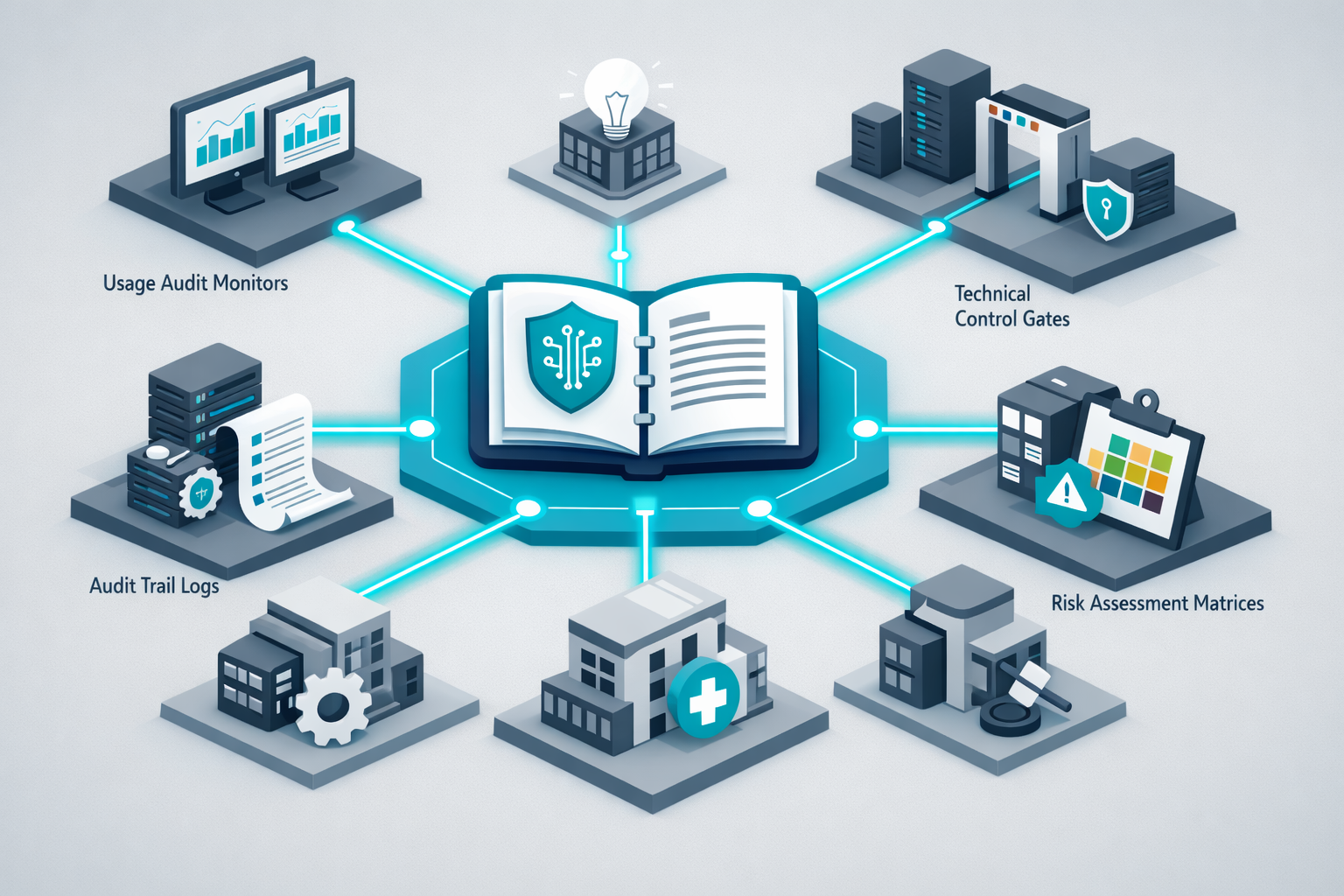
How We Build AI Governance for Oak Park Firms
Our process begins with understanding your current AI landscape, what tools are in use, what data they access, and what risks they present.
AI inventory and assessment. We catalog every AI system in use across your firm. We evaluate what each tool does, what data it processes, what third parties receive that data, and what risks each presents. Many firms are surprised to learn how many AI tools are actively in use across their practice.
Framework development. We develop governance specific to your firm type and practice areas. A law firm on Marion Street needs governance that addresses attorney-client privilege. An accounting practice needs governance addressing taxpayer confidentiality. An architecture firm needs governance addressing intellectual property in AI-assisted design. We draft policies, establish procedures, and create documentation.
Risk mitigation planning. We identify specific risks, including confidentiality exposure, analysis reliability, and regulatory compliance, and define mitigation approaches that fit your practice's actual workflow.
Implementation and training. We implement governance procedures and train your team. Your staff learns what AI tools are approved, how to use them within policy, what to document, and when to seek review.
Monitoring and audit. We establish monitoring to ensure governance is followed and working. Are policies being applied consistently? Are risks being managed as designed? We provide quarterly governance reviews and update frameworks as regulations evolve.
Industries We Serve in Oak Park
Law firms and legal practices establish governance for research AI, document review AI, contract analysis, and client communication support. Governance ensures client communications remain privileged, work product is properly reviewed, and AI use is consistent with bar association guidance for Oak Park and Illinois practitioners.
Accounting and CPA practices establish governance for tax research AI, financial analysis AI, and audit support. Governance ensures client tax information stays confidential, AI analysis is verified against authoritative sources, and practitioners can document AI use in client files.
Architecture and design firms establish governance for AI-assisted design generation, specification development, and project documentation. Governance ensures intellectual property is protected, specifications are professionally reviewed, and client project data is handled appropriately.
Medical and healthcare practices establish governance for clinical documentation AI, patient communication support, and administrative AI. Governance ensures HIPAA compliance, protects patient data, and establishes documentation standards for AI-assisted clinical work.
Consulting practices establish governance for research AI, analysis support, and client communication AI. Governance ensures client information is protected and AI-generated analysis meets the standards clients expect from professional advisors.
Independent professional practices of all types establish basic governance covering which AI tools are approved, how data is handled, what requires human review, and how AI use is documented in client files.
What to Expect Working With Us
1. AI inventory and risk assessment. We understand your current AI use, map every tool in active use across your practice, and conduct risk assessments for confidentiality, reliability, and regulatory compliance. Most firms learn something new during this phase.
2. Governance framework development. We develop policies, procedures, and documentation templates specific to your firm type and practice areas. We draft frameworks you can actually implement, not theoretical governance documents that gather dust.
3. Risk mitigation planning. We identify specific risks and define mitigation approaches. We recommend changes to how certain AI tools are used, what data they access, and what review processes are required before AI-assisted work goes to clients.
4. Implementation and staff training. We implement governance procedures across your practice. Your team learns what is permitted, what requires documentation, and what requires human review. Training is practical and focused on your actual workflows.
5. Ongoing monitoring and regulatory alignment. We monitor governance effectiveness and track regulatory changes from Illinois bar associations, accounting boards, and professional licensing authorities. We update your framework when regulations change.