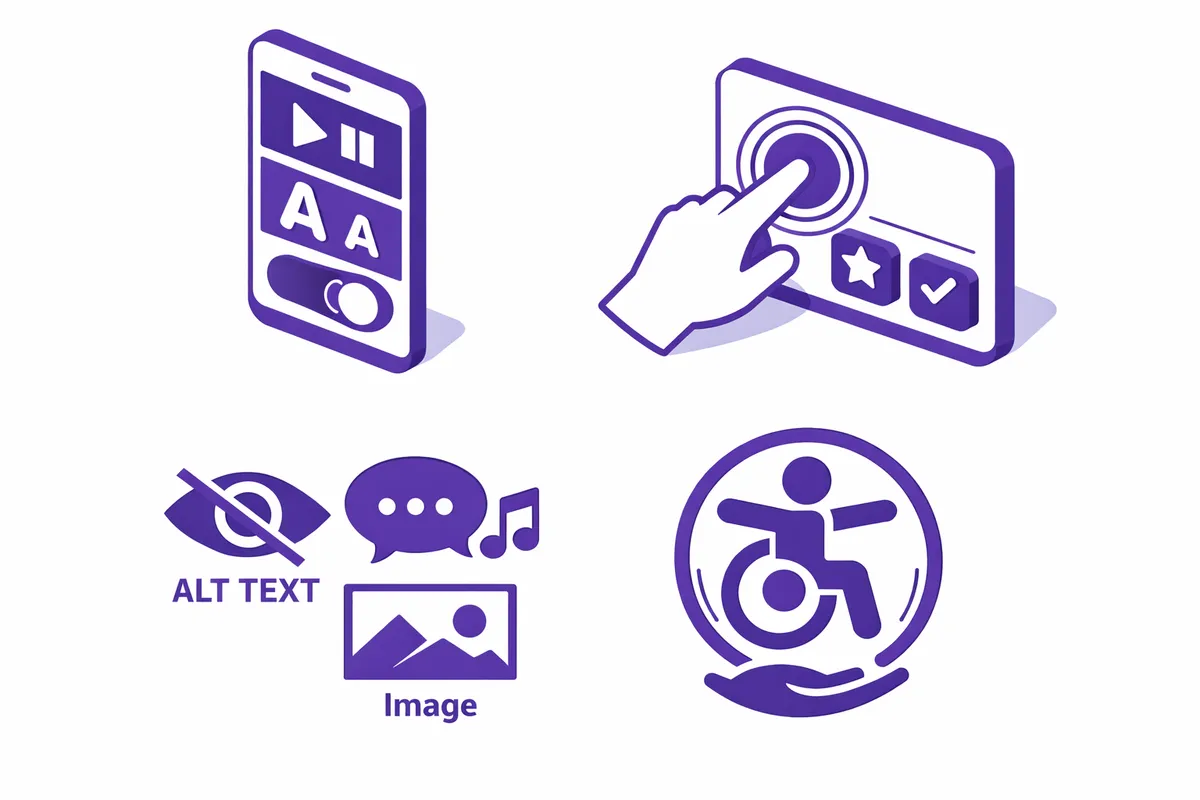
How We Build Accessible Design for Oak Park
We start every Oak Park project with a full accessibility audit before we write a line of new code. For a law practice off Lake Street, that means running automated scans across every page state and supplementing them with manual keyboard navigation testing and screen reader evaluation using NVDA, JAWS, and VoiceOver. The automated tools catch roughly 30 percent of real accessibility failures. The manual testing catches the rest: focus traps buried inside modal dialogs, form fields that lose their label associations when users zoom to 200 percent, PDF documents that lack reading order tags and are invisible to screen readers.
We then produce a remediation roadmap organized by severity. Critical issues that expose the business to legal risk and block core user tasks come first. Structural issues that degrade the experience for assistive technology users come second. Enhancement opportunities that bring the site to WCAG 2.1 AA compliance and beyond come third. For a counseling practice on Chicago Avenue, that sequence might begin with fixing unlabeled form fields in the appointment scheduler, continue with adding proper ARIA roles to the navigation, and conclude with improving color contrast across the entire design system.
Implementation follows the remediation map without shortcuts. We do not patch accessibility issues in ways that solve the automated scan while failing real users. Every heading hierarchy, every alt text string, every focus indicator style is tested against actual assistive technology before it goes to production. Oak Park clients get a post-launch compliance report they can keep on file.
Industries We Serve in Oak Park
Law and professional service practices along Lake Street rely on their websites to convert research-phase prospects into consultations. Accessibility matters here because potential clients may be navigating during periods of stress, on unfamiliar devices, or using assistive technology. We audit intake forms, document downloads, and contact pathways to ensure every visitor can complete the journey from landing page to booked consultation without hitting a barrier.
Restaurants and independent cafes on Oak Park Avenue draw regulars who research menus, hours, and accessibility features before visiting. We build menu displays that screen readers can interpret correctly, reservation widgets that work with keyboard navigation, and contact pages that do not require a mouse to operate. Scoville Park events bring new visitors to the neighborhood each summer, and a restaurant with a fully accessible website captures that audience when competitors do not.
Therapists and counseling practices on Madison Street and Chicago Avenue serve clients who may have cognitive, visual, or motor differences that make inaccessible interfaces actively harmful. We design appointment schedulers with reduced cognitive load, form fields with clear error messaging that does not rely solely on color, and site architectures that do not punish users who need to navigate non-linearly.
Independent retailers along Oak Park Avenue increasingly operate hybrid commerce models: physical store plus e-commerce. An accessible product catalog means that customers with visual impairments can shop online with the same independence they have in person. We build product pages with proper image alt text, checkout flows that announce status updates to screen readers, and filter interfaces that work correctly with keyboard navigation alone.
Architecture and design firms near the Frank Lloyd Wright Home and Studio have a particular obligation to model good design thinking. When a firm's portfolio website uses decorative images as functional navigation or publishes case studies as untagged PDFs, it contradicts the discipline they claim to practice. We build portfolio sites that demonstrate the same accessibility principles the firm should be applying to its built work.
Real estate practices operating across Oak Park and into neighboring River Forest and Berwyn use property listing platforms that are frequently inaccessible: image carousels without pause controls, map embeds that trap keyboard focus, and PDF floor plans with no accessible alternative. We audit and remediate these platforms so every prospective buyer or renter can evaluate listings independently, regardless of how they navigate the web.
What to Expect Working With Us
1. Full-site accessibility audit. We evaluate every page state, interactive element, and document on your site against WCAG 2.1 AA criteria. The audit combines automated scans with manual keyboard and screen reader testing so the results reflect what real users experience, not just what Lighthouse reports. You receive a written report sorted by severity with screenshots and remediation guidance.
2. Remediation and build. We work through the audit findings in severity order. For Oak Park professional practices, this phase often includes fixing document accessibility for the PDFs that legal, financial, and architectural firms publish routinely. We handle both the code-level fixes and the content-level work: alt text, heading structure, link labels, form instructions.
3. Seasonal readiness check. Oak Park's Frank Lloyd Wright home tour season and Farmers Market schedule bring increased site traffic in spring and fall. Before peak season, we run a targeted accessibility check focused on the pages most likely to receive new visitors: location, hours, services, and contact. This is the practical version of seasonal campaign preparation for an accessibility-forward market.
4. Compliance documentation and ongoing monitoring. After launch, we provide a VPAT (Voluntary Product Accessibility Template) or equivalent accessibility statement for your site. We set up automated monitoring that flags new accessibility issues as your content team publishes updates. You are not left to discover regressions through a complaint.