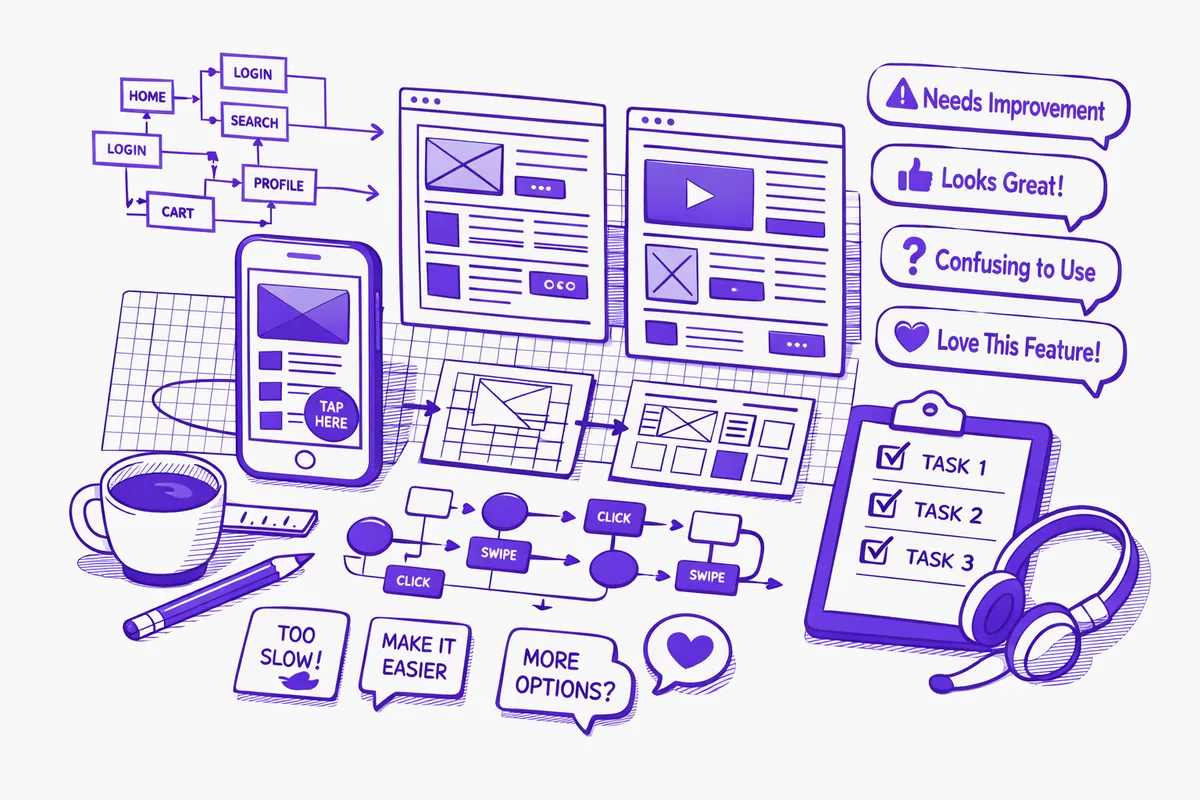
How We Build UI/UX Design for Oak Lawn
Our design process begins with user research, not wireframes. For an Oak Lawn medical practice, that means understanding who the patients are, how they currently interact with the practice, what they expect from a digital portal, and what will cause them to abandon it. We conduct brief interviews or observation sessions with representative users before we design anything. The insights from those sessions determine every major design decision.
From user research, we build a requirements framework: what tasks must the interface support, in what priority order, and with what level of difficulty tolerance given the user profile. A patient portal for a practice with significant senior patient volume needs appointment booking accessible from the home screen, not buried two menus deep. A staff tool for service technicians needs the most-used action available in a single tap, not a dashboard that requires navigation to find.
Design proceeds from low-fidelity wireframes to high-fidelity prototypes that can be tested with real users before development begins. Testing early, when changes are cheap, consistently reveals assumptions that the design team held and the target users do not share. We test prototypes with Oak Lawn residents who match the target user profile, not with tech-comfortable testers whose experience of the interface is not representative.
Industries We Serve in Oak Lawn
Medical practices and clinical offices near Advocate Christ Medical Center on 95th Street develop patient portals, provider scheduling interfaces, and billing tools that serve patients ranging from tech-comfortable millennials to elderly patients who prefer paper but are being nudged toward digital. We design healthcare interfaces that accommodate that range: clear typography, large tap targets, task-oriented navigation, and error states that explain what happened in plain language.
Insurance agencies on Cicero Avenue build client portals where customers can view policy documents, report claims, request changes, and communicate with their agent. The UI/UX for an independent agency client portal needs to feel personal and accessible, not like the impersonal web interfaces that large carriers deploy. Design that reflects the agency's local character retains more users.
Auto dealers and service centers on Harlem Avenue build service scheduling interfaces, vehicle history portals, and fleet management dashboards that service writers, technicians, and customers interact with in different contexts. A service writer needs a different interface than a customer booking their first appointment online. We design each view for its specific user and context.
Specialty retail businesses near The Fairway Retail Center on 103rd Street build e-commerce experiences, custom order configurators, and loyalty program interfaces that serve Oak Lawn shoppers who are comfortable with online shopping but expect the same clear, friction-free experience they get from major retailers. Local retailers who match that experience standard retain customers that would otherwise buy online.
Small professional offices throughout Oak Lawn build client portals, intake questionnaires, and document request interfaces that serve a client base that values professionalism and clarity over novelty. A legal or accounting client portal designed for Oak Lawn clients prioritizes document access, status visibility, and clear communication over feature density.
Youth-serving organizations and family service businesses in Oak Lawn develop enrollment interfaces, event registration tools, and communication portals that serve parents who are busy, often managing multiple children's schedules, and who need interfaces that complete successfully in the two minutes they have between dropping off and picking up.
What to Expect Working With Us
1. User research and requirements definition. We conduct brief interviews or behavioral observation with people who represent the target users for the product. For Oak Lawn healthcare and professional service applications, this typically involves recruiting two to four patients or clients who match the target profile. The output is a written requirements framework that defines what the interface must accomplish, in what priority order, for which users.
2. Wireframe development and review. We build low-fidelity wireframes for every screen in the interface and review them with the business owner and, where possible, with representative users. Wireframes at this stage are fast to change. We resolve structural and flow problems here before we invest in visual design.
3. Prototype design and usability testing. We develop high-fidelity prototypes and conduct brief usability tests with Oak Lawn residents who match the target user profile. We specifically seek users who represent the less tech-fluent segments of the intended audience. Testing at this stage consistently identifies 2 to 4 significant issues that would otherwise be discovered after development, when changes are expensive.
4. Design delivery and developer handoff. Final designs are delivered with complete developer specifications: component library, spacing system, interaction states, and behavior documentation. We remain available during development to answer questions and review implementation against the design intent.