How We Build RAG Systems for Oak Lawn
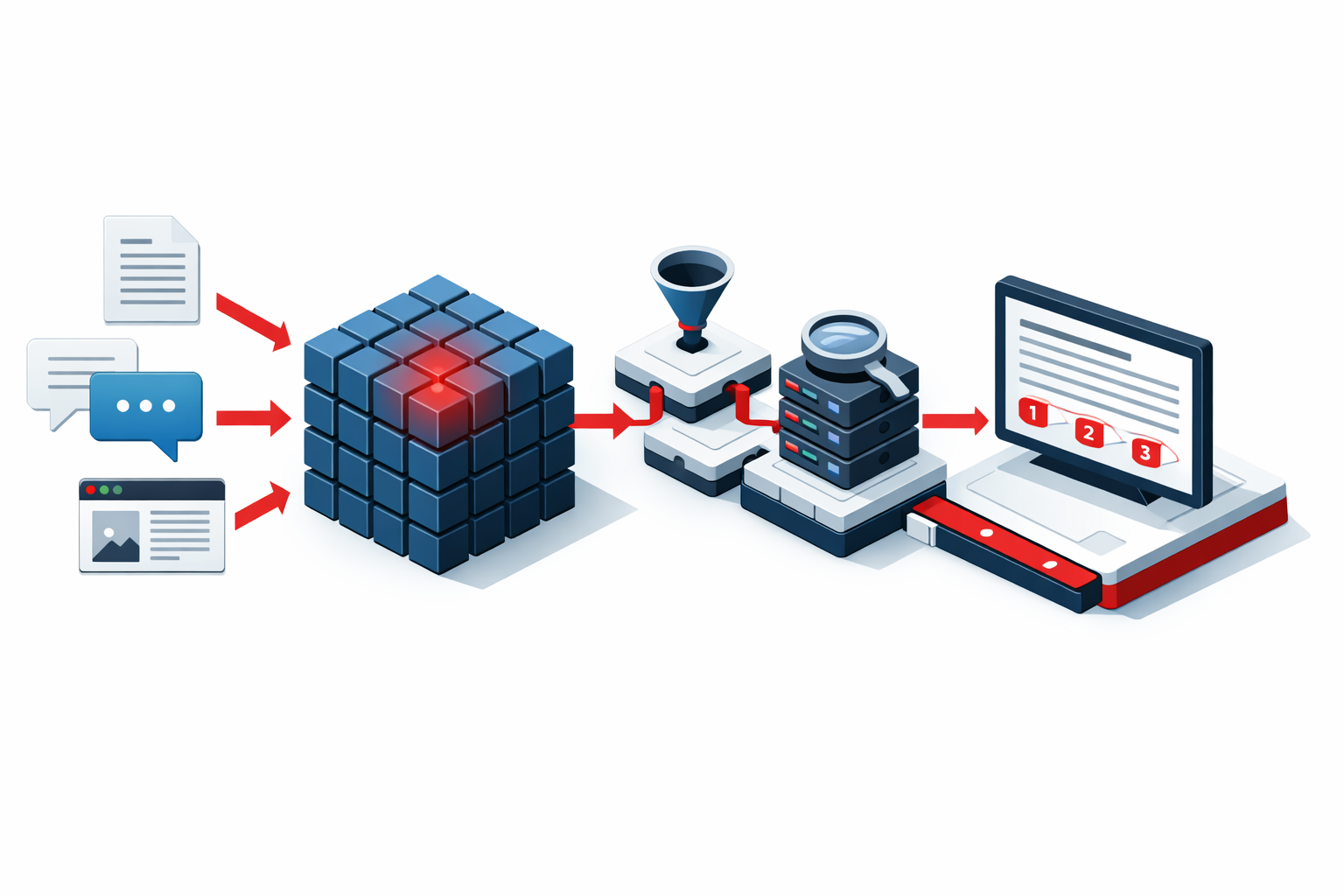
RAG development begins with a knowledge audit. We review what documents your organization has, where they live, how current they are, and which ones are most frequently needed but hardest to find. For an insurance agency, this typically includes policy manuals, underwriting guidelines, class appetite documents, state compliance summaries, producer guides, and precedent files. For a medical practice, it includes clinical protocols, payer requirements, compliance procedures, referral guidelines, and administrative procedures.
The audit produces a knowledge inventory ranked by value and reliability. High-value, high-reliability documents, current payer requirements, active underwriting guidelines, clinical protocols with defined review dates, are prioritized for initial indexing. Outdated or uncertain documents are flagged for review before inclusion, because a RAG system that returns information from a superseded protocol is worse than no RAG system.
Document preparation processes the selected documents for indexing. This involves cleaning formatting inconsistencies, resolving conflicting information across documents, ensuring metadata is accurate, and structuring content so the retrieval system can match queries to relevant sections accurately. Healthcare documents with PHI undergo de-identification or access restriction before indexing.
The retrieval and generation system is built and tested with real queries from your staff. We do not test with synthetic questions. We collect the actual questions your team asks, the knowledge lookups that currently require search or colleague consultation, and test whether the RAG system returns accurate, useful answers. Testing reveals retrieval gaps, documents that are needed but not yet indexed, and generation quality issues, where the answer is technically drawn from a correct source but presented in a way that requires further reading to be useful.
Interface design puts the system where your staff works. A desktop interface for underwriters who work at a workstation all day. Integration into your Slack or Teams environment for organizations where conversation is the primary work surface. A mobile-friendly interface for clinical staff who move between exam rooms. We build for your staff's actual working patterns, not for a use case where they will adopt new habits to access the system.
Industries We Serve in Oak Lawn
Insurance agencies on 95th Street and Cicero Avenue build Oak Lawn-focused RAG systems on underwriting guidelines, class appetite documents, state compliance references, policy manuals, and precedent case files. Producers and underwriters who can query the agency's collective knowledge instantly spend less time searching and more time writing business. New producers who can access institutional knowledge on demand ramp faster and make fewer underwriting errors in their first year.
Medical practices and specialty clinics near Advocate Christ Medical Center build RAG systems on clinical protocols, payer prior authorization requirements, care pathways, compliance procedures, and administrative workflows. Care coordinators who can ask "what does BlueCross require for prior auth on this procedure?" and receive an accurate answer from the agency's current documentation reduce authorization errors and processing time.
Medical billing and coding services build RAG systems on payer-specific billing requirements, procedure code documentation standards, denial rework procedures, and coding reference materials. Billing staff who can query the knowledge base for payer-specific submission requirements before a claim is filed submit with higher accuracy and receive fewer denials from avoidable documentation errors.
Healthcare administrative and compliance consulting firms build RAG systems on regulatory reference material, compliance frameworks, audit guidance, and enforcement precedent. Consultants who serve multiple healthcare clients across the southwest suburban market use RAG to access regulatory knowledge that applies across their client portfolio without maintaining separate reference libraries for each engagement.
Small professional offices including accounting firms near the Fairway Retail Center in Oak Lawn build RAG systems on tax code references, client-specific procedural notes, professional standards guidance, and engagement templates. Accountants who can ask "what was our position on this issue for this type of client last year?" without digging through engagement files save meaningful time during the high-volume months when every efficiency compounds.
Auto dealerships along the Oak Lawn southwest suburban corridor build RAG systems on manufacturer service bulletins, warranty claim procedures, recall information, and service advisor training materials. Service technicians who can query technical bulletins by symptom description rather than searching through manufacturer portals resolve diagnostic questions faster.
What to Expect Working With Us
1. Knowledge audit and document prioritization. We inventory your existing documents, assess quality and currency, and prioritize the knowledge most valuable and most reliable for initial indexing. This phase produces a document inventory your team reviews and approves. Typically one to two weeks.
2. Document preparation and indexing. We clean, structure, and index the prioritized documents. For healthcare clients, we apply appropriate PHI handling throughout. Indexing typically takes two to four weeks depending on document volume. We provide a preview of the searchable knowledge base before moving to the query layer.
3. RAG system configuration and testing. We configure the retrieval and generation system, test with real queries from your team, and tune for your specific document types and query patterns. Testing reveals gaps and quality issues that we address before deployment. Typically two to three weeks.
4. Interface deployment and staff adoption. We deploy the interface into your working environment, train staff on how to query the system effectively, and monitor adoption during the first 30 days. We review which queries are returning good answers and which are not, and refine accordingly.