How We Build POS Systems for Oak Lawn
POS design for Oak Lawn businesses begins with understanding which commercial segment the client operates in. The healthcare-adjacent professional services market has POS requirements that differ sharply from the family restaurant or specialty retail categories, and we treat those as distinct engagements rather than variations on a single template.
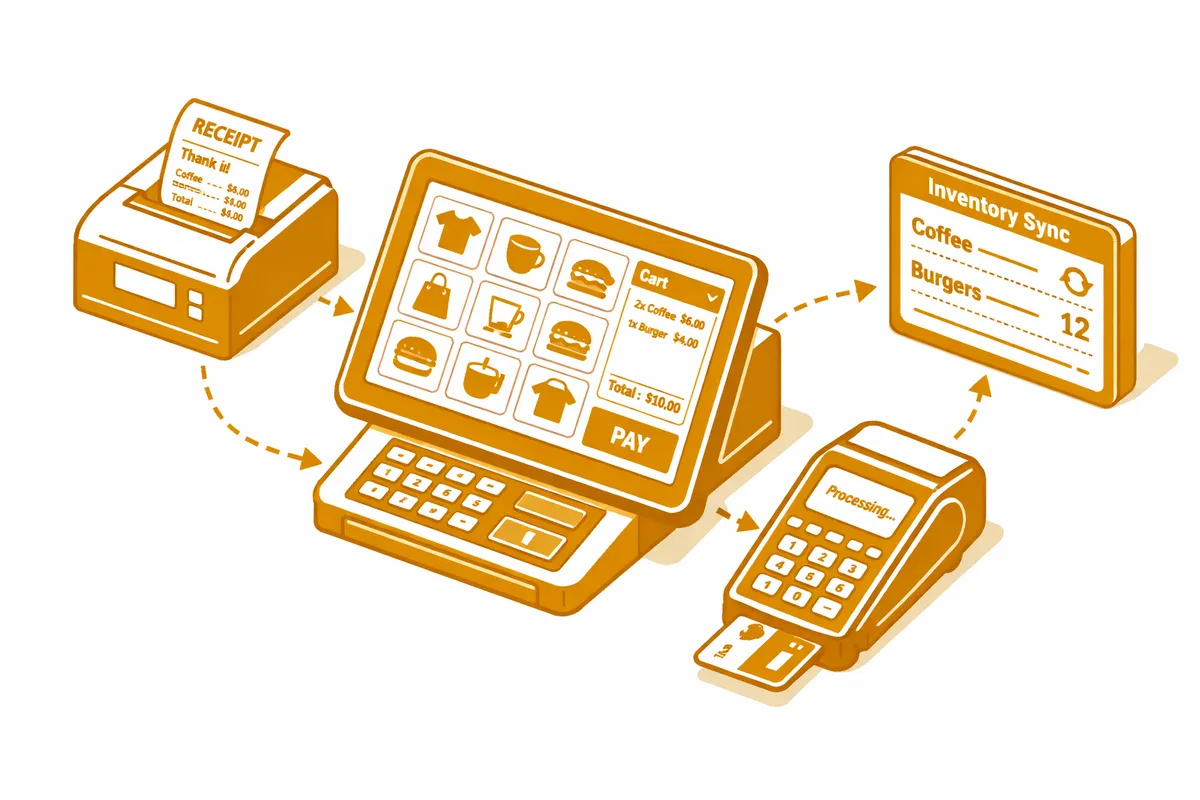
For restaurant and food service clients on Harlem Avenue, Cicero Avenue, and 95th Street, the configuration priorities are speed of service, kitchen display integration that works without a server physically walking to the kitchen, and delivery platform integration that does not require staff to manage orders on a separate device. Oak Lawn diners expect efficient service; they are not visiting as a leisure destination. A POS configuration that minimizes steps between order-taking and kitchen ticket production serves the operational reality.
For professional offices and healthcare-adjacent practices on Pulaski Road and in the 95th Street corridor, the integration priorities are co-pay and patient billing reconciliation, end-of-day reporting that matches billing software, and secure payment handling that meets the professional environment's compliance requirements. These clients often come to us having used consumer-grade payment processors that created reconciliation headaches at month-end; we replace those with systems purpose-built for service-based billing.
Hardware selection for Oak Lawn's physical environments favors durability over style. The restaurant on the 95th Street commercial strip is not a showpiece; it serves regulars who care about their food order, not the terminal's aesthetic. We specify hardware that survives the demands of a high-traffic counter and does not require technician visits for minor issues that a busy owner-operator cannot afford to schedule around.
Industries We Serve in Oak Lawn
Family restaurants and casual dining operations along Harlem Avenue and Cicero Avenue serve a dependable suburban clientele with predictable peak periods around lunch and dinner. The hospital staff who make up a portion of the regular customer base value fast, accurate service above ambiance or novelty. We build POS configurations for these operators with streamlined ordering flows, integrated kitchen displays, and split-check handling that does not slow the table. Delivery integration connects directly to the POS rather than running through a separate tablet that staff have to monitor alongside the main system.
Medical practices and healthcare-adjacent professional offices near Advocate Christ Medical Center on 95th Street collect co-pays, process insurance adjustments, and manage patient billing cycles that look nothing like a retail transaction. The POS configuration we build for these clients integrates with practice management software, handles split billing between payer types, and produces end-of-day reports that reconcile against the billing system without manual intervention. The goal is to eliminate the daily reconciliation work that costs front-desk staff thirty minutes they do not have.
Specialty retail and independent shops at The Fairway Retail Center and along Cicero Avenue serve Oak Lawn residents who prefer local convenience over driving into the city. These operators need inventory management that prevents the embarrassment of discovering a popular item is out of stock at the register, loyalty program integration that keeps regular customers returning, and payment processing that handles every card type without extra steps. Reliable offline operation matters when network issues would otherwise halt a sale mid-transaction.
Insurance agencies and professional service offices distributed across Oak Lawn's commercial corridors need payment collection tools that match an invoice-based service model. These businesses do not run hundreds of transactions per day; they need reliable collection of specific billed amounts, receipt delivery by email rather than printed slip, and integration with their practice management or CRM software so that payment records do not have to be entered twice into separate systems.
Auto dealers and service departments on 95th Street and Harlem Avenue process transactions that span service department work orders, parts sales, and finance products. A POS configuration for an auto service department needs to handle the itemized work order accurately, allow add-on approvals mid-service when a technician identifies additional work, and produce printed or emailed receipts that customers trust for their records. The service advisor counter needs speed; customers waiting for their car are already monitoring the clock.
Small grocery stores and neighborhood market operators serving Oak Lawn's residential blocks need POS systems with barcode scanning, inventory depletion tracking, EBT and WIC acceptance, and age-verification prompting for regulated products. These operators often run lean on staff; a POS that requires frequent manual inventory updates or separate steps for regulated payment types adds labor the business does not have capacity to absorb. We configure these systems to minimize owner-operator intervention while keeping accurate inventory and compliance records.
What to Expect Working With Us
1. Operations discovery and site review. We spend time in your location during representative operating hours before proposing any system. For Oak Lawn restaurant operators on the 95th Street corridor, this means observing a weekday lunch service when Advocate Christ Medical Center staff cycles through. For professional offices on Cicero Avenue or Pulaski Road, it means reviewing your current payment workflow and billing reconciliation process. We do not design systems based on a phone call; we need to see how your operation runs.
2. System design and vendor selection. Based on the discovery, we design the full system: software platform matched to your business type, hardware specified for your physical environment, integration requirements scoped and priced, and menu or product catalog structured for the way your staff actually works. Oak Lawn operators get a design document that reflects their specific business category rather than a standard restaurant or retail template applied generically.
3. Installation, testing, and staff training. We install and configure the system, test every integration before go-live, and train every staff member who will use the system on the same day before cutover. For businesses near Advocate Christ Medical Center that cannot afford any downtime during peak operating hours, we schedule installation and training around your service windows rather than our convenience.
4. Ongoing support and adjustments. We stay reachable after deployment. Menu changes, new integration requirements, additional terminal deployments, and seasonal configuration adjustments are part of the ongoing relationship. Oak Lawn operators should not need to contract a separate support vendor every time a menu price changes or a new payment type needs to be enabled.