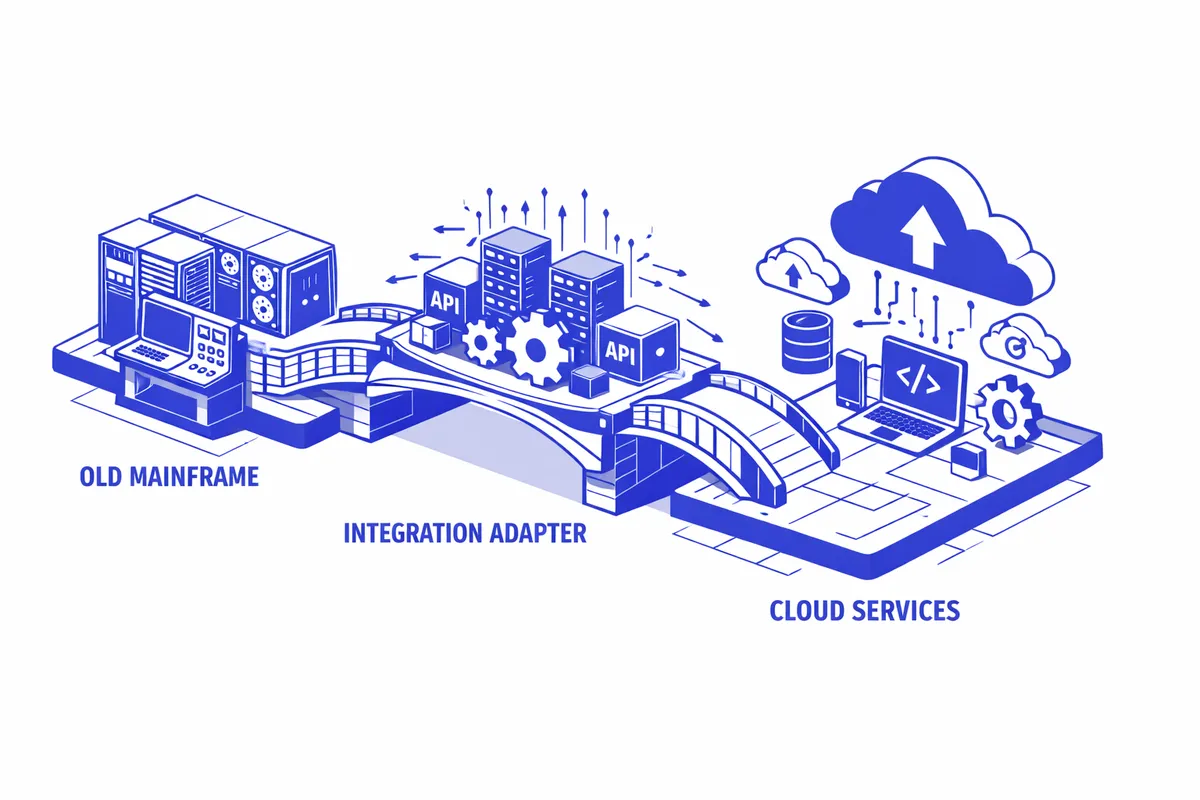
How We Build Legacy System Integration for Oak Lawn
Every Oak Lawn engagement starts with discovery. We document the actual behavior of the legacy system rather than assuming from documentation what it does. For practice management systems common in Oak Lawn's healthcare sector, discovery covers data structure, export capabilities, API availability, and the specific records the integration needs to move. For policy management systems common in Oak Lawn's insurance agencies, discovery establishes how policy records are structured, how status changes are stored, and what integration points the system exposes.
Based on discovery, we select and design the integration architecture. Oak Lawn's healthcare systems frequently support HL7 or specific vendor APIs that allow structured data exchange with modern tools. Insurance and dealership systems more often require database-level access or file-based integration using scheduled exports. We build the transformation logic that maps data from the format the legacy system stores to the format the modern tool expects, and we build error handling that catches failures before they affect daily operations.
After building, we test against production-representative data. Oak Lawn's medical practices have appointment data patterns that differ from retail, and our testing reflects the specific business logic of each client's environment. We deploy with monitoring that surfaces errors and data inconsistencies before they become operational problems, and we provide ongoing maintenance that covers updates triggered when either the legacy system or connected modern tool releases changes that affect the integration layer.
Industries We Serve in Oak Lawn
Medical Practices and Healthcare Services: Practices in Advocate Christ Medical Center's service area operate on practice management and billing systems that need integration with modern patient communication portals, online scheduling platforms, and performance analytics dashboards. We build the connection layers that give these practices modern capabilities without requiring replacement of the systems their staff relies on daily.
Insurance Agencies: Agencies along 95th Street and Pulaski Road running legacy policy management platforms need integration with CRM tools, email marketing systems, and renewal automation platforms. We connect established policy systems to modern client outreach workflows so that renewal management and client communication operate from real-time system data rather than manual exports.
Auto Dealers and Specialty Retail: Dealers on Cicero Avenue and Harlem Avenue operating legacy dealership management systems need integration with online inventory listing platforms, financing partner portals, and customer follow-up tools. We build the connections that keep inventory data synchronized across all channels and automate follow-up workflows that legacy systems cannot trigger natively.
Family Restaurants and Hospitality: Restaurants throughout Oak Lawn's neighborhood corridors running older POS systems need integration with cloud accounting platforms, online ordering systems, and labor management tools. We bridge the gap between established POS systems and modern operations tools without requiring the service disruption that POS replacement would cause.
Small Professional Offices: Accounting firms, law offices, and specialty service businesses throughout Oak Lawn operating on older practice or client management platforms need integration with modern billing, document management, and client communication tools. We build connections that extend the reach of established systems to the workflow tools their clients and staff now expect.
Home Healthcare and Community Health: Home healthcare agencies and community health organizations in Oak Lawn's orbit manage patient and case records in older systems that need to connect with modern care coordination, billing, and compliance reporting tools. We build integration layers that keep patient data accessible across systems without requiring manual transfer between platforms.
What to Expect Working With Us
Legacy System Discovery: We document the actual capabilities of your legacy system before designing anything. For undocumented systems common in Oak Lawn's healthcare sector, this means reading database schemas, testing export functions, and mapping data formats. Discovery eliminates the assumptions that cause integration projects to fail mid-build.
Integration Architecture Design: We select the right approach for your specific system. Healthcare systems often support structured HL7 or vendor APIs. Business systems more often require database-level access or file-based exchange on a scheduled basis. We design the transformation logic, error handling, and conflict resolution rules that make the integration reliable under your actual business conditions.
Build and Testing: We build the integration and test it against data volumes and patterns representative of your actual operations. For Oak Lawn's medical practices, this means testing against appointment volumes and patient record structures that reflect real patient load, not synthetic test data created to make the test pass.
Deployment and Monitoring: We deploy with monitoring that alerts on integration errors, data inconsistencies, or performance degradation. Legacy systems surface behaviors under specific conditions that only appear in production, and sustained monitoring catches these before they become disruptions you have to manage reactively.