How We Build Employee Portals for Oak Lawn
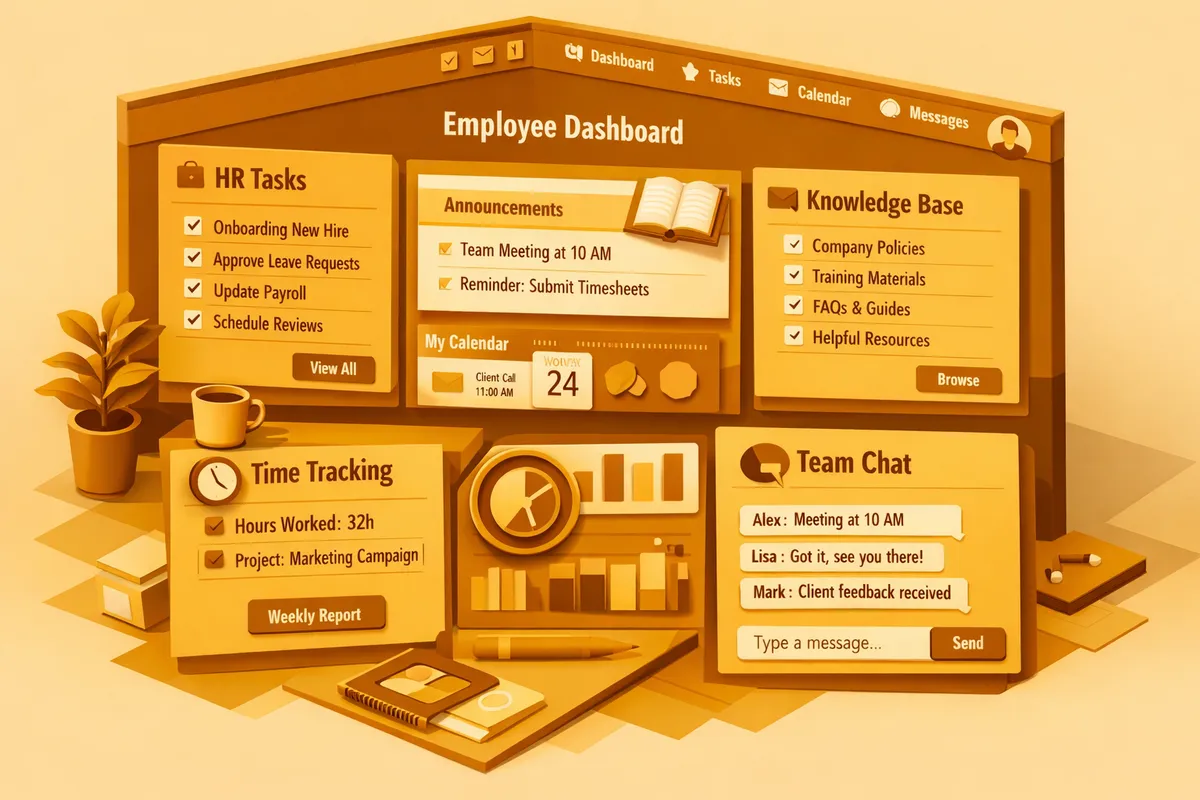
Employee portal projects start with a staff experience audit. We interview the office manager, practice manager, or business owner who handles people operations and ask: what does a new employee need to access in their first week? What does a current employee look up most often? What administrative requests do staff make to managers regularly that should be self-service? What information do you send out to the entire team that currently goes through email?
Those answers define the portal's structure. A medical practice near Advocate Christ Medical Center needs a portal that prominently features the schedule, clinical protocols, compliance training status, and HR documents. An insurance agency on Cicero Avenue needs a portal that surfaces production dashboards, policy templates, carrier contact directories, and commission statements. We do not build one-size-fits-all staff portals. We build the portal your specific staff needs.
Access controls are designed at the same time as the content structure. Not every employee needs access to the same information. The billing specialist at a medical practice should not see the production metrics of agents at an insurance agency, and both should have access only to what is relevant to their role. We configure role-based permissions during the build phase so the portal launches with the right access model, not a permission scramble after the fact.
Industries We Serve in Oak Lawn
Medical practices and clinical offices near Advocate Christ Medical Center on 95th Street use employee portals to centralize the operational infrastructure that clinical and administrative staff rely on: provider schedules, clinical protocols, HIPAA compliance training records, policy documentation, pay stubs, and benefit enrollment. A well-built portal reduces the administrative burden on practice managers who currently answer the same HR questions repeatedly.
Insurance agencies on Cicero Avenue use portals that serve the dual function of HR infrastructure and sales operations support. Agents access their production dashboards, current carrier product sheets, commission schedules, and compliance training completions from a single location. The portal replaces a folder of carrier printouts and a series of email threads that are outdated the moment they are sent.
Auto dealers and service centers on Harlem Avenue use employee portals for service team scheduling, parts ordering workflows, certification tracking, and training documentation. Technicians who need to verify a service procedure or check a certification renewal deadline can do so without interrupting a service manager who is on the floor with a customer.
Family restaurants and catering operations near The Fairway Retail Center use portals for staff scheduling, menu update communication, food safety certification tracking, and catering event assignments. During the holiday catering season, when scheduling complexity peaks, a portal with shift management and communication tools reduces the chaos that otherwise lands entirely on the floor manager.
Specialty retail businesses on 95th Street and Pulaski Road use employee portals for part-time and full-time staff scheduling, product knowledge documentation, inventory procedure guides, and onboarding materials for seasonal hires. A retailer that adds staff for a spring event at the Oak Lawn Pavilion area can onboard those workers in a day with structured portal access.
Small professional offices throughout Oak Lawn handling accounting, legal, or financial advisory services use portals that centralize HR documentation, professional development tracking, client confidentiality acknowledgments, and the internal procedures that define how the office operates. These firms often have staff who work partly remotely, and a portal provides consistent access regardless of where staff are working.
What to Expect Working With Us
1. Staff experience audit and portal scoping. We map what your team currently needs to access to do their jobs and identify what administrative requests could be converted to self-service. This audit typically takes one or two conversations with the person who handles people operations day to day.
2. Access model and content architecture design. We design the role-based permission model and the content structure before building anything. You review the architecture against your actual staff structure, and we refine it until it accurately matches how your business organizes its people and information.
3. Build, populate, and test. We build the portal, populate it with your current HR documents, policy materials, and operational content, and test the access model with representative users from each role. We do not launch with a skeleton and expect staff to add content afterward.
4. Staff rollout and training. We conduct a rollout session with your team that covers how to use the portal for the tasks they do most frequently. For Oak Lawn businesses with multiple shifts and limited team overlap, we record training materials that staff can access on their own schedule. Post-launch we provide 30 days of support for questions and adjustments.