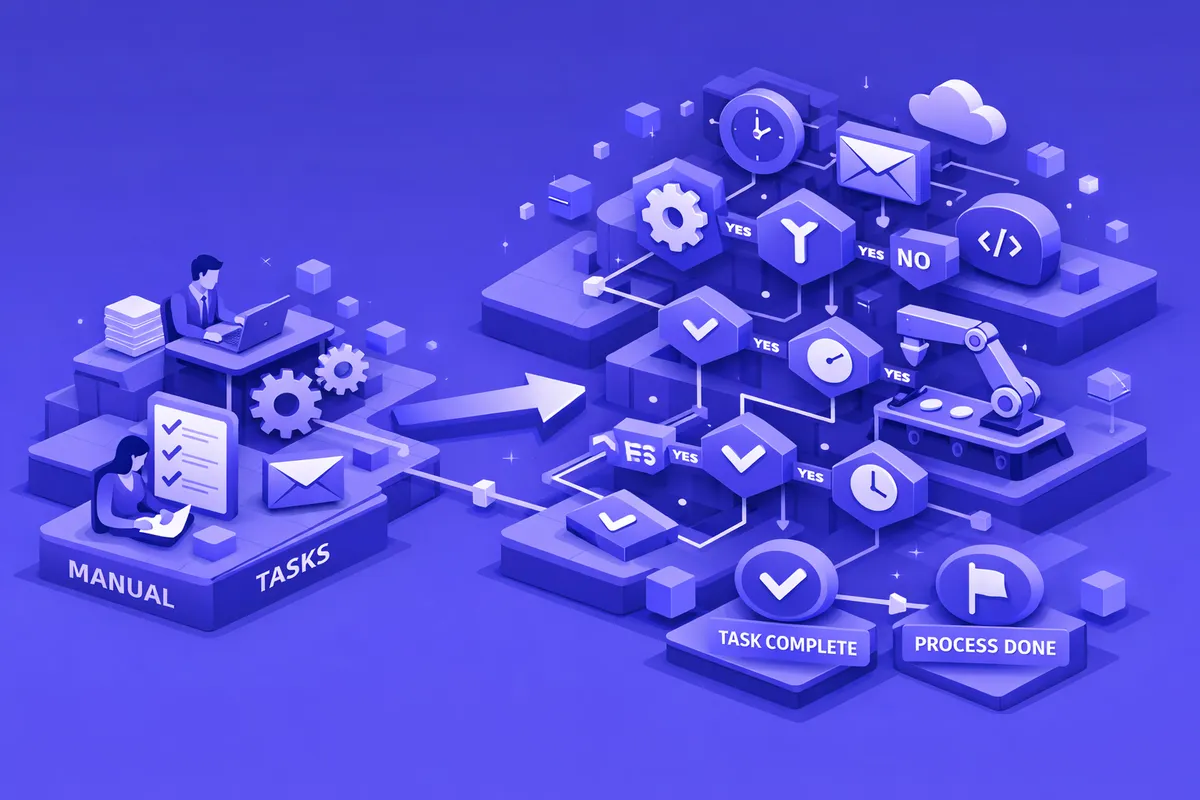
How We Build Business Process Automation for Oak Lawn
Oak Lawn's business community values reliability and practical outcomes over technical novelty. The question we hear most is not "What can automation do?" It is "Will this actually work for my specific business, and is it worth the cost?" Both are fair questions, and we answer them before any project begins.
Every Oak Lawn engagement starts with a process documentation exercise. We map the specific workflows under consideration in enough detail to identify what software is involved, what rules govern each step, and where exceptions occur. For a medical practice on 95th Street, that means tracing the insurance verification workflow from appointment scheduling through verification completion through documentation in the practice management system. For an insurance agency on Cicero Avenue, it means mapping the renewal campaign from the initial outreach letter through the carrier submission through the bound policy confirmation.
From the process map, we build a specific, scoped proposal with a concrete time savings projection. We do not commit to enterprise-scale transformation. We commit to a specific workflow, automated in a specific way, delivering a specific number of hours back to your staff each week. That specificity lets you make a documented investment decision.
We build automation using the software Oak Lawn businesses already use: medical practice management platforms, insurance agency management systems, dealership CRMs, QuickBooks, and industry-specific tools common in automotive service and home services. We connect existing tools rather than replacing them.
Industries We Serve in Oak Lawn
Medical specialty practices and clinics near Advocate Christ Medical Center on 95th Street use business process automation to handle insurance eligibility verification before every appointment, prior authorization submission and tracking for treatment plans, appointment confirmation and reminder sequences, patient intake form collection, and post-appointment follow-up communications. Practices with high patient volumes and payer mix complexity recover the most staff time from verification and prior authorization automation.
Physical therapy and rehabilitation practices serving Oak Lawn patients near the 95th Street medical corridor use business process automation to handle prior authorization renewal tracking, home exercise program delivery sequences, appointment reminder campaigns, progress note completion reminder workflows for therapists, and end-of-episode outcome survey distribution. PT practices often have prior authorization expiration dates that must be tracked across dozens of active patients simultaneously. Automation that tracks expiration dates and submits renewal requests before coverage lapses prevents billing complications downstream.
Insurance agencies along Cicero Avenue and Harlem Avenue use business process automation to handle annual policy renewal campaigns across their full book of business, certificate of insurance generation and delivery, carrier submission workflows for new policies, claims acknowledgment and status communication sequences, and multi-touch follow-up for prospects who have not yet bound coverage. Oak Lawn insurance agencies serving both personal lines and small commercial accounts have renewal cycles running throughout the year that automation manages continuously rather than in concentrated manual campaign bursts.
Auto dealerships and automotive service businesses on Harlem Avenue and Cicero Avenue use business process automation to handle service appointment confirmation and reminder sequences, oil change and maintenance interval reminder campaigns, recall notification workflows, post-service satisfaction surveys, and financing follow-up for customers in the decision process. Dealerships with large service customer databases that currently execute these communications manually or through disconnected tools benefit from automation that consolidates the workflows and ensures consistent execution.
Home services and contractor businesses serving Oak Lawn's residential neighborhoods use business process automation to handle service agreement renewal campaigns, seasonal maintenance appointment outreach, estimate follow-up sequences, job completion notifications, customer review request campaigns, and annual service history summaries. HVAC, plumbing, electrical, and home security contractors serving Oak Lawn and adjacent communities like Beverly and Mount Greenwood have customer relationship management workflows that automation handles at scale.
Specialty retail and personal service businesses at the Fairway Retail Center and along 95th Street use business process automation to handle customer loyalty program communications, birthday and anniversary outreach, event promotion sequences, appointment booking confirmations, and inventory reorder notifications. Specialty retailers with established customer bases often have customer data they are not using systematically. Automation converts that data into consistent, timely outreach.
What to Expect Working With Us
1. Process documentation that respects your time. We document your workflows efficiently. For most Oak Lawn businesses, the process mapping phase involves one or two focused conversations with the staff members who execute the manual processes, producing a workflow document within a week. We do not extend discovery into a multi-month engagement before building anything.
2. A scoped proposal with specific time savings projections. Before any work begins, we present a written proposal with the specific workflow being automated, the tools involved, the implementation timeline, and a projected weekly time savings based on the process documentation. You know what you are buying and what you expect to get from it.
3. Builds that match your actual software environment. We work with the practice management system, agency management system, CRM, or operational software your business already uses. We do not require migrations or new platform subscriptions unless the current tools have specific limitations that prevent the automation from working. If that situation arises, we identify it during process documentation before any build work begins.
4. Post-deployment monitoring and adjustment. Every automation we build includes a monitoring period of four to six weeks after go-live where we review the automation's outputs, check exception logs, and make adjustments based on edge cases that only appear in live operations. The monitoring period is included in the project price, not billed separately. After the monitoring period, you own the automation and can operate it independently.