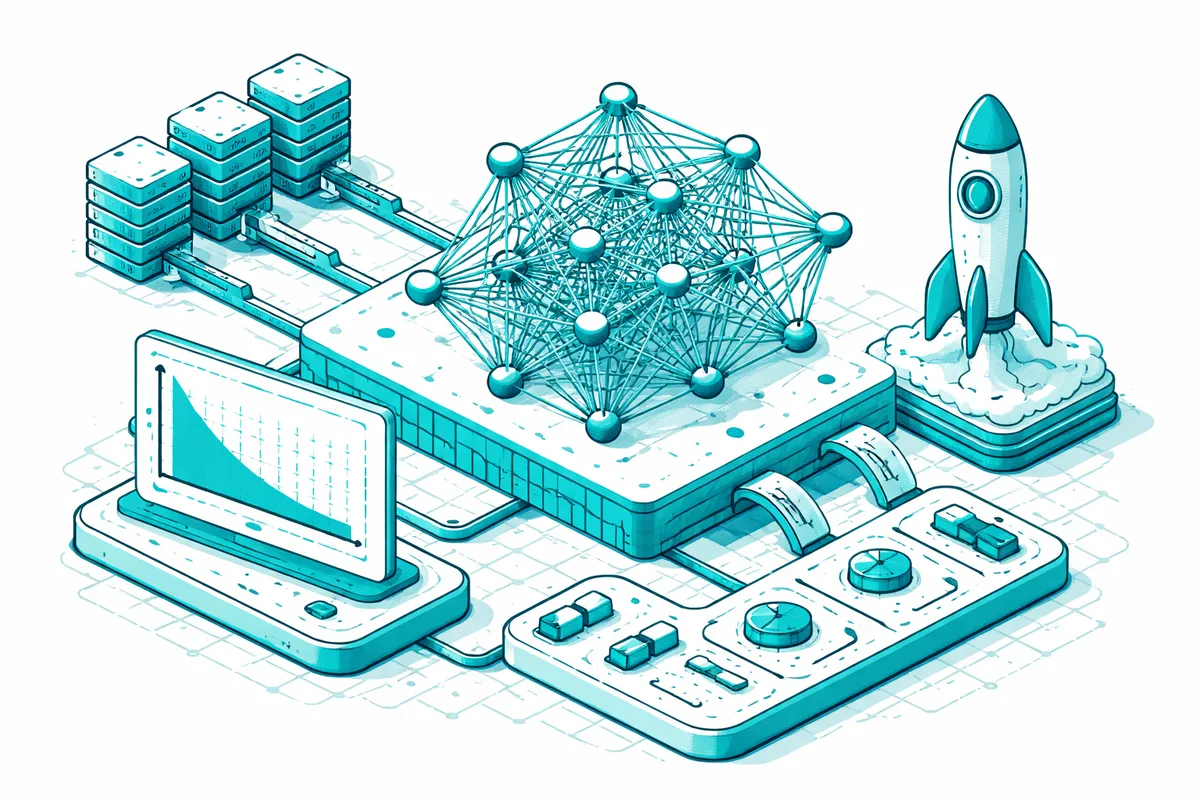
How We Build Custom AI Models for Oak Lawn
Our process begins with understanding your domain. What specialized knowledge matters most for your Oak Lawn business? What tasks would benefit most from custom training versus continued reliance on generic AI tools?
We then train models through several approaches:
Fine-tuning approach. We take a foundation model (like GPT-4 or Claude) and fine-tune it on your specific data. Healthcare data from Oak Lawn practices, insurance data from Cicero Avenue agencies, patient data, business terminology. The model learns from your domain and improves on every relevant task.
Retrieval-augmented approach. We build systems where the AI retrieves relevant information from your proprietary Oak Lawn databases before generating responses. The AI has access to your specific knowledge without being directly trained on it, which provides more flexibility for rapidly changing information.
Ensemble approach. We combine custom models with domain-specific rules and logic. The AI handles patterns and language generation. Rules handle exceptions and compliance requirements specific to Oak Lawn healthcare and insurance regulations.
Industries We Serve in Oak Lawn
Healthcare practices near Advocate Christ Medical Center and throughout Oak Lawn train models on medical terminology, patient data, clinical protocols, and specialty-specific language. Models better understand healthcare context and generate better clinical and patient-facing content without the corrections that generic AI requires.
Insurance agencies on Cicero Avenue and throughout Oak Lawn train models on insurance terminology, underwriting rules, policy language, and their specific product portfolio. Models understand insurance context better and support more accurate underwriting support and customer communication.
Pharmacy and medical supply businesses along Pulaski Road and Southwest Highway train models on drug information, supply data, and medical device terminology. Models understand specialized healthcare product context that generic AI consistently misses.
Billing and claims processing services serving Oak Lawn healthcare organizations train models on claims terminology, processing rules, payer-specific requirements, and compliance needs. Models understand claims processing better and reduce the manual review burden on billing staff.
Medical staffing services in the Oak Lawn area train models on healthcare staffing terminology, credential requirements, and licensing rules across Illinois. Models better match candidates to positions and screen for relevant qualifications faster than generic AI.
Telemedicine platforms serving Oak Lawn patients train models on patient data, medical conditions common in the southwest suburb demographic, and treatment protocols. Models better support patient interactions and clinical decision support.
What to Expect Working With Us
1. Domain assessment. We understand your Oak Lawn domain and identify what specialized knowledge matters most for your business context. We assess where custom training will deliver the most measurable improvement over generic AI.
2. Data preparation. We prepare your data for training: de-identification for healthcare data subject to HIPAA, formatting, and quality assurance to ensure training data is clean and representative of your actual Oak Lawn business.
3. Model selection and training. We select appropriate base models and training approaches based on your Oak Lawn use cases. We train on your data and monitor training to ensure the model is improving on the tasks that matter.
4. Testing and validation. We test custom models on your specific Oak Lawn tasks and validate that custom training delivers measurable improvement over generic alternatives on the work your team actually does.
5. Integration and deployment. We integrate trained models into your Oak Lawn applications and workflows so your team benefits from custom performance without disrupting existing processes.
6. Monitoring and improvement. We monitor model performance and retrain as new Oak Lawn business data accumulates. Models improve over time rather than degrading as your business context evolves.