How We Build AI Integration Services for Oak Lawn
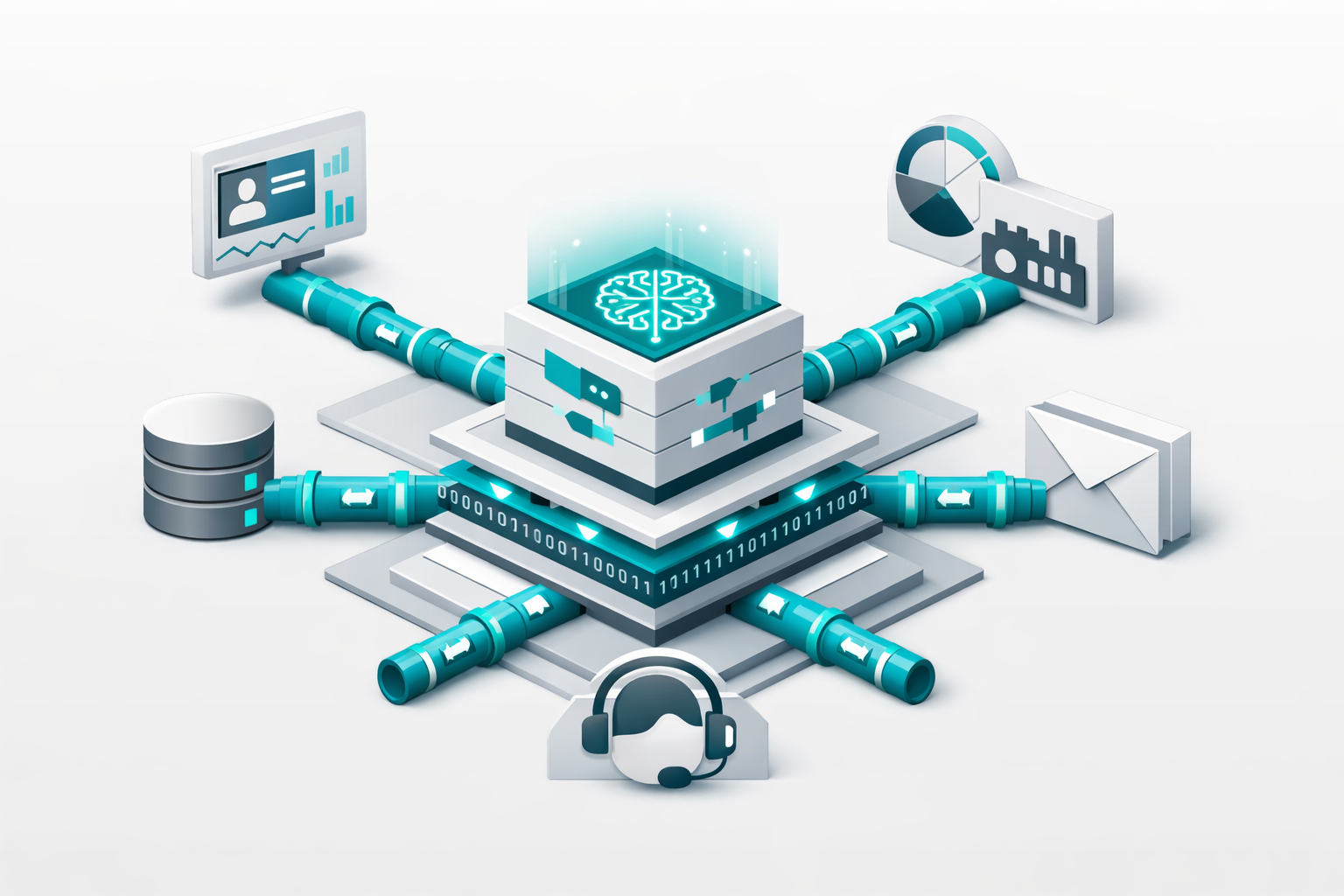
Every integration project begins with a system inventory. We document every platform your business currently uses: the EHR or practice management software, the CRM, the billing platform, the scheduling tool, the e-commerce system, or the dealership management system. We map where data lives, how it moves today, and where the friction points are. This inventory prevents the most common integration failure mode: connecting an AI to data it cannot actually use because of format mismatches or permission gaps.
We then design the integration architecture before writing a line of code. For healthcare practices near Advocate Christ Medical Center, this means designing with HIPAA compliance as a structural requirement rather than an afterthought. The AI integration must handle protected health information according to the same standards the practice already maintains. We document the data flows, the access controls, and the audit trail requirements before any technical work begins.
Implementation uses standard API connections where the target system provides them, and custom middleware where it does not. Many platforms used by Oak Lawn businesses offer API access that has never been activated because the business did not have a technical partner to configure it. We activate those connections, build the necessary translation layers, and test against the actual production data environment rather than staging environments that do not reflect real-world conditions.
Post-launch monitoring is included in every integration project. AI systems that depend on external data sources can break when those sources change their formats or APIs. We maintain the connections we build and respond when something breaks before it becomes a business problem for a busy practice on 95th Street or a dealership on Cicero Avenue.
Industries We Serve in Oak Lawn
Medical and specialty practices near Advocate Christ Medical Center use AI Integration Services to connect clinical AI tools to their EHR platforms, enabling automated prior authorization drafting, clinical documentation assistance, and appointment scheduling optimization that writes directly to their existing practice management systems rather than creating parallel workflows.
Insurance agencies along 95th Street and Harlem Avenue use AI integration to connect their agency management platforms to AI tools that draft renewal communications, summarize policy changes, flag accounts at risk of non-renewal, and prepare quote comparisons from multiple carriers simultaneously without requiring agents to log into each carrier portal independently.
Auto dealerships on Cicero Avenue and Pulaski Road use AI integration to connect inventory systems, CRM platforms, and customer communication tools so that lead responses, vehicle availability updates, and follow-up sequences operate automatically from a single integrated workflow rather than requiring staff coordination across disconnected systems.
Family restaurants and food service businesses near Oak Lawn Pavilion and The Fairway Retail Center use AI integration to connect POS data to inventory management and scheduling platforms, allowing predictive ordering and staffing adjustments based on sales patterns without requiring manual data transfer between systems.
Medical billing and administrative services operating in the Advocate Christ ecosystem use AI integration to connect claim processing tools to insurance verification systems and EHR platforms, reducing the manual reconciliation work that drives administrative costs in medical billing operations.
Small professional offices including CPA firms, law practices, and financial advisors along 103rd Street and the surrounding commercial corridors use AI integration to connect their document management systems, CRM tools, and communication platforms so client data flows automatically between systems rather than requiring staff to update multiple records for each client interaction.
What to Expect Working With Us
1. System audit and integration design. We document your current technology stack, identify integration opportunities, and design the architecture for connecting AI tools to your existing platforms. For healthcare businesses near Advocate Christ Medical Center, this phase includes a compliance review to ensure integration design meets HIPAA and any relevant state regulatory requirements.
2. Build and configure. We build the API connections, middleware layers, and data translation components that make your AI integration work. Configuration includes access controls, data scoping rules, and error handling so the integration behaves predictably in production rather than only in testing.
3. Testing and staff training. We test the integration against real system data and run through the workflows your staff will use daily. Training sessions ensure your team understands what the integration does, when to trust its outputs, and how to flag issues when the AI produces something unexpected.
4. Monitoring and maintenance. We monitor the integration after launch, respond to API changes or system updates that affect the connection, and refine the configuration as your workflows evolve. Oak Lawn businesses run on reliability, and we maintain what we build.