How We Build AI Governance for Oak Lawn
Our process begins with assessing your current AI use. What AI systems does your Oak Lawn business have? What data do they access? What decisions do they make? We understand your specific governance needs before drafting a single policy.
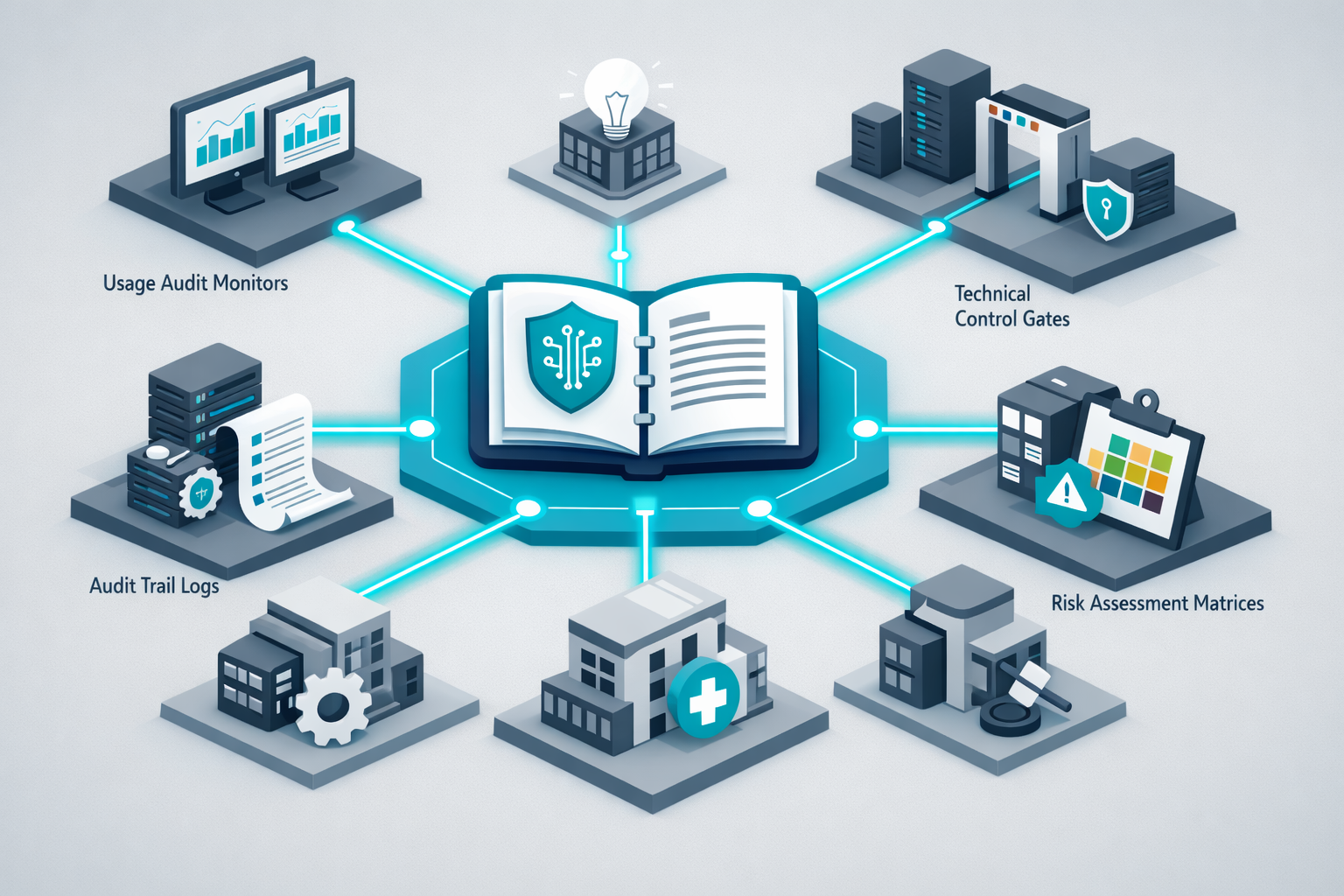
We then develop governance across five areas:
Policy development. We draft policies governing AI use in your Oak Lawn organization. When can AI be used? What types of decisions can AI make? What oversight applies? Policies are specific to healthcare, insurance, and your organization's actual operations rather than generic frameworks that do not fit your context.
Risk assessment. We assess risks introduced by AI in your specific Oak Lawn context: data privacy risks, bias risks, accuracy risks, and decision transparency risks. We quantify risks and prioritize mitigation based on your actual exposure.
Data governance. We establish how AI systems access and use patient or customer data across your Oak Lawn operations. What data is permitted? What security applies? What audit trails are maintained? HIPAA and insurance privacy requirements are specifically addressed.
Decision auditability. We establish how AI decisions are reviewed and audited. What mechanisms track why AI made specific decisions? How are questionable decisions escalated? How are bias and fairness monitored across your Oak Lawn patient or customer population?
Compliance documentation. We create documentation demonstrating your governance framework. This is valuable when regulators inquire about your AI practices or when compliance audits occur in Oak Lawn's increasingly scrutinized healthcare and insurance sectors.
Industries We Serve in Oak Lawn
Healthcare practices throughout Oak Lawn, from solo practitioners near Advocate Christ Medical Center to multi-provider groups on 95th Street, establish governance for clinical decision support AI, patient data systems, scheduling optimization, and diagnosis assistance. Responsible governance enables confident AI adoption.
Insurance agencies on Cicero Avenue and throughout Oak Lawn establish governance for claims processing AI, fraud detection, underwriting, and customer service AI. Governance ensures fair, compliant AI decision-making that protects the agency from regulatory exposure.
Medical imaging and diagnostics centers in Oak Lawn establish governance for AI-assisted radiology, pathology, and diagnostics. Clinical governance ensures accuracy and proper physician oversight on every AI-assisted interpretation.
Billing and claims processing services operating out of Oak Lawn establish governance for automated claims processing, fraud detection, and compliance monitoring. Governance ensures fair, accurate, compliant processing that holds up to payer audits.
Pharmacy and medical supply businesses on Pulaski Road and Cicero Avenue establish governance for prescription AI, inventory optimization, and customer service AI. Governance ensures patient safety and privacy at every step.
Telemedicine and remote patient monitoring providers serving Oak Lawn patients establish governance for patient data security, clinical AI, and remote monitoring. Governance addresses privacy, clinical safety, and the specific regulatory compliance requirements of remote care delivery.
What to Expect Working With Us
1. AI inventory and assessment. We catalog your AI systems, understand what they do, what data they access, and what risks they present. We identify governance priorities specific to your Oak Lawn organization's exposure.
2. Framework development. We develop governance policies specific to your organization and industry. We draft policies, establish procedures, and create documentation that reflects how Oak Lawn healthcare and insurance businesses actually operate.
3. Risk mitigation planning. We identify specific risks and define mitigation approaches. For bias risks, we define monitoring and mitigation. For privacy risks, we define data protections. For accuracy risks, we define validation protocols appropriate for your Oak Lawn patient or customer base.
4. Implementation and training. We implement governance procedures across your Oak Lawn organization. Your team learns new workflows and policies. Governance becomes embedded in how AI is used rather than sitting as a document nobody references.
5. Audit and monitoring. We establish monitoring to ensure governance is working. Are policies being followed? Are risks being managed? Are decisions being audited? We provide quarterly governance audits for Oak Lawn clients.
6. Regulatory alignment. We track regulatory changes relevant to Oak Lawn healthcare and insurance businesses and update governance accordingly. As regulations evolve, your governance framework evolves with them.