How We Build Supply Chain Automation for North Center
Supply chain automation for North Center businesses starts with an inventory and purchasing audit. We map every product category, vendor relationship, historical purchasing pattern, and stockout or overstock incident that your records capture. This audit identifies the patterns that the automation will need to account for: seasonal demand variation near Welles Park, specific product categories with inconsistent supplier lead times, vendor relationships that perform differently for different product types.
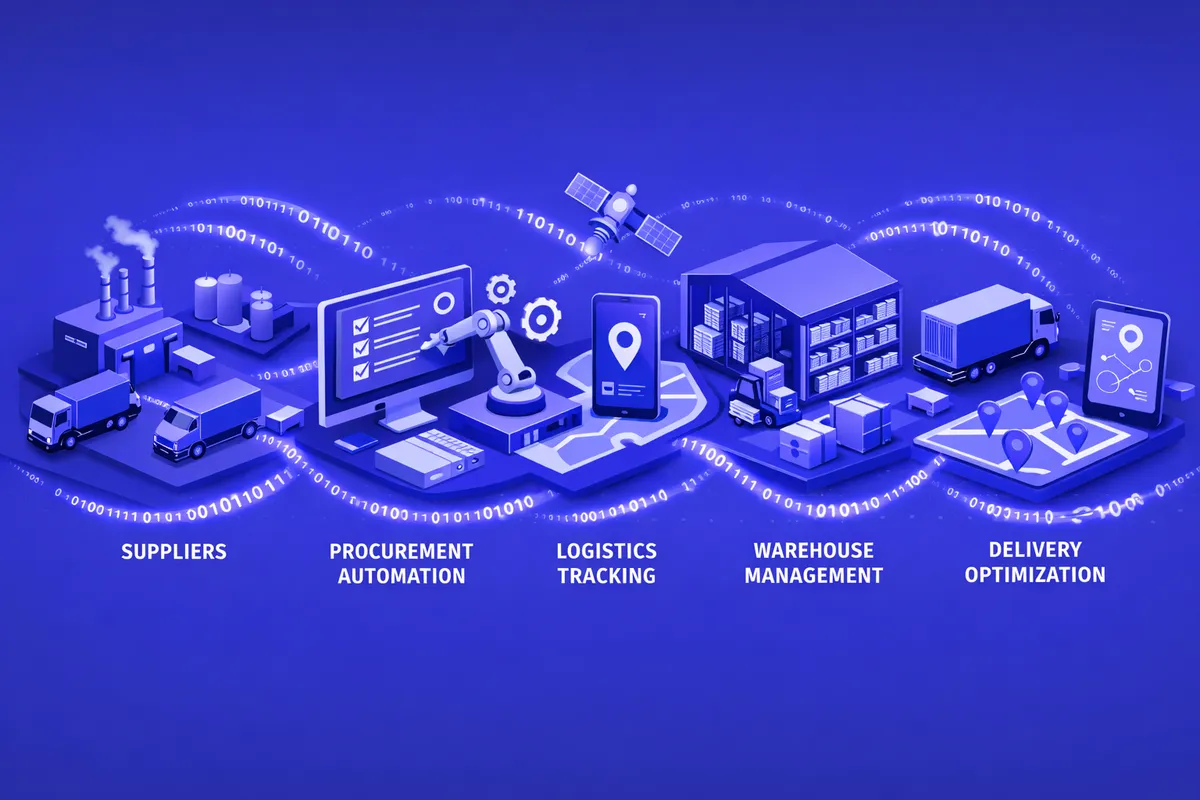
Automation design follows the audit. The core automation components for most North Center small businesses are: inventory level monitoring that tracks stock against reorder points, demand forecasting that adjusts reorder quantities based on historical demand patterns and upcoming seasonal factors, automatic order generation that sends purchase orders when inventory hits the reorder point, and vendor management tracking that records lead times and order accuracy by vendor.
Integration with existing systems connects the automation to the POS or inventory management platform that already tracks your inventory, the accounting system that records supplier payments, and the communication tools that send and receive purchase orders. For North Center retailers using point-of-sale systems that already track inventory, the automation layer builds on top of the existing data rather than replacing it.
Industries We Serve in North Center
Specialty retail businesses on Lincoln Avenue benefit from supply chain automation that sets reorder points by product category, adjusts order quantities based on seasonal demand patterns tied to North Center community events near Welles Park, and flags suppliers with inconsistent lead time performance. A specialty retailer that never runs out of its top twenty products and never carries more than thirty days of its slowest-moving products maintains healthier cash flow and better customer satisfaction simultaneously.
Specialty food businesses on Damen Avenue and near Irving Park Road deal with the additional complexity of perishable inventory that cannot be over-ordered. Supply chain automation for food businesses tracks inventory turnover by product, adjusts ordering frequency based on shelf life and sales velocity, and flags product categories where waste rate is above acceptable thresholds.
Home renovation and construction contractors near Horner Park and Addison Street benefit from project-specific material automation that tracks the materials needed for each active project, calculates order timing based on project schedule and supplier lead times, and generates purchase orders at the right time to ensure materials arrive when needed without excessive job site storage.
Educational services and tutoring centers near the Chicago Waldorf School on Damen Avenue purchase curriculum materials, office supplies, and educational equipment on a recurring basis. Supply chain automation that tracks usage rates and generates reorder requests before items run out prevents the administrative disruption that curriculum supply stockouts cause.
Wellness and fitness businesses near Welles Park and along Damen Avenue purchase consumable supplies, equipment maintenance parts, and retail merchandise on a recurring basis. Automation that monitors inventory levels and triggers orders based on usage rates prevents the in-session supply shortages that create customer service problems.
Professional service businesses with physical supply requirements, including medical practices on Lincoln Avenue and Western Avenue that purchase medical supplies and office materials, benefit from supply chain automation that manages routine reordering automatically, freeing staff from the manual tracking that prevents stockouts in a practice environment where running out of basic supplies during a patient day is unacceptable.
What to Expect Working With Us
1. Inventory and purchasing audit. We document your current inventory categories, vendor relationships, purchasing patterns, and the stockout and overstock incidents that have occurred. The audit reveals the automation opportunities with the highest business impact.
2. Automation design and reorder logic. We design the reorder points, demand forecasting model, and order generation logic for your specific inventory categories and supplier relationships. You review and approve the logic before it is automated.
3. System integration and testing. We connect the automation to your existing inventory management and accounting systems, test the reorder triggers against your actual inventory data, and validate that order generation produces the right quantities and timing.
4. Go-live monitoring and refinement. We monitor the automation during the first sixty days, track any reorder situations where the automated logic diverges from what manual ordering would have done, and refine the logic based on observed performance.