How We Build Field Service Management for North Center
Field service management implementation starts with a process audit: how are jobs currently dispatched, how do technicians receive work orders in the field, how are job completions documented, and how does invoicing work from job close to payment. Most North Center field service businesses we work with have one or two staff handling all of this manually, and the audit surfaces which parts of that process are creating the most errors or consuming the most administrative time.
We evaluate whether to build custom software or configure an existing field service platform based on your operation's specific requirements. For most North Center service businesses in the ten to thirty-technician range, configuring a platform like ServiceTitan, Jobber, or Housecall Pro and integrating it with your existing accounting and payment systems achieves the results you need without the cost of custom development. For operations with unusual workflow requirements or specialized service types, we build custom software that fits your process exactly.
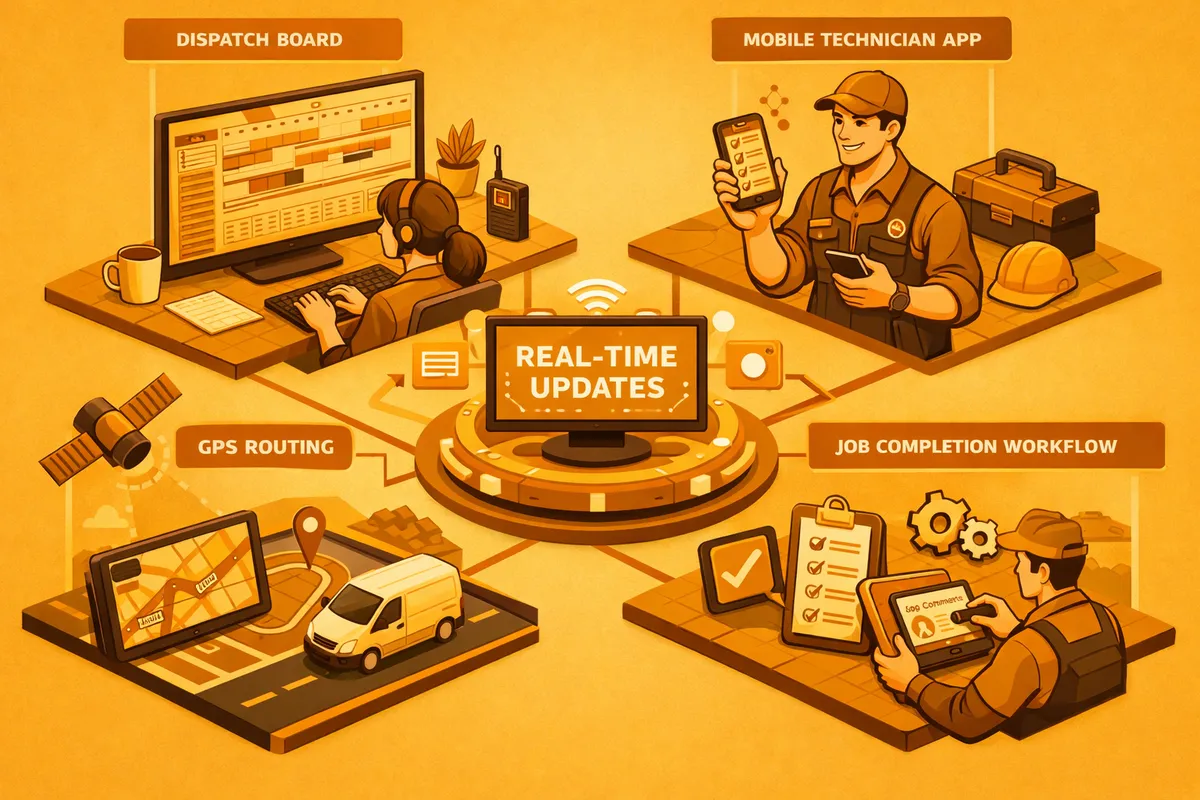
Either way, we handle the migration of your existing customer and job history into the new system, configure the workflows your dispatchers and technicians will actually use, and train your team on both the office-side dispatch view and the mobile technician experience. A field service management rollout that your technicians resist using from day one because the mobile interface is confusing is a failure regardless of how good the software is. Training is part of the project, not an afterthought.
Industries We Serve in North Center
HVAC and plumbing contractors serving the older housing stock on Western Avenue and near Horner Park use field service management for seasonal tune-up campaign scheduling, preventative maintenance contract tracking, emergency dispatch routing, and digital work order documentation. The ability to see at a glance which customers are overdue for their annual boiler service, schedule outreach automatically, and fill the fall calendar before October's first freeze is the primary value driver for residential HVAC operators in North Center.
Landscaping and tree service businesses operating across the Damen Avenue and Irving Park Road corridor use field service management to handle seasonal workload surges: spring cleanups, summer maintenance cycles, and fall leaf and preparation work that generate concentrated demand from the same household base. Route optimization across North Center's residential blocks reduces drive time and allows the same crew to complete one more job per day, which compounds significantly across a six-month active season.
Home improvement and remodeling contractors serving North Center families who are investing in the neighborhood's stock of aging brick homes use field service management for project scheduling, subcontractor coordination, material delivery tracking, and client communication. The homeowner on Addison Street who has three contractors on site for a kitchen renovation wants a single communication channel that tells them what is happening each day. Field service management provides that through automated progress updates and a customer-facing portal where the homeowner can see job status without calling the office.
Residential cleaning services operating along the Lincoln Avenue and Damen Avenue corridors serve a dense concentration of two-income family households where recurring weekly or biweekly service is common. Field service management handles the scheduling complexity of recurring appointments, handles customer requests to skip or reschedule specific visits, and generates automatic invoices after each completed service.
Pest control and home inspection services operating in North Center's older housing market use field service management for appointment scheduling, digital inspection report generation, follow-up service scheduling from initial inspection findings, and warranty tracking for treatment services. The ability to pull up a prior inspection report on a mobile device while standing in the client's basement at the start of a follow-up service is the kind of professional consistency that generates repeat business in a relationship-oriented neighborhood.
Home health and in-home care services near Welles Park use field service management to coordinate caregiver scheduling, track visit completions and hours for billing, manage caregiver certifications, and generate documentation required for insurance and Medicaid billing. Matching caregiver qualifications to client needs across multiple daily time slots is precisely the problem field service management software was built to handle.
What to Expect Working With Us
1. Operations audit and platform recommendation. We spend the first week documenting your current dispatch and invoicing workflow, interviewing your office staff and a technician, and identifying the operational failures that cost the most time and money. That audit produces a clear recommendation: configure an existing platform or build custom, and which platform if we go that route. The recommendation is based on your operation, not on which platform pays us the most referral fees.
2. Configuration, integration, and data migration. We configure dispatch, scheduling, work order, and invoicing workflows in the new system, integrate it with your accounting software and payment processor, and migrate your existing customer database and job history. A technician showing up at a Lincoln Avenue home without access to the prior visit record is a professional regression, not an upgrade. History migration is not optional.
3. Technician mobile training and office dispatch training. We run separate training sessions for office staff and field technicians because they use the system differently. Technician training focuses on the mobile app: accept a job, pull up the work order, document completion, close out. Office training covers the dispatch board, scheduling tools, and customer communication management.
4. 30-day post-launch optimization. The first month after go-live is when real operational questions emerge: how to handle a technician who resists the mobile app, how to manage a return visit outside the original work order, how to respond to customer questions about the new communication format. We are available during this period to adjust workflows and resolve the friction points that only appear in production.