How We Build Workflow Automation for Mount Greenwood
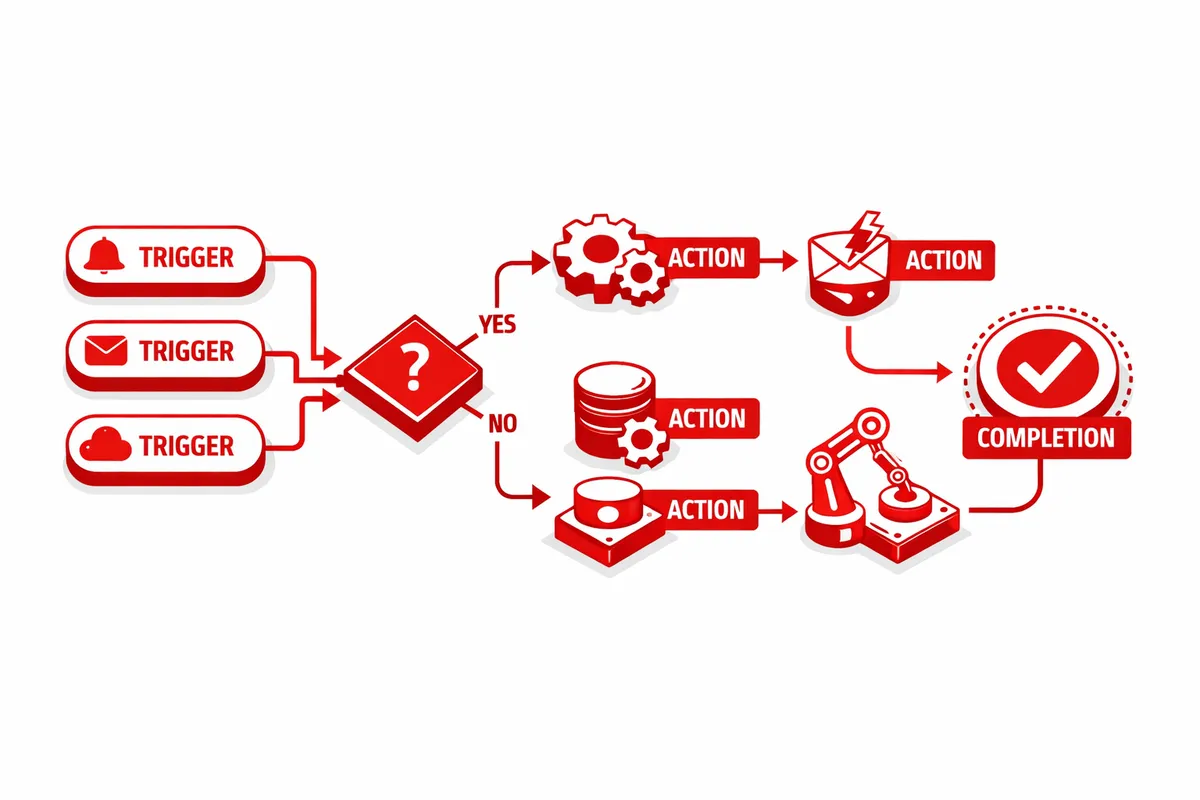
The starting point is a process map. Before we touch any software, we trace the workflows that consume the most time in your business. For a contractor on Sawyer Avenue, that might be the journey from a new lead call to a signed estimate to a scheduled crew assignment. For an insurance agency near Pulaski Road, it might be the new client onboarding sequence from initial inquiry through policy binding. We trace every step, note who does it, how long it takes, and where it depends on someone remembering rather than a system triggering.
Most workflow audits for Mount Greenwood businesses surface the same categories of inefficiency: manual data re-entry between systems, follow-up steps that depend on individual memory, approvals that require in-person or phone communication when an email with a clickable approval would do the same job, and recurring document creation that starts from blank each time instead of from a saved template. We prioritize the automations that address the highest-volume and highest-consequence of those inefficiencies.
The build phase uses tools appropriate to the existing software stack. For a small contractor already using QuickBooks and Jobber, we build automation within those platforms where possible, extending with lightweight middleware where they cannot connect natively. For a professional services firm with more complex needs, we may introduce a dedicated automation layer. We do not recommend replacing systems that work. We connect and automate what is already there.
Testing before deployment is non-negotiable. Automated workflows that have not been tested against real scenarios can create problems harder to fix than the manual process they replaced. We run every automation through test scenarios drawn from your actual business: a new referral lead from a community event, a seasonal order cycle starting before graduation season, a follow-up triggered by a missed appointment. Only after all scenarios pass do we run the automation live.
Industries We Serve in Mount Greenwood
Contractors and trades businesses on the Far Southwest Side automate the estimate-to-job conversion workflow: new lead intake, automatic estimate generation based on service type, follow-up reminders at defined intervals, crew assignment triggers when the estimate is approved, and completion documentation sent to the customer when the job closes. This sequence, built manually, takes three to four hours of administrative time per job. Automated, it runs in the background while the owner and crew focus on the work.
Insurance agencies near Pulaski Road have client lifecycle workflows with multiple touchpoints: new inquiry, quote delivery, policy binding, annual renewal reminder, and policy review outreach. Automating that lifecycle means every client moves through the sequence on schedule, follow-up emails go out without someone remembering to send them, and the producer's time is spent on the conversations that require judgment rather than the administrative steps that do not.
Family-owned restaurants and bars on 111th Street automate their back-of-house administrative workflows: weekly purchasing order generation, staff scheduling notifications, vendor invoice routing, and event booking confirmation sequences. The owner or manager who currently handles those tasks manually every week does not stop overseeing them; they stop building them from scratch each time.
Florists and event retailers on Kedzie Avenue automate their seasonal ordering and fulfillment sequences. A graduation order placed in April triggers a materials procurement workflow, a confirmation message to the customer with pickup or delivery details, a preparation reminder to the shop floor two days before the order date, and a completion notification when the order is ready. That four-step sequence happens automatically for every order during the graduation rush, not only for the orders the owner manages to track manually.
Accounting offices near Mount Greenwood Library automate client communication workflows tied to the tax preparation lifecycle. Engagement letter delivery, document collection reminders, draft return notifications, and payment confirmation messages all run on triggers rather than manual outreach. During tax season, this means the administrative sequence runs reliably for every client without requiring additional staff.
Neighborhood retail and specialty shops near 115th Street automate inventory management notifications, supplier reorder triggers, and loyalty program communications. When a product category drops below a reorder threshold, the automation generates a purchase draft. When a regular customer has not visited in 60 days, an outreach message is triggered automatically. These small automations compound over time into meaningful operational efficiency.
What to Expect Working With Us
1. Workflow audit across your highest-cost processes. We spend a working session with you tracing the three to five workflows that consume the most time or create the most risk when they break down. The audit is conversational, not a form. We want to understand how decisions are actually made in your business, where the bottlenecks are, and what happened the last time a workflow failed during a busy week. That conversation shapes the entire project scope.
2. Automation specification and approval before build. Every workflow we propose to automate is documented as a specification before any technical work begins: trigger, sequence of steps, decision points, and failure handling. You review and approve each specification. For Mount Greenwood businesses that depend on relationships, it is important that automated communications are reviewed for tone and accuracy before they go out to customers on your behalf.
3. Phased deployment starting with your highest-ROI workflow. We build and deploy automation in phases, starting with the workflow that offers the highest return on the effort: typically your highest-volume repeating process. You run it live for two to four weeks, observe how it performs against real scenarios, and provide feedback before we build the next phase. This approach means you see tangible results quickly while the more complex automations are still being refined.
4. Documentation and owner training so you can maintain and adjust. Every automation we build is documented with plain-English descriptions of what it does, what triggers it, and how to modify the key variables. You or your office manager can adjust follow-up timing, update message templates, or add new trigger conditions without calling us for every change. We train the person who will own the automation on exactly those tasks before we hand it over.