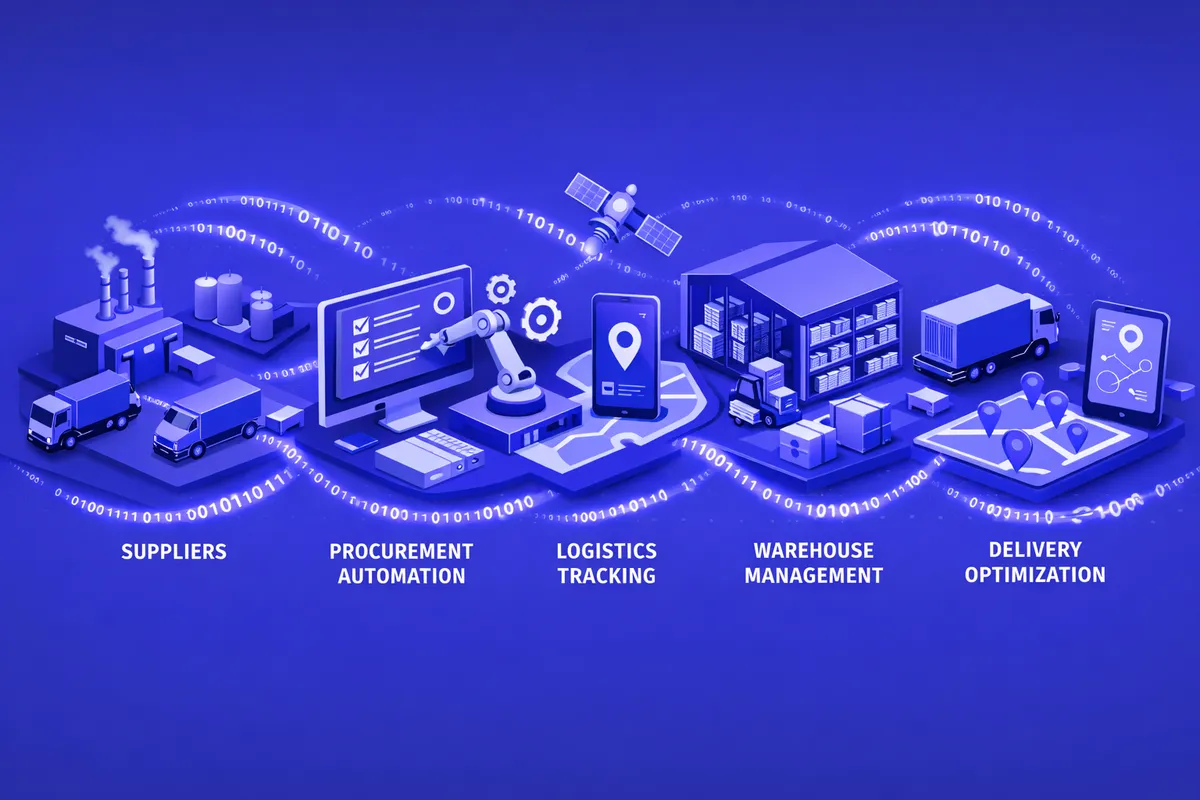
How We Build Supply Chain Automation for Mount Greenwood
The discovery phase for a supply chain project in Mount Greenwood begins with your purchasing records. We want to see the actual orders placed over the last 12 months: what was purchased, when, from whom, at what quantities, and at what prices. For most small businesses on the Far Southwest Side, those records are split across email inboxes, vendor portals, QuickBooks purchase orders, and paper invoices in a filing cabinet. We consolidate them into a single view that reveals your actual purchasing patterns, your vendor relationships, and the seasonal timing of your largest orders.
The pattern analysis almost always surfaces a few things the owner already suspected and could not previously document: materials categories where the business is chronically over- or under-stocked, vendor relationships where pricing has drifted upward without a formal renegotiation, and seasonal orders that are routinely placed late because there is no automated trigger to start the ordering process on schedule. Each of those findings becomes a configuration point in the automation system.
We build automation using a combination of your existing business systems, whether QuickBooks, Jobber, or a specialized industry platform, and middleware that connects inventory levels to purchasing triggers. When a specific material type drops below a configured threshold on your roofing contractor dashboard, a purchase order draft is automatically generated and sent for approval. When a florist's seasonal order calendar shows graduation season approaching, the system generates procurement reminders 30 days out and again 14 days out, with pre-populated order templates based on last year's volume adjusted for this year's confirmed order book.
Vendor integration is built where the relationship volume justifies it. A contractor who places ten or more orders per year with the same lumber supplier benefits from direct integration between their job management system and the supplier's order portal. A florist who orders from the same wholesale distributor every week benefits from automated weekly order generation that the owner reviews and submits rather than building from scratch.
Industries We Serve in Mount Greenwood
Contractors and trades businesses working the residential neighborhoods between 111th Street and the Beverly border manage material ordering across multiple simultaneous projects. Supply chain automation gives these contractors job-level material tracking, automated reorder alerts for consumables, and purchase order generation that matches ordered materials to specific job budgets. The accounting benefit is clean: every material cost is tied to a job code before the invoice arrives.
Florists and event retailers on Kedzie Avenue deal with the specific challenge of perishable inventory that must be ordered to match a known demand calendar rather than restocked continuously. Automation for these businesses is built around their seasonal event schedule: the system knows that graduation season starts in late May and prompts the ordering sequence six weeks prior, with quantity estimates based on prior-year orders and current confirmed bookings.
Restaurants and bars on 111th Street manage food and beverage purchasing on weekly cycles that require consistent vendor communication, invoice reconciliation, and waste tracking. Supply chain automation reduces the time a chef or general manager spends on purchasing administration by generating order suggestions based on sales data, flagging invoice discrepancies against agreed pricing, and tracking waste against recipe yield standards.
Insurance agencies and professional services near Pulaski Road have supply chains that are primarily paper and digital: printed materials, client gifts, office supplies, and marketing collateral. Automating reorder thresholds for printed materials ensures that a tax season mailer or a renewal brochure is never out of stock during the weeks when it is most needed.
Neighborhood retail shops near Mount Greenwood Library manage inventory across product categories with different turnover rates and different supplier relationships. Automation that generates reorder alerts category by category, integrating with the POS system's inventory depletion data, gives these retailers the supply chain visibility that national chains have as standard infrastructure but independent retailers rarely build.
Contractors supplying materials to other trades businesses as part of commercial or subcontracting relationships on the Far Southwest Side need to track their own supply chain while also managing the materials they are providing to project partners. Automation that spans both sides of those transactions reduces disputes and ensures consistent documentation for every materials transfer.
What to Expect Working With Us
1. Purchasing history analysis and vendor mapping. We collect 12 months of purchasing records from every source you have, consolidate them, and map your vendor relationships, seasonal patterns, and inventory categories. For most Mount Greenwood businesses, this is the first time they have seen their supply chain as a complete system. The analysis identifies the three to five highest-value automation opportunities before any configuration begins.
2. Threshold configuration and order trigger setup. We configure reorder thresholds for each inventory category based on your historical usage rates and lead times. For seasonal businesses, we layer in calendar-based triggers that initiate the ordering process ahead of the demand spike. These configurations are reviewed with you before they go live so you understand exactly what the automation will and will not do on its own.
3. Vendor integration and approval workflow. For your highest-volume vendor relationships, we configure direct integrations where they are available. For others, we set up automated order drafts that route to you for review and submission. The approval workflow is designed to take less than five minutes per order, since the order is pre-populated and you are confirming rather than building from scratch.
4. Reconciliation reporting and exception management. After go-live, we provide monthly reporting that shows your purchase volume by vendor and category, flags invoices where the billed price differed from the agreed price, and summarizes inventory accuracy metrics. Exception alerts go to a designated contact immediately when a discrepancy exceeds a threshold you set. You spend time on the exceptions that matter, not on auditing every transaction manually.