How We Build RAG Systems for Mount Greenwood
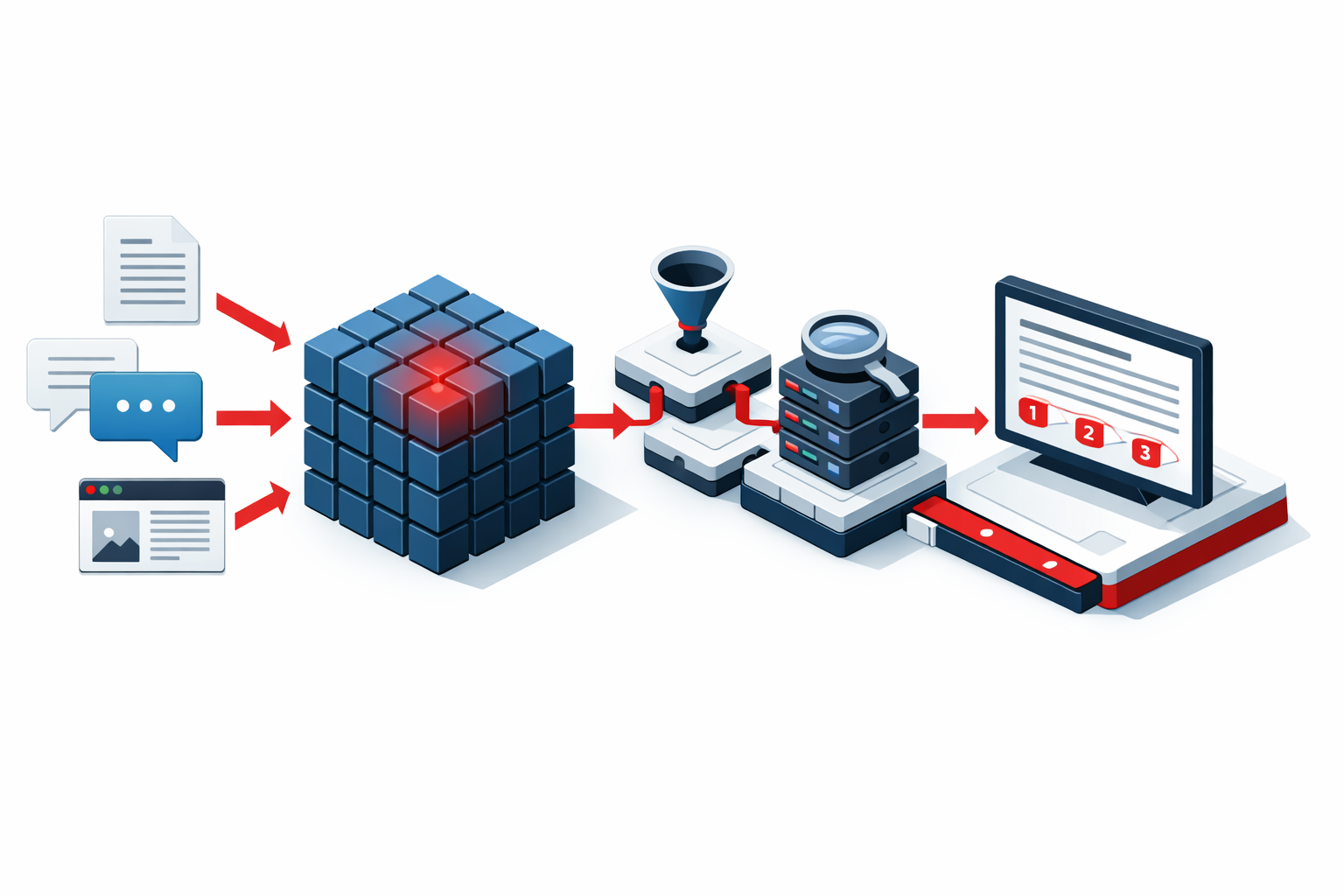
We start with a knowledge audit. We want to understand what institutional knowledge your Mount Greenwood business has accumulated and where it currently lives. The audit maps document types, storage locations, knowledge formats (written, verbal, embedded in processes), and the questions that knowledge is used to answer. Most Mount Greenwood businesses discover they have more structured knowledge than they realized once we start mapping it systematically.
We assess what knowledge is in usable form and what needs to be captured before it can be ingested into the system. Documents, email archives, case files, and procedure manuals can be ingested directly with processing. Knowledge that lives only in employees' heads needs to be captured through structured interviews and documentation before it can be included. We design a knowledge capture plan that is practical given your team's time constraints.
We then build the RAG system. The technical implementation indexes your knowledge in a format that allows semantic search: queries in plain language that match relevant knowledge even when the exact words do not match. A contractor's apprentice who asks about "dealing with water coming through a basement wall in an older house" gets the documentation on that problem even if the stored document says "foundation seepage remediation." The system understands intent, not just keywords.
Interface design is critical. A RAG system that requires technical queries does not get used. We build search interfaces that work in plain language, return results in readable summaries, and cite the source documents so staff can verify and dig deeper when needed.
We test with real questions drawn from your actual operations before deployment. We want to see what your team actually asks and ensure the system returns useful answers.
Industries We Serve in Mount Greenwood
Law offices and legal practices near 111th Street build RAG systems on their case files, research archives, and legal precedent libraries. New associates access the firm's collective research immediately. Common case types get consistent, well-researched responses drawn from the firm's actual experience rather than rebuilt from scratch each time.
Insurance agencies near Pulaski Road build RAG systems on their coverage interpretations, claims histories, policy documentation, and client service procedures. Agents access consistent guidance on coverage questions. New agents learn the agency's specific approaches faster. Client service improves because answers draw from the firm's full experience, not just the agent who happens to answer the call.
Contractors and home service businesses throughout Mount Greenwood build RAG systems on their project archives, procedure documentation, vendor relationships, and material specifications. Field staff access technical guidance. New crews learn how the business handles specific situation types. Project managers pull relevant precedent before scoping estimates.
Accounting and tax practices serving Mount Greenwood's professional families build RAG systems on their tax research archives, client situation precedents, and advisory guidance. Common client questions get consistent, well-researched responses. Tax season preparation is faster because relevant precedents are accessible.
Funeral homes near Mount Greenwood Cemetery build RAG systems on their service procedures, community relationships, vendor coordination protocols, and family communication guidance. Staff at every experience level have access to the firm's full institutional knowledge for serving families through difficult circumstances.
Neighborhood businesses and retailers on Kedzie Avenue build RAG systems on their product knowledge, vendor relationships, customer service procedures, and operational policies. Staff turnover is less disruptive when institutional knowledge is accessible rather than departing with experienced employees.
What to Expect Working With Us
1. Knowledge audit and gap assessment. One to two weeks mapping your accumulated knowledge, assessing what is in usable form, and identifying gaps that need to be captured before ingestion. We produce a knowledge map and an ingestion plan.
2. Knowledge organization and ingestion. Two to three weeks processing your existing documents, structuring them for RAG indexing, and capturing knowledge that is not yet in documented form. We handle the technical work of preparing your knowledge base.
3. RAG system build and interface design. Two to three weeks building the retrieval system and the search interface your team will use. We design for plain-language queries and readable responses.
4. Testing and refinement with real queries. One to two weeks of testing using actual questions from your operations. We measure response quality, identify gaps, add missing knowledge, and refine retrieval to ensure the system returns genuinely useful results.
5. Staff training and deployment. We train your team on how to use the system, how to contribute new knowledge, and how to flag gaps. We deploy and monitor usage to identify areas where the knowledge base needs expansion.