How We Build ERP Integration for Mount Greenwood
Discovery for a Mount Greenwood integration project means sitting with the owner and walking through every software system touching the business. Most operators along Pulaski Road and the 111th Street corridor can name their systems quickly: QuickBooks for accounting, Jobber or ServiceTitan for field service, a payroll provider, maybe a point-of-sale system for front-of-house retail. What takes longer to map is the manual work between systems. Where does someone export a CSV and import it somewhere else? Where does data get re-entered by hand? Where do discrepancies between systems show up as recurring headaches? Those spots become the integration priorities.
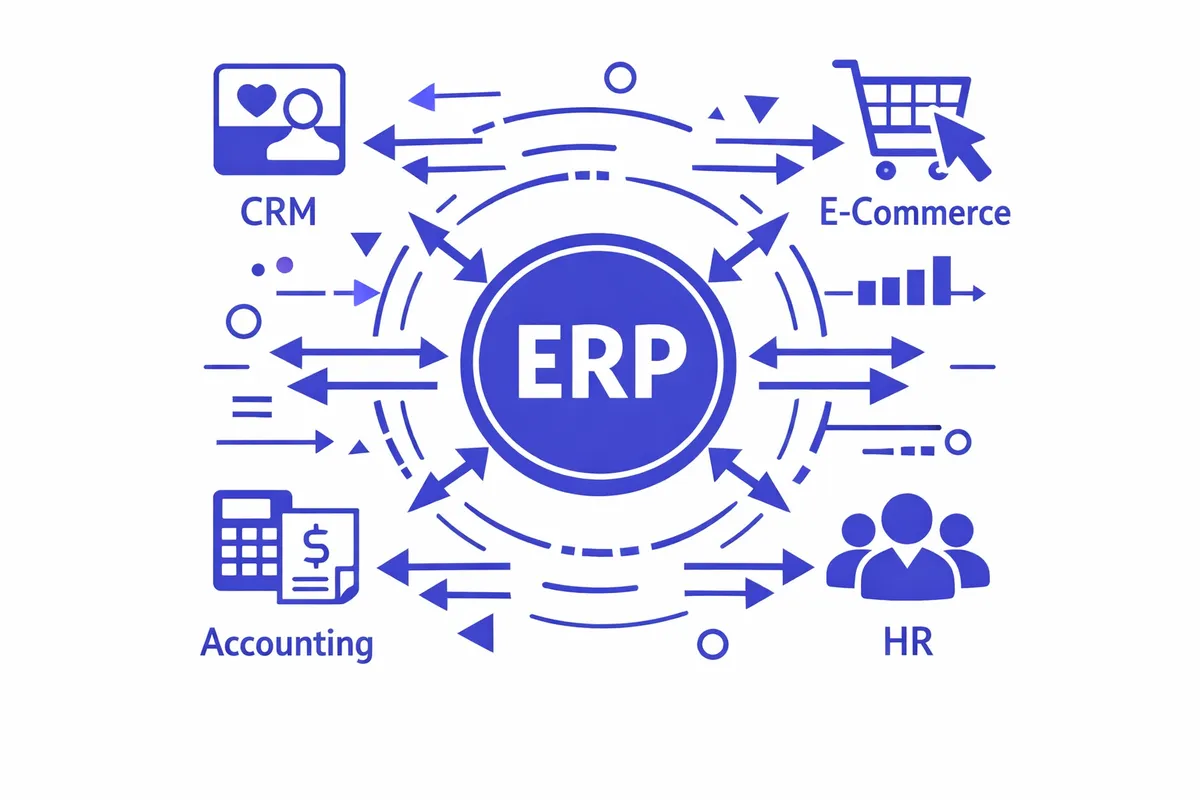
We build integrations using middleware platforms that create reliable, monitored data flows between your existing systems. We rarely recommend ripping out a system that works. A contractor who has used Jobber for three years and trained their entire crew on it does not benefit from switching to a new field service platform just because it comes with built-in accounting. Instead, we build a clean integration between Jobber and QuickBooks so job costs, labor hours, and materials purchases flow into accounting automatically, and invoices flow back to the field service dashboard when they are paid.
The integration architecture accounts for your specific data model: how you name customers, how you structure job categories, how your chart of accounts is organized. Generic integrations built without that context create mapping errors that produce worse results than the manual process they replaced. Our integrations are configured against your real data from day one, tested with actual transactions from your business before go-live.
Industries We Serve in Mount Greenwood
Contractors and trades businesses working out of Mount Greenwood connect field service management, materials purchasing, labor tracking, and accounting through ERP integration so that every job on the Far Southwest Side produces accurate cost data without manual entry. A roofing contractor along Sawyer Avenue who previously reconciled job costs against QuickBooks by hand every Friday afternoon can reclaim those hours once the systems speak directly.
Insurance agencies near Pulaski Road run client management, policy tracking, and accounting across separate platforms that rarely agree on customer records or revenue figures. Integration ties the CRM to the accounting system so commissions, renewals, and new policies are reflected in financial reporting in real time, without a staff member auditing the discrepancy each month.
Family-owned restaurants and bars on 111th Street use ERP integration to connect their point-of-sale system to inventory management and accounting. When a restaurant's POS generates nightly sales data that flows automatically into QuickBooks and triggers inventory reorder alerts, the owner is not doing those three tasks manually. That time compounds across a year into hundreds of recovered hours.
Accounting offices near 115th Street handle client bookkeeping at scale and benefit from integration between their practice management software and their clients' source systems. Rather than downloading client files and uploading them to your accounting platform, direct integrations keep data current and reduce the reconciliation work that consumes associate time during tax season.
Florists and event retailers along Kedzie Avenue manage inventory, orders, and customer payments through systems that were not built to talk to each other. Connecting an order management platform to inventory and accounting means that when a large graduation order is confirmed near the end of May, the inventory deduction, supplier reorder trigger, and revenue recognition all happen without the owner touching three separate applications.
Property management and real estate services near Mount Greenwood Park manage rental income, maintenance work orders, vendor invoices, and tenant communications across disconnected tools. ERP integration creates a single operational picture where work orders flow from tenant request to vendor assignment to invoice payment to accounting entry without manual intervention at each step.
What to Expect Working With Us
1. System inventory and integration mapping. The first session is a working audit of every system touching your business: what it does, who uses it, what data it produces, and where that data currently goes. For most Mount Greenwood businesses, this surfaces three to five manual handoffs that have become normalized but represent significant time loss. We prioritize those handoffs and design the integration sequence around them.
2. Data model alignment. Before any technical build begins, we align the data structures between your systems. Customer names, account categories, product classifications, and job codes need to match across platforms for integration to produce clean output. This work prevents the mapping errors that make generic integrations unreliable. We do it with your real data, not sample records.
3. Phased build and testing with live transactions. We build integrations in phases so you can validate each connection with real business data before we wire the next one. The first integration is typically between your highest-volume data flow: field service to accounting for contractors, POS to inventory for retailers. We run parallel tracking for two to four weeks to confirm accuracy before deprecating the manual process.
4. Monitoring and seasonal adjustment. Connected systems need watching. We provide ongoing monitoring that flags errors when a data sync fails so the problem is caught before it compounds. Before high-volume periods like graduation season or the holiday retail push, we run a systems check to confirm every integration is handling expected volume and adjust rate limits or sync frequency if needed.