How We Build AI Integration Services for Mount Greenwood
Every integration engagement begins with a systems inventory and workflow mapping session. We document every software tool your business uses, what data each system holds, and how information currently flows between them. This mapping often reveals integration opportunities that were not initially obvious, as well as workflow steps that exist only because systems are not connected rather than because they add actual value.
From the workflow map, we identify the integration priorities. The highest-priority integrations are typically the ones that eliminate the most manual data entry, reduce the most errors, or enable the most important automation workflows. For a Mount Greenwood trades business, job completion to invoice generation is almost always the top priority. For a professional services practice, new client intake to CRM record creation is typically the most valuable first integration.
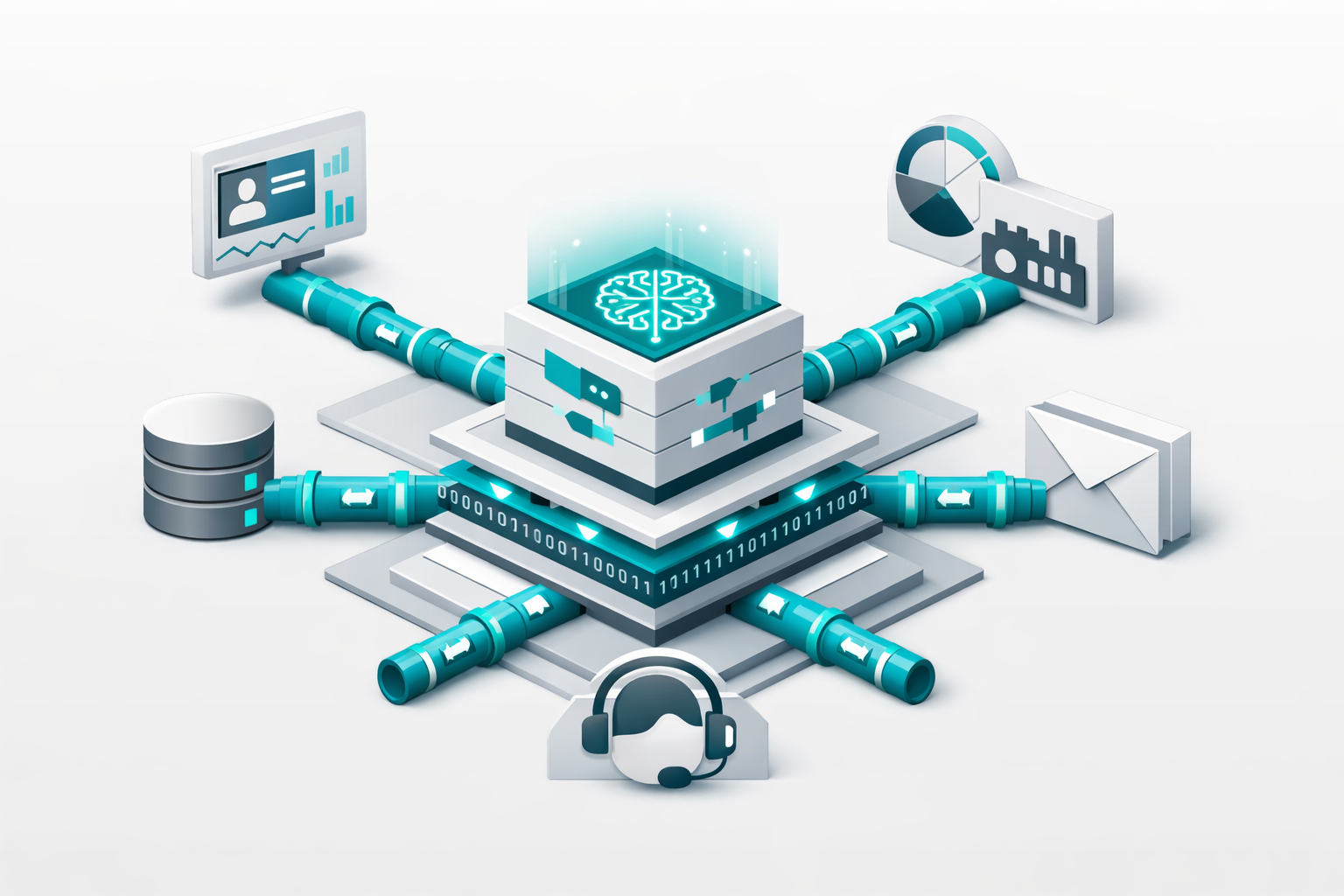
We build integrations using the connection methods available for your specific software tools. Most modern business software has APIs that allow authorized integration platforms to read and write data programmatically. We use these APIs to build direct, reliable connections between your systems. Where APIs are not available, we use other connection methods including file transfers, email parsing, or AI-powered screen automation for legacy systems.
AI enhances traditional integration in several ways. AI-powered integrations can classify and route documents intelligently rather than just moving structured data. They can extract information from unstructured sources like emails and PDFs and inject it into structured systems. They can recognize patterns in data flows and flag anomalies that suggest errors or exceptions requiring human attention. These capabilities handle the integration scenarios that simple rule-based tools cannot.
Industries We Serve in Mount Greenwood
Trades and home service businesses with field operations and back-office administration benefit from integrations that connect field service management platforms with accounting, payroll, inventory, and customer communication systems. We build complete job lifecycle integrations that automate the data flow from new job creation through invoice payment and customer follow-up.
Dental practices and medical offices benefit from integrations connecting practice management, billing, insurance verification, and patient communication systems. Integrated workflows reduce front-desk administrative burden and improve data accuracy across systems that currently require manual synchronization.
Insurance agencies and financial service practices benefit from integrations connecting CRM, policy management, billing, and document management systems into cohesive client service workflows. New client onboarding, policy renewal, and claims processing workflows are common integration targets for these businesses.
Retail and restaurant businesses along 111th Street benefit from integrations connecting point-of-sale, inventory management, payroll, and marketing systems. Integrated inventory and sales data eliminates manual stock count reconciliation and enables automated reordering.
What to Expect Working With Us
1. Systems inventory and workflow mapping. We document every tool your business uses and map the current data flows between them, including the manual steps your team performs today to compensate for disconnected systems. This map is the foundation for every integration decision.
2. Integration design and prioritization. We design the specific integrations that address your highest-priority workflow gaps and present them in a prioritized roadmap with expected time and cost for each. You choose which integrations to pursue and in what order.
3. Build, testing, and deployment. We build the integrations, test them thoroughly with realistic scenarios from your actual business operations, and deploy them into your production environment with monitoring to confirm they operate reliably after launch.
4. Documentation and ongoing support. We document how each integration works, what to watch for if something stops functioning correctly, and how to request changes as your business workflows evolve. Ongoing support is available for troubleshooting and enhancements.