How We Build Accessible Design for Mount Greenwood
We start by auditing what you currently have. Many Mount Greenwood small businesses built their first websites years ago with a template or a relative's help. We run those sites through a combination of automated tools and manual screen-reader testing to surface the real barriers: missing alt text on images, form fields that screen readers skip over, color contrast ratios that fail the 4.5:1 threshold for normal text. The audit produces a prioritized list sorted by severity and fix complexity.
From there we either remediate your existing site or rebuild it from a clean accessible foundation, depending on what the audit reveals. For a contractor off Kedzie Avenue whose site is mostly a contact form and a photo gallery, remediation is usually the right call. For an insurance agency on 111th Street with a complex quote-request flow and multiple downloadable forms, a rebuild often costs less time and money than patching a brittle template.
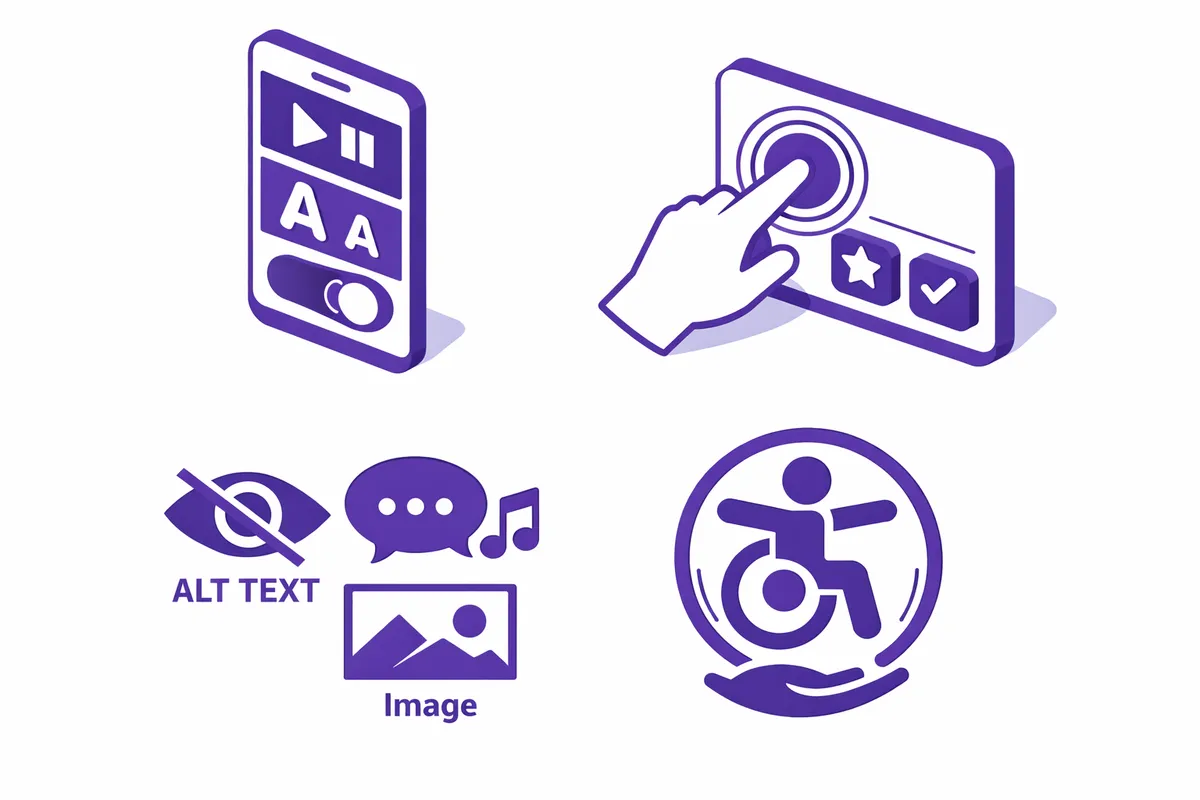
Every implementation we deliver follows WCAG 2.1 AA standards across four dimensions: perceivable content, operable navigation, understandable language, and robust code that assistive technologies can parse reliably. We test against NVDA and VoiceOver screen readers before any site leaves our hands. We also document every decision so your team can maintain the standards after launch without starting from zero when you update a page.
Industries We Serve in Mount Greenwood
Insurance agencies along 111th Street handle complex document workflows: quote requests, policy comparisons, claim forms. Accessible design ensures those workflows function for clients using keyboard navigation or screen readers. When a longtime customer loses sight in one eye after retirement and needs to review their homeowner's policy online, they should not have to call the office for what used to be self-service.
Accounting and tax offices near Mount Greenwood Library serve clients who upload sensitive documents, sign forms, and access financial statements through client portals. Accessibility requirements for secure document workflows are more demanding than standard sites, because the failure modes are higher-stakes. We build portals that meet WCAG standards without sacrificing the security controls your professional liability requires.
Contractors and trade businesses on Pulaski Road often use their websites primarily to generate estimate requests. An accessible estimate form, properly labeled and keyboard-navigable, converts visitors with disabilities at the same rate as everyone else. It also positions the contractor well with property managers and building owners who are themselves required to operate accessibly and favor vendors who demonstrate the same commitment.
Family-owned restaurants and bars anchoring the 111th Street corridor serve regulars who may have been coming in for twenty years. When those regulars can no longer read a menu online because the text contrast fails, or cannot find your hours because the page structure is broken for screen readers, you lose digital touchpoints with your most loyal customers. Accessible menus and location pages cost nothing extra when built correctly from the start.
Florists serving the Mount Greenwood community for weddings, funerals, and First Communion arrangements field a meaningful volume of customers who order online. Accessible product pages and checkout flows open that channel to customers who rely on assistive technology, including older residents who account for a significant share of neighborhood floral purchases.
Neighborhood retail shops near Sawyer Avenue and throughout the commercial blocks depend on foot traffic supplemented increasingly by local search and mobile browsing. Accessible mobile design serves the older residents who make up a substantial portion of the Mount Greenwood customer base, and it also improves core web vitals, which carry weight in local search rankings for the queries your customers actually type.
What to Expect Working With Us
1. Accessibility audit of your current site. We run every page through automated scanners and manual testing, then walk you through the findings with plain-language explanations of what each issue means for your customers. No jargon, no upselling issues that do not exist. For most Mount Greenwood small business sites this takes three to five business days.
2. Prioritized remediation plan. We sort every issue by severity and fix complexity, separating the quick wins from the structural work. You see the full picture and decide how much to tackle in the first phase. For a neighborhood contractor or florist, phase one often resolves 90% of user impact with a focused two-week sprint.
3. Build and test against real assistive technology. Every page and interaction we deliver gets tested with screen readers and keyboard-only navigation before we hand it back. We catch the issues that automated tools miss, which typically account for 30-40% of real accessibility barriers.
4. Seasonal review tied to your business calendar. Mount Greenwood businesses see traffic spikes around the St. Patrick's Day corridor events, spring graduation season from Marist High School and Brother Rice High School, and the summer park programs at Mount Greenwood Park. We schedule a post-launch review before each peak season to catch any new content that has drifted from accessibility standards.