How We Build UI/UX Design for McKinley Park
McKinley Park's user population is practical. They use digital tools when those tools save time and create value, and they stop using them when the tools create friction. This is not a market that will persist through a bad interface out of curiosity or FOMO. We design for that reality by starting discovery with the actual users, not with assumptions about user behavior imported from other markets.
Discovery for McKinley Park projects includes observation of how current processes work. For a family restaurant on Archer Avenue, this means understanding how orders come in today, what the peak service periods look like, and where the owner's time goes that digital tools could absorb. For a contractor, it means understanding the estimate process from the first call through the signed contract, and identifying where clients fall off or call back with questions that a cleaner interface would have answered. These observations produce design priorities that are grounded in the actual operation rather than hypothetical improvements.
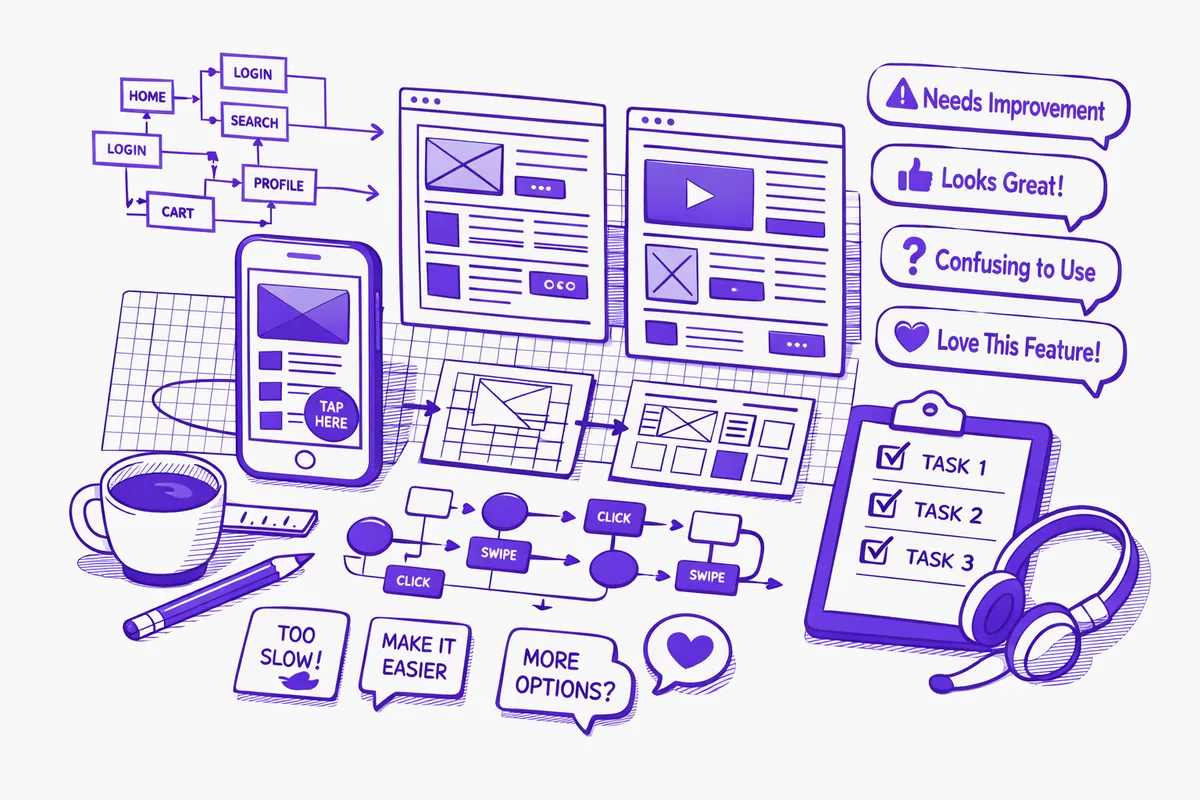
Wireframes and prototypes for McKinley Park products are tested with participants from the neighborhood and the broader Southwest Side community. We recruit through neighborhood networks, local community boards, and referrals from McKinley Park business operators who know their customers personally. Test participants bring practical expectations: Does it work on my phone? Can I figure it out without reading instructions? Does it save time or create more? Their feedback drives the iteration between wireframes and final design.
Industries We Serve in McKinley Park
Family-run restaurants and food businesses on Archer Avenue and throughout the neighborhood need online ordering, reservation, and catering inquiry interfaces that match the simplicity their customers expect from the takeout experience. We design direct-order flows that work on a phone, confirm orders clearly, and integrate with however the kitchen is currently managing incoming orders, without requiring the owner to learn a new system from scratch.
Auto service and repair shops near Western Avenue and Pershing Road serve a customer base that makes large decisions based on trust. A shop that makes it easy to request a service estimate online, receive a clear quote, and schedule a drop-off has already differentiated itself from the competitors who require a phone call for everything. We design customer-facing scheduling and estimate tools for the auto service market, along with the status communication flow that keeps customers informed while their vehicle is being serviced.
Small warehouses and logistics operators in McKinley Park's industrial corridor manage client accounts, delivery schedules, and inventory across systems that were not designed to talk to each other. We design client-facing portals and internal management interfaces that give logistics operators a single view of their operations while giving clients a clear, self-service window into their account status.
Contractors and home service businesses throughout the Southwest Side need estimate tools, scheduling interfaces, and project communication portals that make the pre-job experience as professional as the job itself. We design the client-facing layer that presents a proposal clearly and makes approval easy, alongside the internal job management view that helps the contractor track multiple projects without losing track of any of them.
Neighborhood grocery and specialty food stores near the McKinley Park Library and throughout the commercial corridors on Western Avenue are adding delivery and curbside ordering capabilities. We design these interfaces for the store's actual customer base: families who know what they want, value speed and accuracy, and will not return to a service that fails their first order.
Family medical and health practices serving McKinley Park's residential population need patient-facing scheduling, intake, and communication tools that work for patients across a range of digital comfort levels, including older adults and patients who primarily use a phone rather than a desktop. We design accessible, simple patient-facing interfaces alongside the practice management tools that staff use to coordinate care.
What to Expect Working With Us
1. Discovery and research. We begin with your operation and your customers. For McKinley Park businesses, this means interviewing current customers from the neighborhood, observing how the current process works on a busy day, and identifying the specific points where things break down or require manual workarounds. The findings from discovery drive the design priorities directly.
2. Information architecture and wireframing. We design the structure of the experience before the surface. For McKinley Park operators, wireframes are reviewed in plain language: does this match how your customers think about the task, and does this match how you need to manage it on the back end. We iterate on structure until both questions have clear answers.
3. High-fidelity design and prototype testing. Pixel-level interfaces built in Figma, tested with actual McKinley Park community participants. The goal of testing is to find the places where real users from the neighborhood encounter confusion before the product is built, not after.
4. Developer handoff and ongoing support. Complete design documentation delivered to the development team, with our team available through implementation to answer questions and review the built product against the tested design. McKinley Park operators get a product that works the way the testing said it would, not one that drifted during development.