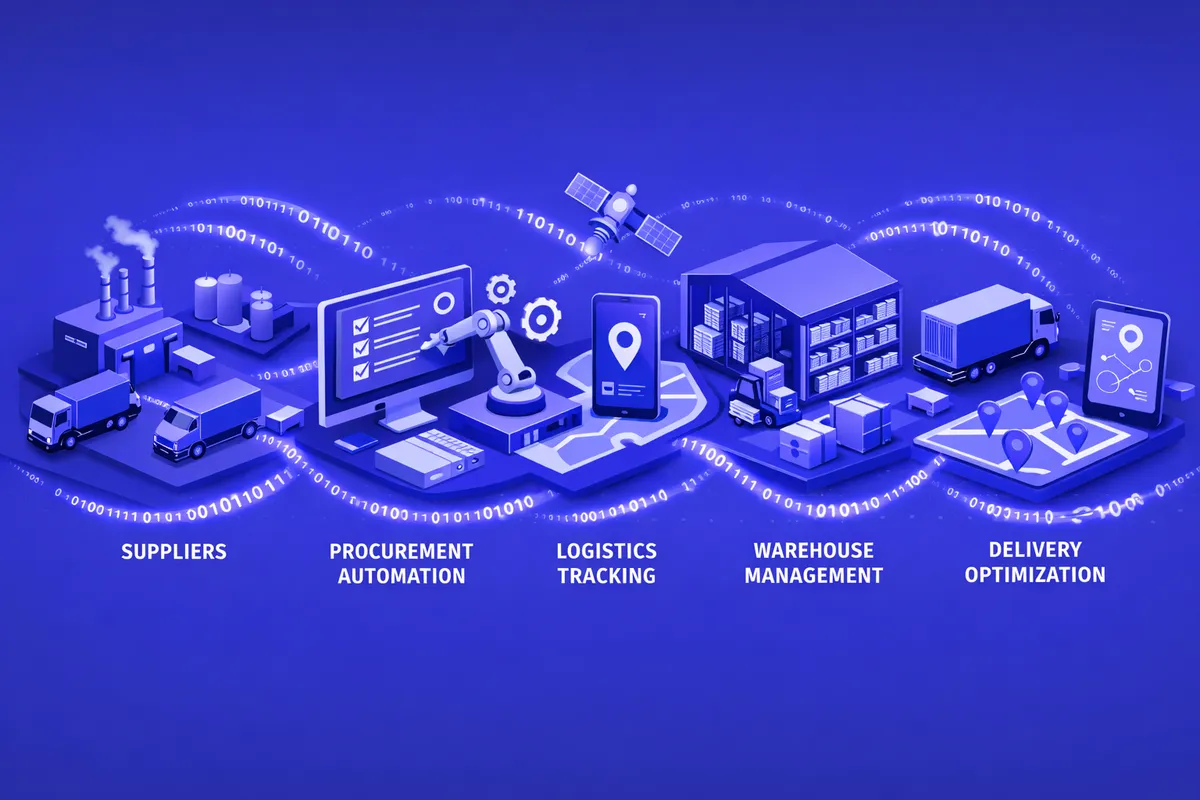
How We Build Supply Chain Automation for McKinley Park
Every McKinley Park engagement begins with a supply chain process audit: mapping your current purchasing workflows, identifying where manual steps create the most cost or risk, and building a prioritized automation roadmap. For food importers and restaurants, this audit specifically addresses freshness and expiration tracking, supplier lead time variability, and the minimum order dynamics that make food supply chains more complex than standard product purchasing.
Integration architecture is designed around the systems McKinley Park businesses already run. Many small food businesses use Square or Toast for POS. Logistics operators use industry-specific platforms or combinations of QuickBooks and spreadsheets. Our automation layer connects your existing tools rather than replacing them, adding workflow triggers, monitoring logic, and vendor communication automation that your current systems cannot provide independently.
For food businesses, we prioritize perishable goods management automation: automated freshness tracking, FIFO enforcement at receiving, and reorder triggers calibrated to lead time plus safety stock rather than just current inventory levels. For logistics and distribution operators, we prioritize inbound inventory monitoring, multi-vendor purchase order management, and outbound shipment tracking.
Industries We Serve in McKinley Park
Vietnamese and Latinx Food Importers: Food importers and specialty food distributors operating in McKinley Park manage product sourced from multiple international and domestic importers with varying lead times and freshness windows. Automated inventory monitoring, freshness tracking, and demand-triggered reordering reduce waste and stockout frequency across high-turnover specialty ingredient catalogs.
Restaurants and Panaderias: Neighborhood restaurants and panaderias near McKinley Park and along Archer Avenue manage daily ordering cycles, multiple supplier relationships, and perishable inventory with tight freshness windows. Automated purchasing triggered by inventory depletion, delivery confirmation workflows, and FIFO management reduce waste and eliminate the ordering errors that compound across a high-volume food production environment.
Light Industrial Operators and Warehouses: Small warehouses and light industrial businesses near the Bubbly Creek industrial corridor manage inbound product from multiple vendors and outbound fulfillment to local accounts. Automated inventory monitoring, replenishment ordering, and shipment tracking provide the operational visibility that makes competitive service levels achievable without proportional staffing increases.
Auto Service and Parts Distributors: Auto service businesses along Western Avenue and 35th Street managing parts inventory across multiple supplier programs need automation that monitors availability, triggers replenishment based on service demand, and tracks inbound shipments without manual follow-up. Parts availability directly affects service throughput, making inventory automation a direct revenue driver.
Neighborhood Grocers: Small grocery stores serving McKinley Park's Latino and Vietnamese communities manage product catalogs with a mix of domestic and imported specialty items, each with different reorder cadences and supplier relationships. Automated reordering triggered by sales depletion reduces stockouts on high-turnover specialty items while keeping slow-movers from accumulating excess inventory.
Small Logistics and Delivery Operators: Third-party logistics operators and specialty delivery companies in McKinley Park manage inbound product staging, client inventory, and outbound delivery routing. Automated inventory visibility and shipment tracking reduce the manual coordination overhead that grows with each new client relationship.
What to Expect Working With Us
1. Supply Chain Audit. We map your current purchasing and inventory workflows, identify the highest-cost manual touchpoints, and produce a prioritized automation roadmap. For McKinley Park food businesses, this includes assessment of perishability management, supplier lead time variability, and the ordering patterns that create recurring stockouts or waste.
2. Integration Architecture. We design the connections between your existing platforms and the automated workflows. For food businesses using POS systems, we map the data flow from sales depletion to reorder trigger to purchase order generation. You approve the architecture before any development begins.
3. Phased Implementation. Highest-impact automations go live first. Your team sees operational benefit before the full program is complete. Each phase is tested against your actual supply chain scenarios, including the seasonal and cultural event patterns that drive demand spikes in McKinley Park's food economy.
4. Monitoring and Reporting. Post-launch monitoring tracks purchasing cycle times, waste rates, fill rates, and vendor delivery performance. We establish baseline metrics during the audit and report improvement against those baselines throughout the engagement.