How We Build RAG Systems for McKinley Park
We begin with a knowledge audit: understanding what documentation your business has, where it lives, what format it is in, and how valuable it is. Most McKinley Park businesses have more usable knowledge than they realize, and some things they think are documented well turn out to be outdated or inconsistent. The audit surfaces both.
From the audit, we prioritize what to include in the RAG system. Not all business knowledge is equally valuable to make searchable. We focus on the knowledge staff need most frequently and cannot easily retrieve from memory or from existing systems. Pricing and proposal references, service procedures, customer history, supplier contacts, and operational policies are typical starting points.
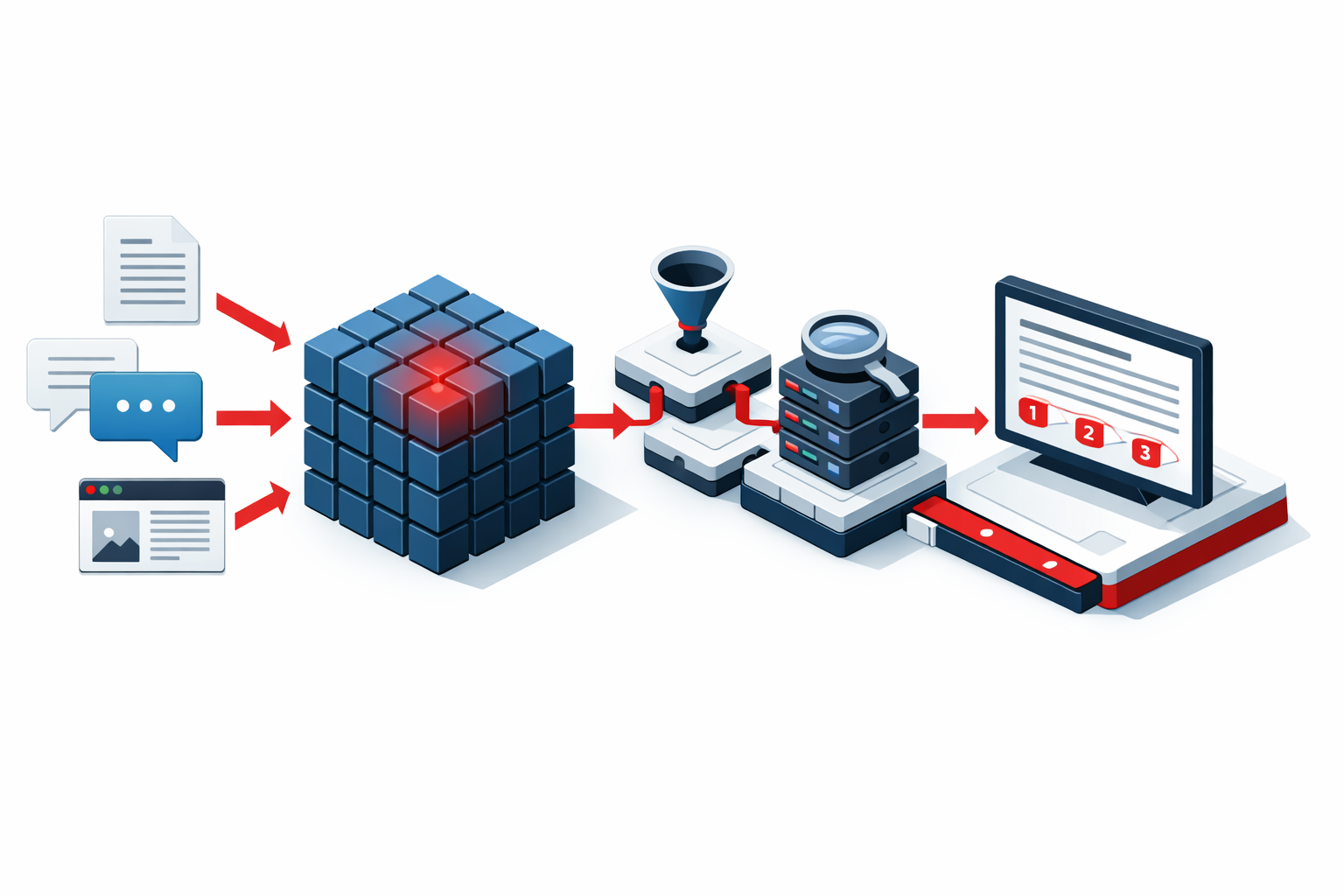
We then build the knowledge base: ingesting, indexing, and organizing your documentation so the AI can retrieve relevant information accurately in response to plain-language questions. The system is configured for your specific vocabulary and the types of questions your staff actually ask.
The search interface is simple. Staff type a question, the system finds the relevant information in your documentation, and presents it with citations pointing to the source document. No special training is required beyond understanding that the tool exists and what to ask it.
Industries We Serve in McKinley Park
Contractors and trades businesses throughout McKinley Park and Brighton Park build RAG systems containing project specifications, pricing references, supplier contacts, warranty documentation, permit procedures, and historical project records. Estimators and project managers access accurate information instantly rather than hunting through files or waiting for the owner to answer.
Family medical practices and health clinics on Ashland Avenue build RAG systems containing clinical procedures, insurance billing guidelines, patient history summaries, formulary references, and administrative policies. Staff find accurate answers to patient questions in seconds rather than escalating to clinical staff for administrative information.
Auto service and mechanical shops on Western Avenue and 35th Street build RAG systems containing service procedures, warranty terms, technical service bulletins, parts supplier information, and customer vehicle history. Service advisors answer technical questions confidently without pulling a technician off a job.
Family restaurants and catering operations on Archer Avenue build RAG systems containing recipes, allergen information, supplier contacts, catering pricing, and health department compliance procedures. Kitchen managers and catering coordinators access operational knowledge without interrupting the owner.
Neighborhood grocers and food retailers near Stearns Quarry build RAG systems containing product information, supplier contacts, pricing guidelines, promotional history, and inventory management procedures. Staff answer customer product questions accurately and manage ordering decisions with access to complete purchase history.
Small warehouses and logistics operations near Bubbly Creek build RAG systems containing client requirements, handling procedures, carrier contacts, rate sheets, and shipment history. Operations staff access accurate information for client inquiries and operational decisions without escalating to management.
What to Expect Working With Us
1. Knowledge audit and prioritization. We inventory your business documentation, assess its quality and completeness, and identify the knowledge most valuable to make searchable. You receive a clear picture of what will go into the system and what should be documented before ingestion. One to two weeks.
2. Knowledge organization and system build. We organize your documentation, fill critical gaps, ingest it into the RAG system, and configure the retrieval settings for your specific vocabulary and use cases. Three to five weeks.
3. Interface deployment and staff training. We deploy the search interface your staff will use, test it against real questions from your operations, and train your team on how to use it effectively. One week plus training.
4. Ongoing maintenance and expansion. We help you add new documentation as your business generates it, update the system when procedures change, and expand coverage as you identify additional knowledge categories to include.