How We Build Progressive Web Apps for McKinley Park
We build PWAs for McKinley Park businesses around the specific use case that generates value for the owner, not around a theoretical feature list. A contractor's client portal needs project status, photo uploads, and change order approvals. It does not need a social feed, a blog, or a loyalty program. A restaurant's customer-facing app needs menu browsing, ordering, and a simple rewards program. It does not need event ticketing or a podcast.
The specification process starts with the owner's current pain point. For a contractor on Ashland Avenue, that might be the time spent on status calls: customers calling to ask where the project stands, whether a permit came through, when the crew will be back. A client portal PWA that gives customers real-time status access eliminates most of those calls. For a McKinley Park family restaurant, the pain point might be phone orders during the dinner rush that tie up the line and create errors. An ordering PWA reduces phone volume and captures orders more accurately.
We design for the device reality of McKinley Park's customer base. Not every customer has the latest iPhone on a fast plan. We build PWAs that load quickly on 4G connections, cache content so that pages display even when connectivity drops, and render correctly on older Android devices. Performance testing against slower connection speeds is part of our standard build process for Southwest Side businesses.
For contractors and small logistics businesses near Archer Avenue, we design offline-first workflows that keep job data available when a worker is underground, in a basement, or in a building with poor reception. Data syncs when connectivity returns, and the sync process handles conflicts gracefully rather than creating duplicate records.
Industries We Serve in McKinley Park
Contractors and home services businesses on Western Avenue and Archer Avenue use client-facing PWAs to give homeowners a direct view into project status, scheduled work, permit information, and photo documentation. Clients who can check progress from their phones call less and trust more. For contractors who juggle multiple active projects, a PWA that customers install creates a persistent communication channel that replaces scattered text threads and voicemails.
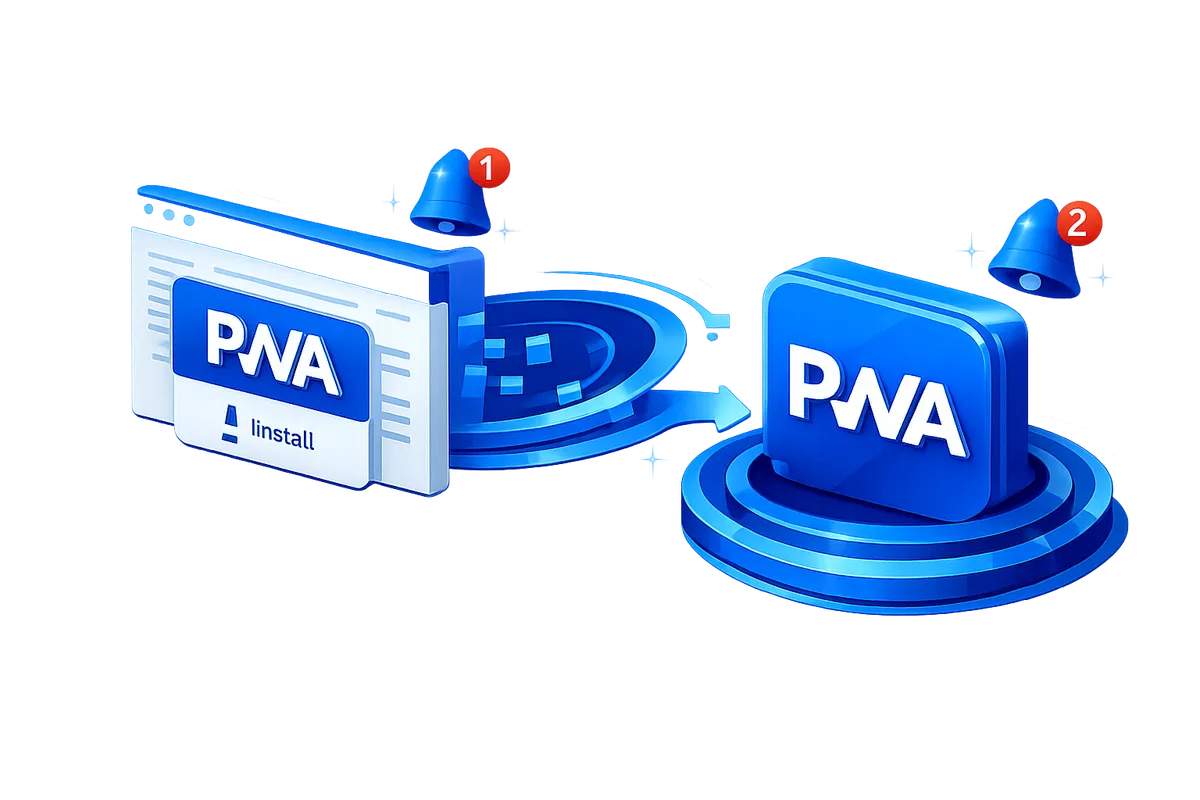
Family restaurants near 35th Street and Central Park Theater use PWAs for online ordering and loyalty programs. Customers browse the menu, place orders, and earn rewards points without downloading anything from an app store. The PWA installs from the restaurant's website with a single tap. Push notifications remind loyalty members about weekly specials or let them know when their order is ready for pickup.
Small warehouses and logistics businesses near Stearns Quarry and Bubbly Creek use internal PWAs for dispatch management, delivery confirmation, and inventory tracking. Drivers access job assignments and route information from their phones, log delivery completions with a photo and signature, and sync data back to the office system when they return to cellular coverage.
Neighborhood grocers and specialty food shops throughout McKinley Park use customer-facing PWAs for weekly specials notifications, loyalty programs, and pre-order systems for specialty items. A customer who installs the PWA receives push notifications about fresh produce arrivals or upcoming sales without the grocer needing to manage a separate app in any app store.
Family medical practices serving McKinley Park use patient-facing PWAs for appointment scheduling, health record access, and appointment reminders. A patient who can manage their appointments from a home screen app without navigating a hospital portal website is more likely to stay current with preventive care. For a family practice near Pershing Road with a large Spanish-speaking patient base, a PWA built with Spanish-language support from the start reaches more of the practice's patients.
Auto service businesses on Archer Avenue and Ashland Avenue use customer-facing PWAs for appointment booking, service status updates, and vehicle history records. A customer who can check whether their car is ready from their phone rather than calling the shop reduces front desk interruptions and improves customer satisfaction.
What to Expect Working With Us
1. Single use-case focus. We build the PWA that solves the specific problem you described in our first conversation, not a comprehensive platform with features you will never use. For a McKinley Park contractor, that is a client portal. For a restaurant, it is ordering and loyalty. We scope to the use case and build it correctly before adding complexity.
2. Design for your actual customer base. We test performance against the connection speeds and device types representative of your customer base. A PWA that performs well on the latest phone on a fast connection is not useful if your customers are on older devices and variable 4G. Performance optimization for real-world conditions is part of our standard process.
3. Spanish-language support. For McKinley Park businesses with Spanish-speaking customers, we build language support into the PWA from the start. That means Spanish-language interface strings, bilingual push notifications, and content that serves customers in the language they prefer. Retrofitting language support onto a finished app is more expensive than building it in from the beginning.
4. Simple deployment, no app store required. When the PWA is ready, deployment is a web server update, not an app store submission. There is no review process, no rejection risk, and no wait period. Updates go live immediately when you approve them. Your customers receive the update the next time they open the app in their browser.